

Key Takeaways
Option A
Raised Beds
The controlled, customizable growing environment.
Best for: Gardeners dealing with poor native soil, drainage issues, or physical limitations who want a defined, manageable growing space.
Option B
In-Ground Planting
The traditional, low-barrier approach to garden growing.
Best for: Gardeners with decent existing soil who want to cultivate larger areas at lower upfront cost.
If your yard has compacted, rocky, or contaminated soil
Raised Beds
Raised beds let you fill with a custom growing mix from the start, bypassing native soil problems entirely without years of amendment work.
If you want to garden on a tight budget or cover a large area
In-Ground Planting
In-ground plots require no materials for structure, making them far cheaper to establish — especially at scale.
If you have back, knee, or mobility concerns
Raised Beds
A raised bed at the right height eliminates the need to kneel or bend, making gardening more comfortable and sustainable over time.
If you're growing deep-rooted crops like squash, corn, or asparagus
In-Ground Planting
Large or deep-rooted plants benefit from unrestricted root space that in-ground beds naturally provide without hitting a container bottom.
If you're a beginner starting a small vegetable plot
Raised Beds
A small raised bed is easier to manage, weed, water consistently, and monitor — giving new gardeners a confidence-building win early on.
What Actually Separates These Two Approaches
The difference between raised beds and in-ground planting isn't just aesthetic — it shapes nearly every practical aspect of how you garden, from soil preparation to pest management to daily watering. Understanding the structural difference is the first step.
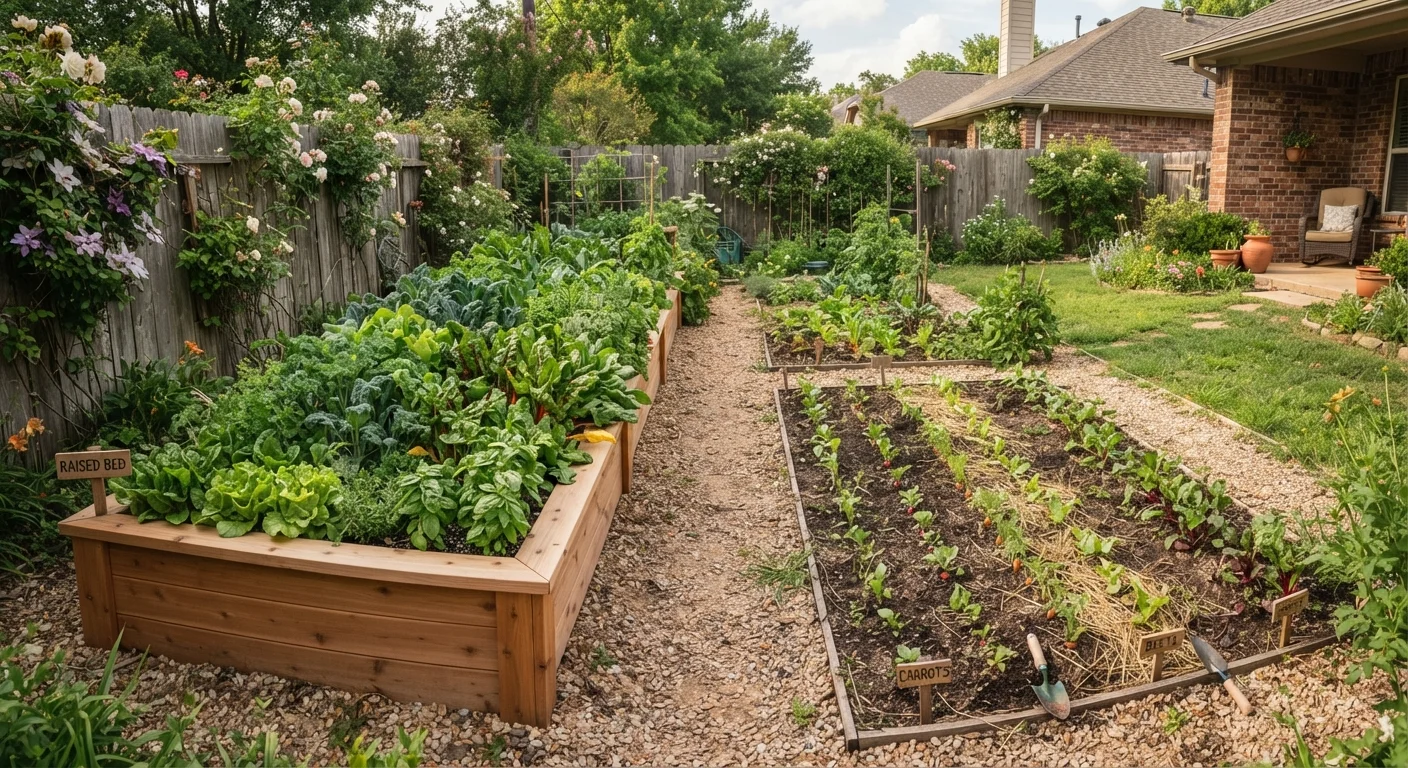
Raised beds are enclosed growing frames — typically made from wood, metal, or composite materials — filled with imported growing mix and positioned above the surrounding ground level. They create a physically separate growing environment.
In-ground planting means working directly with your native soil, amending it over time and planting directly into the ground. This is how most traditional gardens and agricultural plots have been established for centuries.
Neither method is inherently superior. The right choice depends on what your yard already offers, what you want to grow, and how much time and money you're ready to invest upfront versus over time. If you're just beginning, see our complete beginner's vegetable garden guide for a broader orientation.
| Criterion | Raised Beds | In-Ground Planting |
|---|---|---|
| Upfront cost | Higher — materials plus fill soil | Lower — tools and amendments only |
| Soil control | Full — you choose the growing mix | Limited to native soil plus amendments |
| Drainage | Excellent — drains freely above grade | Varies by native soil type |
| Weed pressure | Lower — fewer weed seeds in imported soil | Higher — native seed bank persists |
| Scalability | Costly to scale to large areas | Easy and inexpensive to expand |
| Season length | Longer — soil warms faster in spring | Shorter warm-up in cold climates |
| Accessibility | Highly adaptable for mobility needs | Requires bending or kneeling |
| Deep-rooted crops | Limited by frame depth | Unrestricted root depth |
Soil Control, Drainage, and Root Health
Soil quality is where raised beds genuinely shine. When you fill a raised bed, you choose exactly what goes in — typically a blend of topsoil, compost, and amendments suited to what you're growing. This sidesteps poor native soil, clay hardpan, or contaminated ground entirely.
Drainage is another clear advantage. Because raised beds sit above grade, water moves through them more freely, reducing the waterlogged conditions that cause root rot. If overwatering is already a concern in your yard, our article on why overwatering kills more gardens than drought explains the underlying risks in depth.
In-ground beds, by contrast, rely on your native soil's drainage and fertility. If you have loamy, well-draining soil — common in some regions — in-ground planting can be highly productive with minimal amendment. However, clay-heavy or sandy soils typically require sustained work. Regular additions of compost and organic matter build soil structure over seasons, not weeks. Our guide on composting at home walks through how to produce quality amendment material yourself.
Deep-rooted plants — asparagus, squash, parsnips — often prefer the unrestricted depth that in-ground beds provide. A standard raised bed depth of 6–12 inches suits most vegetables, but can constrain root systems of larger crops over time.
Check for Soil Contamination Before You Dig
If your home was built before the 1980s or your yard was previously used for industrial or commercial purposes, it's worth testing native soil for lead and other contaminants before in-ground planting. Many university extension programs offer low-cost soil testing. Raised beds with imported growing mix are often recommended in areas where contamination is a concern, since they physically separate roots from native ground.
Cost, Effort, and Long-Term Maintenance
Upfront cost is one of the sharpest practical differences. Building even a modest 4×8 ft raised bed involves materials for the frame plus fill soil — an expense that multiplies quickly as you add more beds. In-ground planting, by comparison, requires little more than tools and amendments, making it far more accessible for large-scale growing.
6–12 in
Typical raised bed depth for most vegetables
Most vegetable crops — including tomatoes, lettuce, and peppers — develop successfully in raised beds at least 6 inches deep, though 12 inches is generally recommended for better root development and moisture retention.
4 weeks
Earlier warm-up for raised bed soil in spring
Raised beds can warm up several weeks earlier than in-ground plots in cooler climates due to their above-grade position and improved drainage, according to general horticultural guidance from university extension services.
Over the long term, the calculus can shift. Raised beds, once established, typically require less weeding than in-ground beds because imported soil contains fewer weed seeds and the defined edges make encroachment easier to manage. They also warm up faster in spring, extending the growing season in cooler climates.
In-ground beds tend to dry out more slowly, which can reduce watering frequency — a meaningful benefit in hotter, drier climates. If you're considering irrigation for either setup, our irrigation system setup guide covers drip lines and soaker hoses that work well with both approaches.
Mulching plays a big role in maintaining either bed type. Applied correctly, mulch reduces water loss and suppresses weeds whether you're gardening in a frame or on flat ground. For a full overview of mulch types and techniques, see our complete guide to garden mulching.
Making the Decision for Your Specific Yard
Rather than choosing based on trends, focus on three practical questions about your site:
- What is your native soil like? A simple soil test — available through many county cooperative extension offices — can tell you whether your ground is worth working with or whether starting fresh with imported mix makes more sense.
- How large an area do you want to cultivate? If you're planning a compact kitchen garden, a raised bed's higher per-square-foot cost is manageable. If you want to grow across hundreds of square feet, in-ground planting is more practical economically.
- What are your physical needs? Raised beds at 24–30 inches tall can accommodate gardeners who cannot kneel or bend comfortably. This shouldn't be an afterthought — it's a legitimate, important factor in choosing a setup you'll actually sustain.
It's also worth noting that these approaches aren't mutually exclusive. Many gardeners combine both — using raised beds for high-value crops like salad greens and herbs while growing sprawling plants like melons and corn in adjacent in-ground rows. Pairing this with thoughtful companion planting strategies can improve yields in either bed type.
Whatever setup you choose, healthy, living soil is the foundation. Be skeptical of quick-fix amendments — our piece on miracle soil additive claims separates evidence-based practices from marketing hype.