

Key Takeaways
Why Mulching Matters
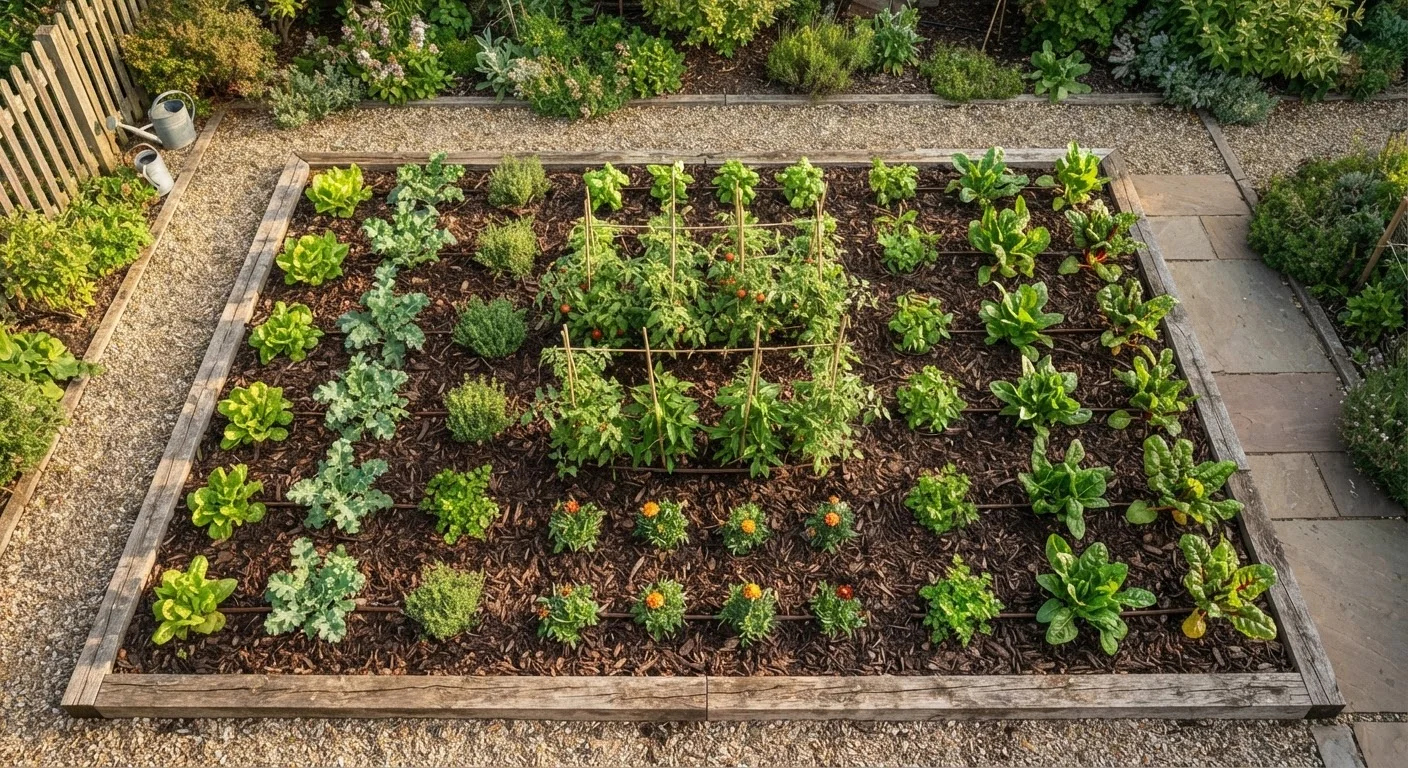
Mulching is one of the highest-return tasks in home gardening. A correctly applied layer of mulch performs several jobs simultaneously: it slows evaporation from the soil surface, moderates soil temperature fluctuations, suppresses weed germination, and — when organic — gradually feeds the soil food web as it decomposes.
Unlike fertilizers or soil additives, mulch works passively across the entire growing season. Once it's down, it keeps working without additional intervention. For gardeners seeking a lower-maintenance approach to healthy plants, it's a foundational practice rather than an optional extra.
25%
Reduction in soil water loss with mulch
Research from university extension programs consistently shows mulched beds lose significantly less moisture to evaporation than bare soil.
2–4 in
Ideal mulch depth for most garden beds
This range is widely recommended by horticultural experts as the sweet spot for weed suppression and moisture retention without root suffocation.
90%
Weed reduction in well-mulched beds
A consistent mulch layer of adequate depth blocks most weed seed germination by limiting light and disrupting soil temperature cycles.
Mulch also plays a meaningful role in soil health over the long term. Organic mulches, in particular, support earthworm activity, fungal networks, and microbial communities — the living infrastructure that makes soil productive. This connects closely to what you'd find in a well-run compost system: see our guide to composting at home for how to combine both practices effectively.
Organic vs. Inorganic Mulch: Understanding the Difference
The first decision any gardener faces is whether to use an organic or inorganic mulch. Understanding the difference shapes every other choice.
- Organic mulches — wood chips, straw, shredded leaves, bark, compost, and grass clippings — are derived from once-living material. They decompose over months to years, feeding soil organisms and improving structure as they break down. They require periodic topping up.
- Inorganic mulches — gravel, crushed stone, landscape fabric, and rubber — do not decompose. They are longer-lasting and lower-maintenance but add nothing to soil biology. They work best in ornamental settings or areas where permanence matters more than soil improvement.
For most home vegetable gardens and mixed perennial beds, organic mulch is the more versatile choice. For pathways, desert-style plantings, or areas where you want a permanent, tidy appearance with minimal replanting, inorganic options can be appropriate.
“Mulch is one of the best things a home gardener can do. It moderates soil temperature, conserves moisture, and slowly feeds the soil food web — all with a single, relatively simple application.”
— Linda Chalker-Scott, Extension Urban Horticulturist, Washington State University
Common Mulch Materials and Their Best Uses
Not all organic mulches behave the same way. Here's a practical breakdown of the most widely available types:
- Wood chips and shredded bark
- Long-lasting, attractive, and widely available. Best for trees, shrubs, and ornamental beds. Aged chips are preferable near edible plants.
- Straw
- Lightweight, easy to apply, and decomposes within a single season. A classic choice for vegetable gardens and newly seeded lawns. Avoid hay, which contains weed seeds.
- Shredded leaves
- Excellent and free if you have deciduous trees. Shred them first to prevent matting. Rich in trace minerals and excellent for improving clay-heavy soils.
- Grass clippings
- Apply in thin layers only (1 inch or less). Thick layers mat and become anaerobic. Avoid clippings from lawns treated with herbicides.
- Compost
- More a soil amendment than a traditional mulch, but it functions as both when spread 1–2 inches deep on the surface. It feeds plants while suppressing some weeds.
- Gravel and stone
- Ideal for Mediterranean-style plantings, succulents, and alpine gardens. Reflects heat in summer, which suits drought-tolerant species but can stress cool-season plants.
Free Mulch from Your Own Yard
Shredded autumn leaves, grass clippings, and small pruned branches run through a chipper are all excellent free mulch sources. Running leaves through a mower before spreading them prevents matting and speeds decomposition. Check with your local municipality — many offer free wood chip mulch from tree-trimming operations.
Choosing a mulch that matches your garden's style and your plants' needs — rather than reaching for whatever is cheapest or most available — will deliver noticeably better results season to season. Our article on soil additive claims can help you separate evidence-based choices from marketing noise.
How to Apply Mulch Correctly
Proper application technique matters as much as the material you choose. Follow these steps for consistent results:
- Clear the area first. Remove existing weeds — including roots where possible — and rake the soil surface level. Applying mulch over established weeds will slow but not eliminate them.
- Water the soil. Mulch retains moisture; start with a moist base for maximum benefit.
- Apply 2–4 inches deep. This is the effective range for most materials. Thinner layers allow light to reach weed seeds; thicker layers can impede water penetration and oxygen exchange in the root zone.
- Keep mulch away from stems and trunks. Leave a clear gap of 2–3 inches around plant stems and at least 3–6 inches around tree trunks. Moist mulch against bark creates conditions for disease and pest damage.
- Extend to the drip line. For trees and large shrubs, a wide mulch ring — extending to the outer edge of the canopy — is far more beneficial than a narrow ring close to the trunk.
Never Volcano-Mulch Your Trees
Piling mulch up against a tree trunk — sometimes called a 'mulch volcano' — traps moisture against the bark, promoting rot, disease, and pest activity. Always leave a clear gap of at least 3–6 inches between the mulch and the trunk. The mulch ring itself should extend outward toward the drip line of the tree, not inward toward the base.
For gardeners using raised beds, note that mulch depth recommendations may need slight adjustment depending on your bed's soil composition. Our raised beds vs. in-ground planting guide covers how setup affects soil and moisture management.
Timing Your Mulch Application
When you apply mulch influences how effective it will be:
- Spring: Wait until the soil has warmed before mulching. Applying mulch too early in cool climates traps cold in the soil, delaying plant growth. A good rule of thumb is to mulch after you've done your first round of planting and the soil feels warm to the touch a few inches down.
- Summer: Midseason topping up can be valuable in hot, dry climates where evaporation is high and mulch breaks down quickly.
- Fall: Apply a fresh layer before the ground freezes to insulate perennial roots and bulbs through winter. This is especially important in climates with freeze-thaw cycles.
- After rain: Mulching onto already-moist soil — rather than dry, cracked ground — locks in existing soil moisture effectively.
For a complete view of when mulching fits within a full-year gardening plan, consult our seasonal garden maintenance reference, which integrates mulching with pruning, feeding, and other tasks by month.
Rubber Mulch: A Note on Longevity vs. Soil Health
Rubber mulch lasts many years and is often marketed for playgrounds and high-traffic areas. However, it does not contribute to soil biology and some studies have raised questions about whether rubber mulch leaches compounds into surrounding soil over time. For food-growing areas, organic mulches remain the more straightforward choice.
Common Mulching Mistakes to Avoid
Even experienced gardeners make these errors. Being aware of them upfront saves time and plant health:
Before laying fresh mulch each season, rake and loosen the existing layer if it has compacted or formed a crust — this allows water and air to continue reaching the root zone.
Compacted mulch can become hydrophobic, causing water to run off the surface rather than penetrate to plant roots, which defeats one of mulch's primary benefits.
Mix two or three types of organic mulch together — such as shredded leaves combined with wood chips — to create a more balanced texture that resists compaction and decomposes more evenly.
Blended mulches tend to stay loose longer, maintain better aeration, and provide a more diverse range of nutrients as they break down.
- Using too little mulch. A half-inch layer does very little for weed suppression. Commit to the 2–4 inch recommendation.
- Mulching over dry soil. Mulch can actually slow moisture absorption into dry, hydrophobic soil. Water thoroughly before applying.
- Choosing the wrong material for edible gardens. Certain dyed or treated wood mulches are not appropriate near food crops. Opt for straw, compost, or untreated wood chips in vegetable beds.
- Neglecting to refresh mulch annually. Organic mulch breaks down — which is part of its value — but it needs periodic replenishment to maintain adequate depth and effectiveness.
- Piling mulch against foundations or siding. Moisture-retaining mulch against a home's structure can contribute to rot and pest ingress. Keep mulch at least 6 inches from foundation walls.
Avoid Fresh, Uncomposted Wood Chips Near Vegetables
Fresh wood chips can temporarily tie up soil nitrogen as they decompose, potentially slowing plant growth. Use aged or composted wood chips in vegetable beds, or keep fresh chips reserved for pathways and ornamental trees. When in doubt, apply a thin nitrogen-rich compost layer beneath the mulch.
Mulching is straightforward once you understand the principles at work. Applied correctly and refreshed seasonally, it consistently reduces garden workload while supporting healthier plants — arguably the best return on a single garden task available to everyday gardeners.