

Key Takeaways
Summary
22 items · 30–60 minutes
Why a Pre-Departure Vehicle Check Matters
There's something undeniably exciting about loading up the car for a long road trip across America's open highways. But the difference between a smooth, memorable journey and a frustrating detour often comes down to what you checked — or skipped — before leaving the driveway.
Mechanical failures are among the leading causes of non-collision roadside incidents. A flat tyre in the Nevada desert, an overheated engine in the Smoky Mountains, or a dead battery in a motel parking lot outside Amarillo are all scenarios that a disciplined pre-departure review can either prevent or give you the tools to handle. This isn't about mechanical expertise — most of these checks require no special skills. It's about taking a methodical walk around and under your vehicle before you commit to hundreds of miles.
For general car maintenance guidance, building these habits year-round makes the pre-trip check even faster. And if you're bringing a four-legged co-pilot, see our guide to travelling with a pet for additional preparation steps.
Don't Ignore Dashboard Warning Lights
If your check engine, brake, oil pressure, or temperature warning light is on before you leave, do not assume it will resolve itself on the road. Have a qualified mechanic diagnose the issue before departing. Driving hundreds of miles on an undiagnosed fault can turn a minor repair into a major — and expensive — breakdown.
Brake Concerns Require Professional Inspection
Any unusual brake behaviour — grinding, pulling, sponginess, or a vibrating pedal — should be evaluated by a licensed mechanic before your trip. Brakes are a safety-critical system, and guessing at a diagnosis on the road is not a reasonable alternative to a proper inspection.
How to Use This Checklist
Work through each group in order — tyres first, then fluids, lights, brakes, documentation, and emergency supplies. Ideally, complete this review at least 48 hours before your planned departure. That window gives you time to book a mechanic appointment, order a replacement bulb, or pick up a missing item without the pressure of a morning clock ticking down.
If you discover a concern in the brakes or steering categories, treat it as a hard stop rather than a watch-and-see situation. The signs of brake wear are worth understanding even before you run this checklist. Similarly, if your vehicle has seasonal needs — extreme heat or a late-autumn mountain route, for example — pair this review with a look at seasonal car maintenance considerations to catch climate-specific risks.
Schedule Checks at Least 48 Hours Before Departure
Completing your vehicle review two days before you leave gives you time to act on anything you find. If a tyre needs replacing, a fluid is dangerously low, or your mechanic flags a belt that's on its last legs, you'll have a realistic window to address it — rather than scrambling at 6 a.m. on departure day. Rushing pre-trip vehicle prep is one of the most common reasons road trips start with a roadside stop instead of a scenic one.
Below you'll find the tools worth having on hand, followed by the full grouped checklist.
Tyre Pressure Gauge
Accurately measures PSI in each tyre so you can inflate or deflate to the manufacturer's recommended level.
Tyre Tread Depth Gauge or Penny
Quickly checks whether remaining tread depth meets the safe minimum threshold before highway driving.
Engine Dipstick (vehicle-installed)
Used to check engine oil level and condition without any additional tools.
Portable Jump Starter or Jumper Cables
Provides a way to restart the vehicle if the battery fails on the road without needing another car nearby.
Roadside Emergency Kit
Contains reflective triangles, a flashlight, and basic first aid supplies for unexpected breakdowns or minor injuries.
Working Through the Checklist
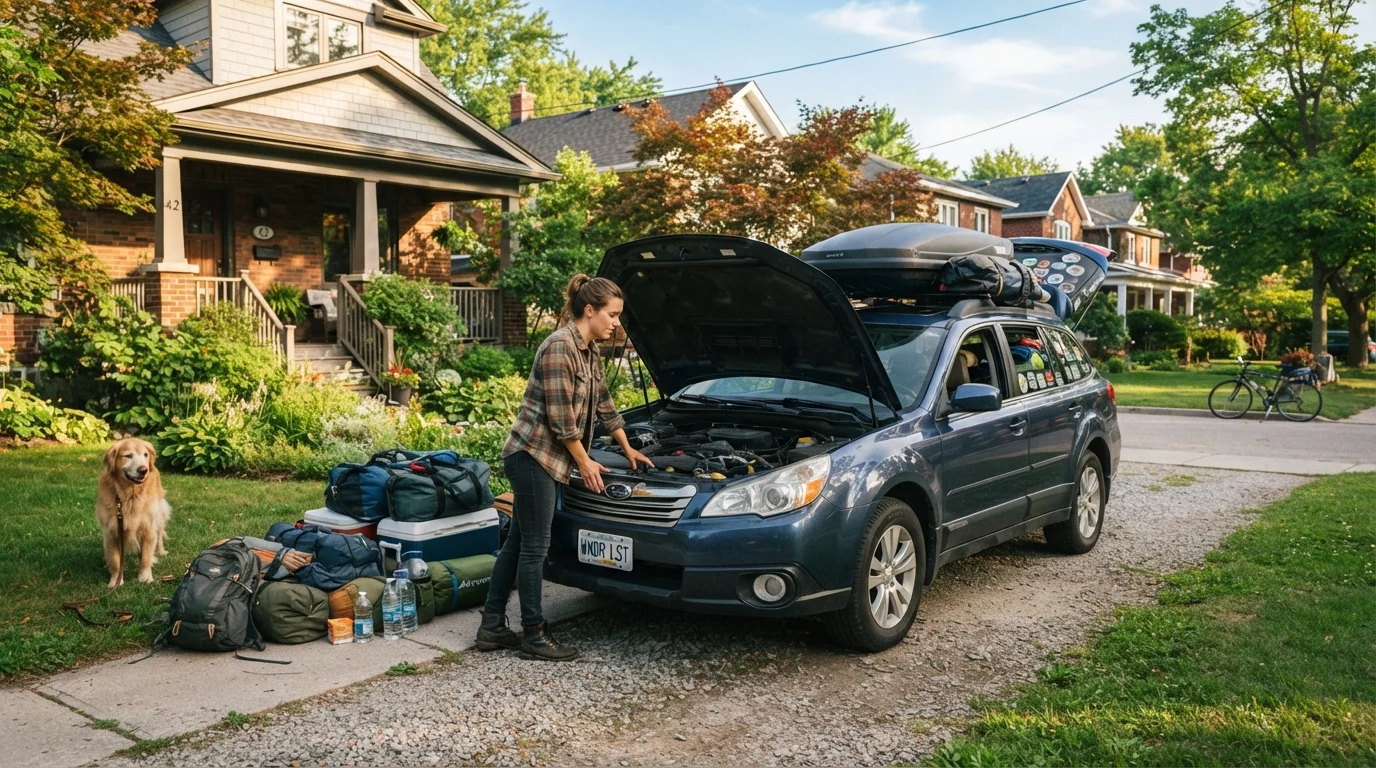
Start outside the vehicle. Walk a full loop, crouching to eyeball each tyre before pulling out your pressure gauge. Many drivers skip the spare — don't. A flat spare discovered during a highway blowout situation is worse than no spare at all.
Under the hood, check fluids with the engine cool when possible, particularly coolant and oil — hot engines can cause scalding if caps are removed too quickly. For a deeper walkthrough of what each reservoir means and where to find it, the fluid checks guide is a helpful companion reference.
Lights are easy to overlook because you don't typically see them while driving. Enlist a travel partner or use your garage door as a reflective surface to confirm brake lights and reverse lights are working. A non-functional brake light is both a safety risk and a traffic stop waiting to happen.
Finally, open the glove compartment. Registration, insurance card, and your license should all be physically present — not just assumed to be there. If you're planning cross-state travel on a long route, the pre-trip research checklist covers broader planning considerations worth reviewing alongside your vehicle prep.
Tyres
Fluids
Lights and Electrical
Brakes and Steering
Under the Hood and Belts
Documentation and Insurance
Emergency Supplies
This article provides general vehicle preparation information for educational purposes only. For any mechanical concerns, consult a qualified, licensed mechanic before travelling. Always verify documentation requirements with your state's motor vehicle authority and relevant insurance provider.