

Key Takeaways
Why Companion Planting Deserves a Second Look
Companion planting has a reputation problem. It sits somewhere between ancient wisdom and gardening myth, and sorting fact from folklore takes real effort. The honest answer is that some combinations have solid research support, others rely on plausible logic, and a few popular pairings are simply tradition dressed up as science.
That doesn't mean the practice is worthless — far from it. When you choose pairings based on what plants actually do (fix nitrogen, attract beneficials, confuse pests with scent), you get results that hold up season after season. If you're just starting out with vegetable gardening, building companion planting into your plan from the beginning is far easier than retrofitting it later.
Below are seven combinations that have genuine, practical logic behind them — along with an honest note about what each one does and doesn't do.
The Three Sisters: Corn, Beans, and Squash
This combination, developed by Indigenous farming communities across North America, is one of the most structurally elegant in all of horticulture. Corn provides a vertical trellis for climbing beans. Beans fix atmospheric nitrogen, feeding the corn and squash. Squash spreads low and wide, shading the soil to retain moisture and suppress weeds.
Each plant addresses a genuine need of the other two. The combination works in both in-ground plots and large raised beds, though it needs adequate horizontal space — don't try to squeeze it into a small container.
Each plant in this trio solves a real problem for the other two.
Tomatoes and Basil
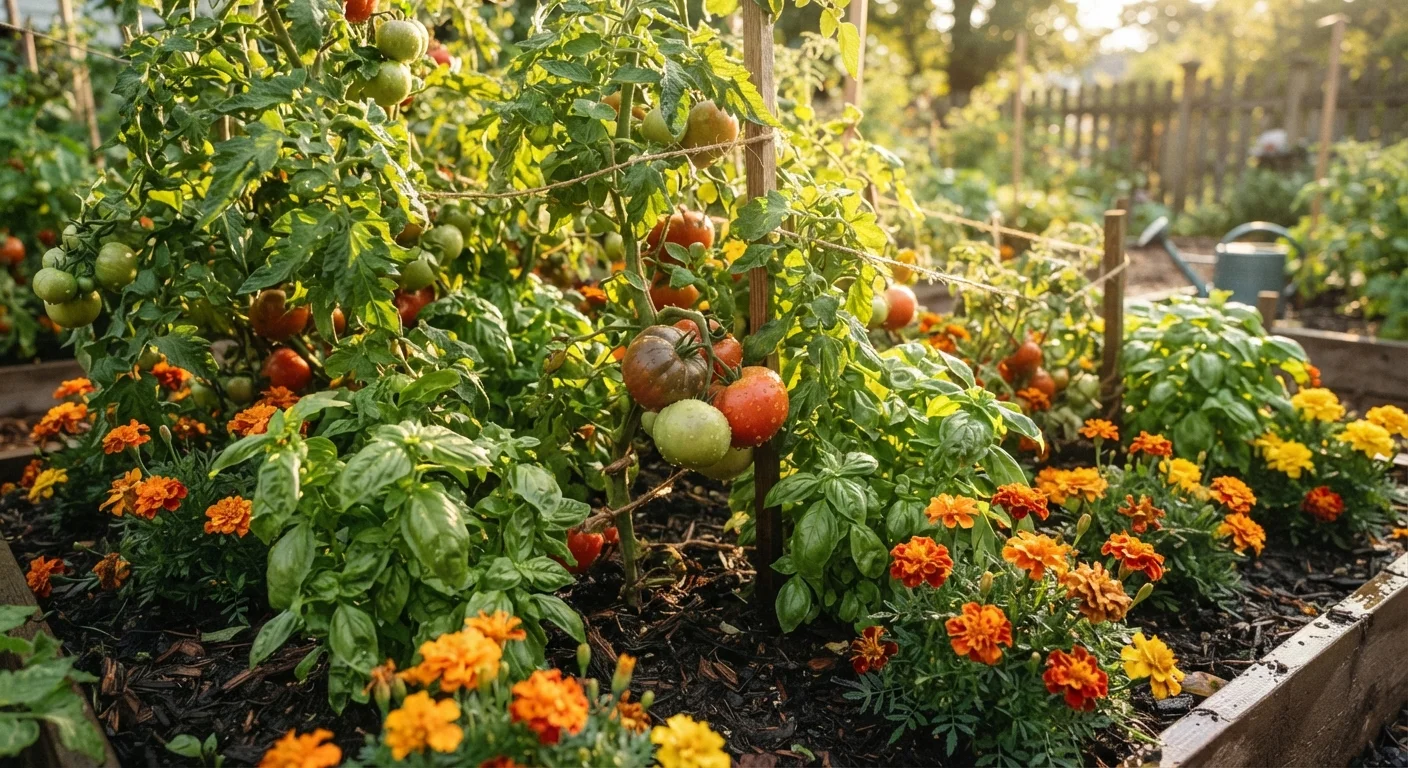
This is the pairing most gardeners have heard of, and it does have some practical basis — though the claims are sometimes overstated. Basil's volatile oils are thought to repel thrips and aphids, and the two plants have compatible water and sunlight needs, making them sensible neighbors in a bed.
Scientific evidence for direct growth enhancement is limited, but the pest-deterrence logic is plausible enough to act on. Practically speaking, basil also acts as a living mulch and marker, and growing it near tomatoes means you'll harvest both together for the kitchen — a benefit that needs no scientific backing.
Compatible growing needs make tomatoes and basil natural, low-maintenance neighbors.
Marigolds with Most Vegetables
French marigolds (Tagetes patula) are one of the better-studied companion plants. Research has shown that they produce a root exudate that suppresses soil nematodes — a real, documented effect, not a gardening myth. They also attract hoverflies and other predatory insects that feed on aphids.
Plant them as a border around vegetable beds or interplant them with tomatoes, peppers, and brassicas. One caveat: marigolds need full sun to perform well, so they won't offer much benefit tucked into a shady corner.
Marigolds' nematode suppression is one of the most well-documented effects in companion planting.
Nasturtiums as a Trap Crop
Nasturtiums are sometimes called a 'sacrificial plant' for good reason. Aphids are strongly attracted to them, which means planting nasturtiums near susceptible crops like beans and brassicas can draw pest pressure away from your harvest. You then manage the aphid-laden nasturtiums — by removing infested stems or spraying with water — rather than your vegetables.
This works best as a deliberate strategy, not an afterthought. Position nasturtiums at the edges of beds so they're easy to monitor and manage without disturbing the main crop.
Nasturtiums work best as a deliberate trap, not just a pretty addition to the bed.
Carrots and Onions (or Chives)
The theory is that carrot fly is deterred by the scent of onions, and onion fly by the scent of carrots — each masking the other from its primary pest. The evidence is mixed in formal trials, but interplanting does appear to reduce pest pressure in some conditions, and the two crops have non-competing root structures (deep tap root vs. shallow bulb).
Chives are an easy substitute if you don't want full-size onion plants. They also flower reliably, attracting beneficial insects to the bed.
Carrots and alliums share space efficiently with non-competing root structures.
Brassicas and Dill or Fennel — With One Warning
Dill attracts parasitic wasps that prey on caterpillars — including the cabbage white caterpillars that devastate brassicas. Planting dill nearby supports this natural predator population, making it a useful neighbor for cabbages, broccoli, and kale.
The important caveat: fennel is famously allelopathic, meaning it releases compounds that inhibit the growth of many neighboring plants. Keep fennel isolated in its own container or a separate corner of the garden rather than mixing it freely into beds. Dill does not share this problem to the same degree.
Fennel's allelopathic effects make it a better solo plant than a companion.
Legumes Before Heavy Feeders
Companion planting doesn't always mean growing plants simultaneously. A rotation-based approach — growing nitrogen-fixing legumes like peas or beans in a bed one season, then following with heavy feeders like corn, squash, or brassicas the next — puts biology to work across time rather than space.
When legume roots decompose, they release the nitrogen they've fixed into the soil, directly benefiting the next crop. This is a low-effort, high-return strategy that pairs well with good compost practice and doesn't require you to crowd your beds with multiple species at once.
Rotating legumes before heavy feeders is companion planting that works across seasons, not just within them.
Building a Smarter Garden Layout
Companion planting isn't a standalone fix. It works best when your soil is healthy, your beds are well-structured, and you're paying attention to light and water needs. If you're weighing whether a raised bed or in-ground plot suits your space, our guide to raised beds vs. in-ground planting covers the practical trade-offs in detail.
Good compost also amplifies the benefits of companion planting by giving plants the nutrient base they need to thrive — a topic explored in our piece on composting at home. Finally, if your goal includes attracting pollinators, several of the pairings below — especially those involving flowering herbs and nasturtiums — directly support that aim. See our guide to attracting pollinators to urban gardens for planting strategies that layer well with companion planting.
Start Small and Observe
Rather than overhauling your entire garden layout at once, trial one or two companion combinations each season alongside control rows where you grow the same crops alone. Even informal observation — fewer pests here, better yields there — builds useful knowledge over time. Garden journals don't need to be elaborate; a notes app with dates and photos is enough.
The combinations that consistently disappoint gardeners are usually those built entirely on anecdote. Keep a simple garden journal noting what you planted together, what pests you observed, and how yields compared season to season. That personal data, accumulated over a few years, is more useful than any single study or tradition.