

Key Takeaways
Why Water Kills: The Science Behind the Damage
Most gardeners know that plants need water to survive, but water in excess does something counterintuitive: it suffocates roots. Healthy soil contains air pockets that roots rely on for oxygen. When those pockets are flooded and stay flooded, roots begin to die from lack of oxygen — a process called anaerobic stress. Weakened roots are then easily colonized by fungal pathogens responsible for root rot.
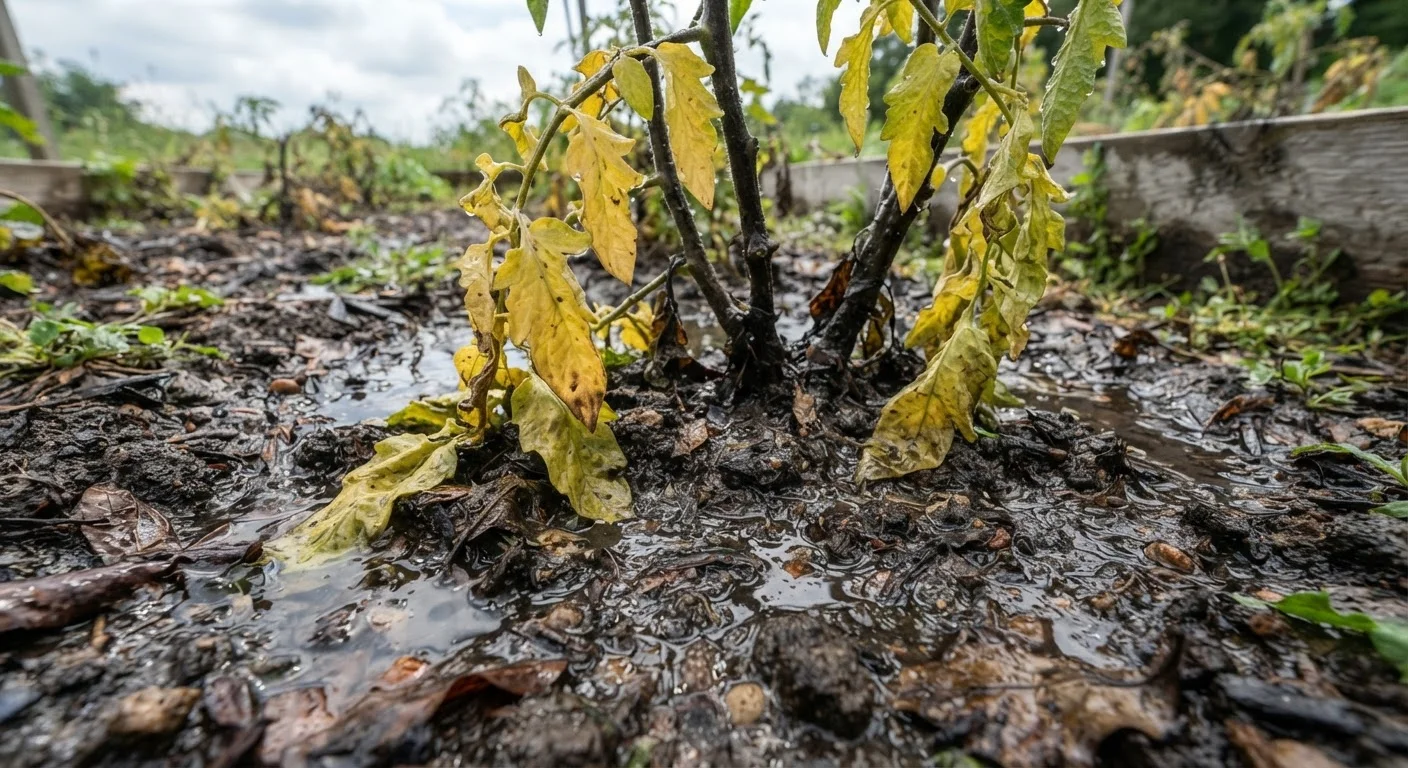
The cruel irony is that overwatered plants often look thirsty. Damaged roots can no longer pull moisture and nutrients up through the plant effectively, so leaves yellow, wilt, and drop — symptoms that look identical to drought stress. This visual confusion leads many gardeners to add more water, accelerating the decline.
Root Rot Can Kill Plants in Days
Once root rot sets in — caused by the fungal pathogens that thrive in waterlogged soil — recovery is difficult and sometimes impossible. Affected roots turn brown and mushy, cutting off the plant's ability to absorb water and nutrients. If you suspect root rot, act quickly: remove the plant from soggy soil, trim affected roots, and repot or replant in well-draining conditions. Prevention is far easier than treatment.
Understanding this mechanism changes how you approach the whole garden. Water is not inherently beneficial — it is only beneficial in the right amount, at the right time, in soil that can drain it properly.
Common Overwatering Mistakes and How to Avoid Them
Most overwatering problems trace back to a handful of predictable habits. Recognizing these patterns is the first step toward correcting them.
Watering on a fixed schedule regardless of actual soil moisture.
Why it happens: Gardeners often set automatic timers or water daily out of habit, assuming plants always need the same amount. This ignores rainfall, temperature changes, and the plant's actual uptake rate.
Treating wilting as a definitive sign that a plant needs water.
Why it happens: Wilting looks like drought stress, so the instinctive response is to add water. But wilting can also result from waterlogged roots that can no longer absorb oxygen, creating the same drooping appearance.
Planting in containers or beds with insufficient drainage.
Why it happens: Many gardeners focus entirely on watering frequency and overlook the role of drainage. Containers without drainage holes and compacted clay soils trap water around roots even when watering is moderate.
Applying the same watering routine to every plant in the garden.
Why it happens: It is easy to treat the whole garden as a single unit, but different plants have very different moisture needs. Succulents and lavender can languish — and die — under the same watering regime that suits tomatoes or hydrangeas.
Ignoring the visible symptoms of overwatering until the plant is severely stressed.
Why it happens: Early overwatering symptoms — slight yellowing, soft lower leaves, faint mold at the soil surface — are easy to overlook or misattribute to pests or nutrient deficiency.
If you are considering a more systematic solution, a well-designed irrigation setup can actually help prevent overwatering by delivering precise amounts of water directly to roots. Our guide to setting up a garden irrigation system walks through drip lines and soaker hoses that give you greater control than hand watering alone.
Building Better Watering Habits
The goal is not to water less — it is to water smarter. A few practical habits make a significant difference.
~90%
Houseplant deaths attributed to overwatering
Horticulture educators commonly cite overwatering as the leading cause of houseplant and container plant death, outpacing underwatering by a wide margin.
2 inches
Soil depth to check before watering
University cooperative extension programs generally recommend checking soil moisture at a 2-inch depth as a reliable guide for most vegetable and ornamental garden plants.
- Water deeply and infrequently. Deep watering encourages roots to grow downward where moisture persists longer, rather than staying near the surface where soil dries and floods repeatedly.
- Water in the morning. Morning watering allows foliage to dry before evening, reducing the risk of fungal disease — one of overwatering's most damaging secondary effects.
- Mulch your beds. A 2–3 inch layer of organic mulch slows surface evaporation, which means the soil holds moisture longer without requiring frequent rewatering.
- Track rainfall. A simple rain gauge costs very little and removes the guesswork of whether natural rainfall has already met your plants' needs for the week.
Getting the soil structure right also matters enormously. Poorly structured soil compounds every watering decision you make. Our piece on garden soil additives separates evidence-based soil improvements from marketing claims, helping you make smarter amendments.