

Key Takeaways
Why National Parks Deserve a Place on Your Route
Most road trippers plan their routes around highways, fuel stops, and overnight towns — and that's sensible. But some of the most memorable moments on an American road trip come from the parks that sit just off those corridors, close enough to pull off without losing a whole day, yet dramatic enough to reframe the entire journey.
The US National Park System protects more than 400 sites across the country, and a surprising number of them hug the same corridors millions of drivers use every year. The trick is knowing which ones are genuinely worth the detour and roughly what you're getting into before you exit the highway. If you're still shaping your overall plan, our guide on building an itinerary that won't burn you out is worth reading first — spacing your stops well makes detours feel like gifts rather than obligations.
The parks below are organised by the major routes they sit nearest to. Each one has something distinct to offer, whether you have two hours or two days.
Arches National Park — Near I-70 in Eastern Utah
If you're crossing Utah on I-70, Moab and Arches National Park sit roughly five miles north of the highway via US-191 — a detour that takes under 15 minutes one way. Inside, more than 2,000 natural sandstone arches create one of the most visually arresting landscapes in North America.
The park's main road is paved and drivable in about 90 minutes without stops, making it realistic even on a tight schedule. Delicate Arch — the most photographed — requires a 3-mile round-trip hike on moderate terrain. Spring and fall offer the most comfortable temperatures; summer midday heat in the canyon country can be intense, so early morning visits are strongly advisable.
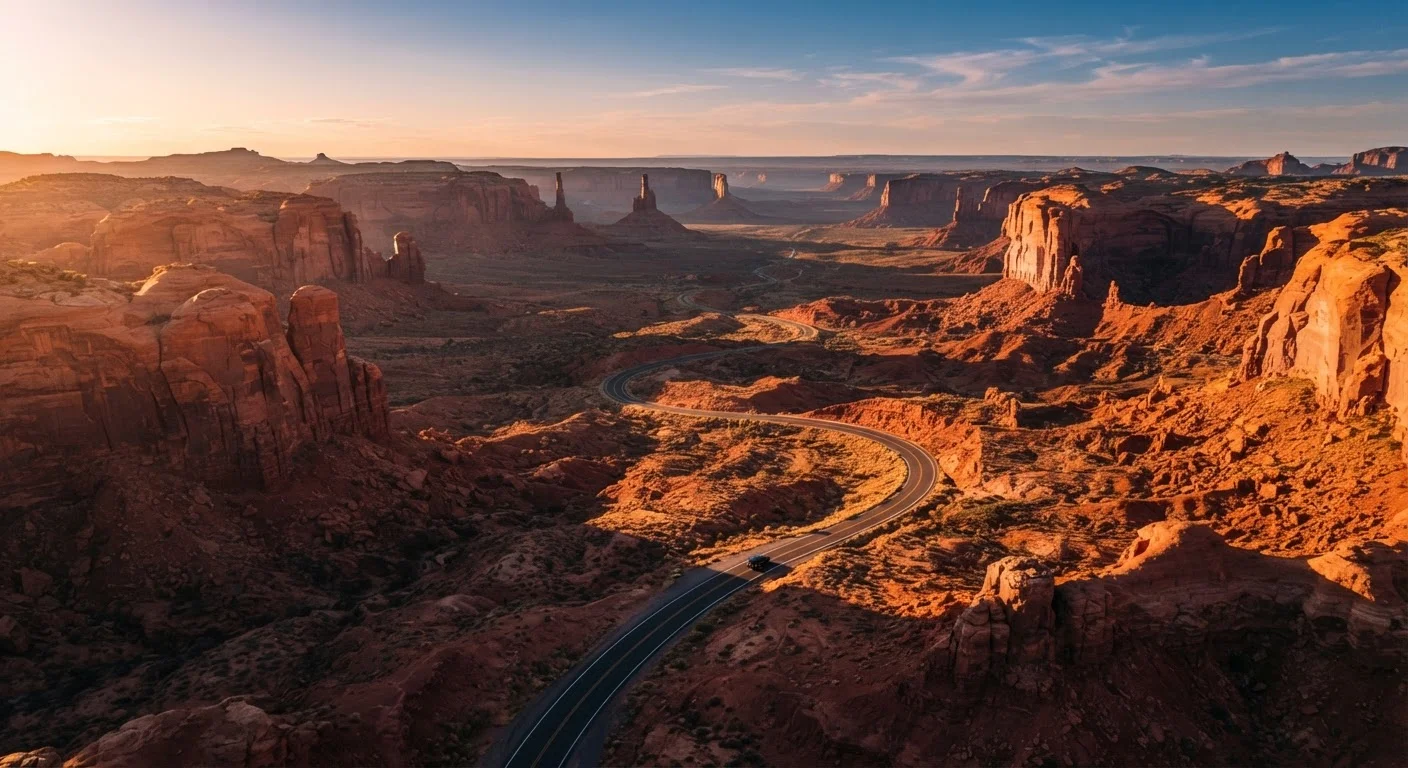
More than 2,000 natural sandstone arches make Arches one of the most visually arresting parks in North America.
Shenandoah National Park — Along I-81 or I-66 in Virginia
Skyline Drive — Shenandoah's 105-mile spine road — runs along the crest of the Blue Ridge Mountains and connects to both I-66 in the north and I-64 in the south, making it a natural fit for East Coast road trips between Washington DC and the Carolinas.
Even driving just the northern section gives you sweeping valley views, access to short ridge-top trails, and a sense of Appalachian scale that's hard to find close to the urban corridor. The park is open year-round, though sections of Skyline Drive may close during winter weather events. Fall foliage season — generally mid-October — draws significant crowds, so expect slower traffic and limited parking at overlooks.
Shenandoah's Skyline Drive connects two major interstates, making it a natural East Coast road trip route in itself.
Theodore Roosevelt National Park — Off I-94 in North Dakota
This one surprises people. Theodore Roosevelt National Park sits directly adjacent to I-94 in the North Dakota Badlands, with the South Unit entrance at Medora just a couple of minutes off the highway. It's one of the most undervisited parks relative to its visual drama — eroded buttes, prairie dog towns, and free-roaming bison herds characterise the landscape.
The South Unit's loop road is roughly 36 miles and doable in two to three hours with stops. The North Unit, about 70 miles away, is quieter still and rewards those with more time. For anyone driving cross-country on I-94, this is among the easiest national park additions imaginable — and among the most rewarding for the effort involved.
Theodore Roosevelt's South Unit entrance is minutes from I-94, making it one of the easiest cross-country park detours.
Great Smoky Mountains National Park — Off I-40 at the Tennessee–North Carolina Border
Great Smoky Mountains is the most visited national park in the United States, and its accessibility is a big reason why. The park straddles the Tennessee–North Carolina line with entrances near Gatlinburg, TN and Cherokee, NC — both reachable from I-40 in well under an hour.
Unlike many parks, Great Smoky Mountains charges no entrance fee, which removes one common barrier. Cades Cove Loop Road offers wildlife viewing (deer, black bear, and wild turkey are regularly seen), and the Newfound Gap Road crosses the mountain crest with overlooks into both states. The flip side of accessibility is crowds — summer weekends and October foliage season can mean significant congestion. Timed-entry reservations have been required during peak periods in recent years; check current NPS requirements well ahead of your visit.
Great Smoky Mountains charges no entrance fee and sits within easy reach of I-40, making it the most visited US national park.
Petrified Forest National Park — Along Historic Route 66 / I-40 in Arizona
Route 66 enthusiasts and I-40 drivers in northern Arizona pass directly alongside Petrified Forest National Park — and the park itself has two highway access points, making it possible to enter from one side and exit the other without backtracking. That's genuinely rare and makes it one of the most road-trip-friendly parks in the system.
The landscape combines ancient petrified wood (trees that turned to colourful quartz over 200 million years) with painted desert terrain that shifts from violet to red to cream across the miles. The main park road is about 28 miles. If you're also tracing the Route 66 corridor, our piece on what Route 66 actually delivers provides useful grounding before you go.
Petrified Forest has two highway access points on I-40, letting you drive through without backtracking — a genuine road-trip rarity.
Mississippi National River and Recreation Area — Along the Great River Road
Not every national park unit is a remote wilderness. The Mississippi National River and Recreation Area stretches through the Twin Cities metro area in Minnesota, protecting a 72-mile section of the Mississippi River corridor that's accessible, urban-friendly, and genuinely educational about the river's ecology and history.
For anyone following the Great River Road — one of America's longest designated scenic byways — this unit provides interpretive context for the river you're tracing. Visitor centers, riverside trails, and historic sites sit along or near the route. If the Great River Road interests you, our full guide on following the Mississippi from source to Gulf covers the full corridor in detail.
This urban national river unit offers accessible riverside education perfect for Great River Road travelers passing through Minnesota.
A Few Things to Know Before You Exit
National parks aren't all the same experience. Some have well-paved loop roads you can drive in under an hour; others require hiking to reach anything meaningful. Entrance fees, reservation systems for timed-entry permits, and seasonal road closures can all affect your visit — conditions change, so always verify the current status through the National Park Service website (nps.gov) before you go.
America the Beautiful Pass — Worth Considering
If you plan to visit three or more fee-charging national parks in a 12-month period, the America the Beautiful Interagency Annual Pass covers entrance fees at federal recreation sites. It's available at park entrance stations and through the USGS store. Some groups — including US military members and fourth-grade students through the Every Kid Outdoors program — may qualify for free passes. Verify current eligibility and pricing at store.usgs.gov before your trip.
If you're road tripping solo, bear in mind that some parks — especially remote desert and canyon parks — carry additional planning considerations around cell coverage and emergency preparedness. Our piece on solo road trips across the US covers exactly that. And if a park sits along a designated scenic byway, understanding what that designation means can help you get more from the surrounding drive.
Finally, a detour works best when your overnight plan is flexible. Knowing how to choose overnight stops that feel like part of the journey — rather than just a place to sleep — means you can base yourself near a park and squeeze in an early-morning visit before hitting the road again.