

Key Takeaways
Complete schedule freedom — stop, linger, or push on
You set the pace entirely. If a town earns more time or a vista demands you pull over, there's no one to consult and no compromise needed.
Deeper presence in the landscape
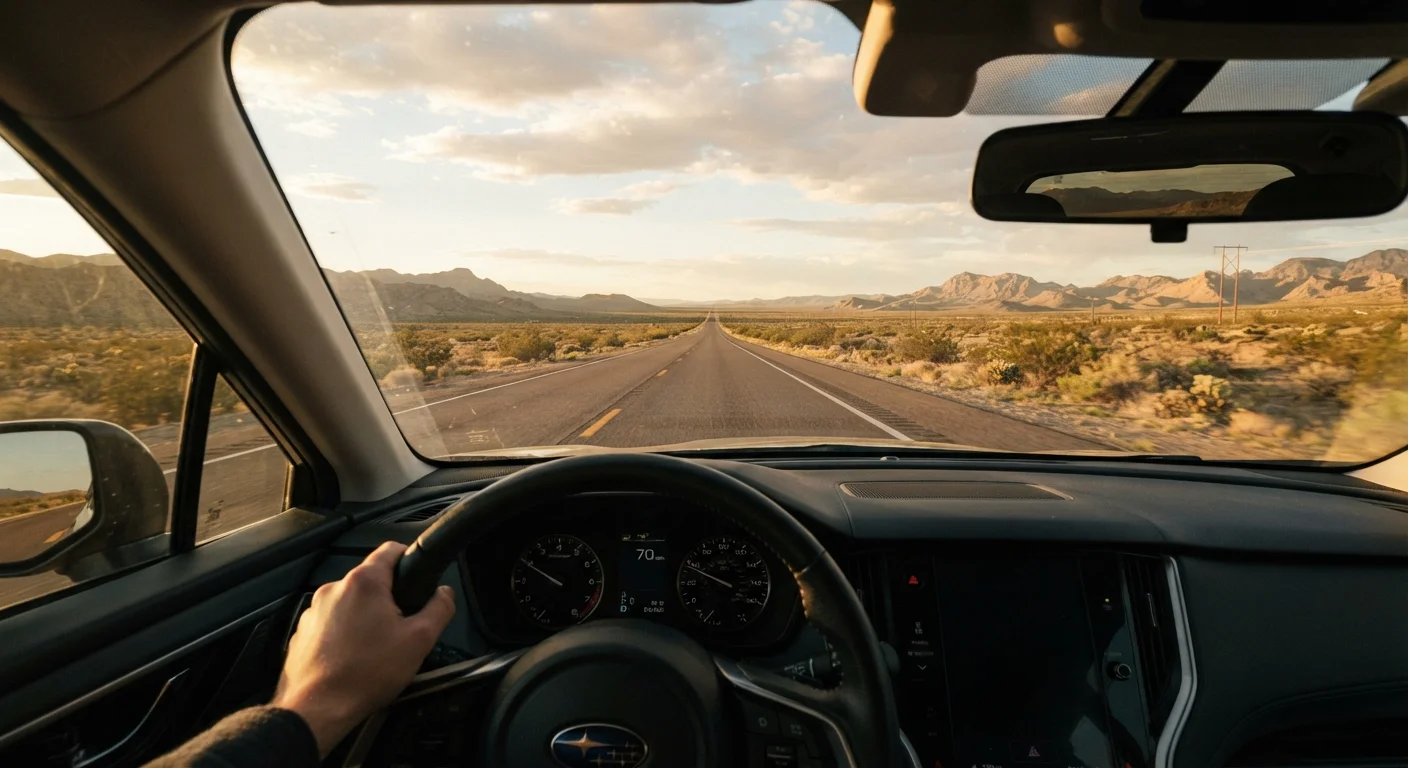
Without conversation filling every mile, many solo drivers report noticing more — the light changing over mesas, the smell of rain on hot asphalt, the texture of different regions.
Genuine self-reliance builds confidence
Handling unexpected detours, navigation hiccups, and minor car issues alone is demanding — and consistently reported by solo travelers as one of the most rewarding outcomes of the trip.
Easier to meet locals and other travelers
Solo travelers are more approachable and more likely to strike up conversations at diners, campgrounds, and roadside stops — leading to the kind of spontaneous connections that define memorable trips.
No compromise on music, podcasts, or silence
The audio environment of a long drive is more personal than most people realize. Having total control over it — including choosing silence — is a quiet pleasure of solo travel.
No driver rotation — fatigue risk is higher
When you're the only driver, highway fatigue accumulates without the relief valve of handing off the wheel. This requires more deliberate rest planning and honest mileage limits per day.
Full accommodation cost falls on one person
Hotels and vacation rentals are almost universally priced for two, meaning solo travelers often pay a premium per person that group travelers absorb collectively.
Safety responsibility is entirely yours
A second person in the car provides both a practical safety net and a social deterrent in uncertain situations. Solo travelers need to compensate with stronger pre-trip planning and consistent check-in habits.
Solitude can tip into loneliness on long stretches
Multi-day solo drives through remote corridors can feel isolating, particularly on days when weather or traffic forces you off your planned route. This is worth knowing in advance, not discovering mid-trip.
No backup for navigation or decision-making
Every judgment call — route changes, mechanical concerns, unfamiliar areas — falls to you alone, which raises the cognitive load of driving, especially in unfamiliar regions.
Our Verdict
Solo road tripping across the US is genuinely transformative — but it's also a different undertaking than group travel in ways that matter. The freedom is real, the self-reliance is demanding, and the rewards are deeply personal. Going in with clear safety habits and realistic expectations makes all the difference.
Ideal for independent-minded travelers who want total flexibility, are comfortable with solitude, and are willing to invest in thoughtful pre-trip preparation.
How the Experience Actually Shifts
Driving solo across the United States isn't just a logistical variation on a group road trip — it's a fundamentally different kind of journey. When there's no co-pilot to navigate, no passenger to swap driving duties with, and no one to help decide whether to push on to the next town or pull over at that roadside diner, every call is yours. That autonomy is both the appeal and the challenge.
Solo travelers often report deeper engagement with the landscape and their stops. Without social negotiation — "do we really need to stop again?" — you can linger exactly as long as a place deserves. At the same time, the mental load is higher. Route decisions, fuel tracking, weather awareness, accommodation check-ins — you're managing all of it, continuously. For some people that's energizing; for others, it's the part that quietly exhausts them by day three.
If you haven't driven extended highway miles before, it's worth reading up on fatigue, lane management, and gap judgment before heading out. Our guide to first-time highway driving covers the fundamentals that even experienced local drivers can underestimate on long-distance stretches.
The Real Advantages of Going Alone
Solo road trips have a way of delivering experiences that group dynamics simply can't produce. Here's what genuinely changes in your favor:
Complete schedule freedom — stop, linger, or push on
You set the pace entirely. If a town earns more time or a vista demands you pull over, there's no one to consult and no compromise needed.
Deeper presence in the landscape
Without conversation filling every mile, many solo drivers report noticing more — the light changing over mesas, the smell of rain on hot asphalt, the texture of different regions.
Genuine self-reliance builds confidence
Handling unexpected detours, navigation hiccups, and minor car issues alone is demanding — and consistently reported by solo travelers as one of the most rewarding outcomes of the trip.
Easier to meet locals and other travelers
Solo travelers are more approachable and more likely to strike up conversations at diners, campgrounds, and roadside stops — leading to the kind of spontaneous connections that define memorable trips.
No compromise on music, podcasts, or silence
The audio environment of a long drive is more personal than most people realize. Having total control over it — including choosing silence — is a quiet pleasure of solo travel.
Many solo travelers find that the detour becomes the destination. With no one else's schedule to consider, you can spontaneously turn off toward a state park, double back for a better viewpoint, or spend three hours at a small-town museum that wasn't in the plan. That flexibility is hard to put a price on. For route inspiration, the national parks worth detouring for guide is a useful starting point for building unstructured flexibility into your itinerary.
The Honest Disadvantages
Solo driving is not without its real trade-offs. Going in clear-eyed about these makes the trip safer and more enjoyable:
No driver rotation — fatigue risk is higher
When you're the only driver, highway fatigue accumulates without the relief valve of handing off the wheel. This requires more deliberate rest planning and honest mileage limits per day.
Full accommodation cost falls on one person
Hotels and vacation rentals are almost universally priced for two, meaning solo travelers often pay a premium per person that group travelers absorb collectively.
Safety responsibility is entirely yours
A second person in the car provides both a practical safety net and a social deterrent in uncertain situations. Solo travelers need to compensate with stronger pre-trip planning and consistent check-in habits.
Solitude can tip into loneliness on long stretches
Multi-day solo drives through remote corridors can feel isolating, particularly on days when weather or traffic forces you off your planned route. This is worth knowing in advance, not discovering mid-trip.
No backup for navigation or decision-making
Every judgment call — route changes, mechanical concerns, unfamiliar areas — falls to you alone, which raises the cognitive load of driving, especially in unfamiliar regions.
Solo Doesn't Mean Unconnected
Modern solo road trippers have more tools for staying connected than any previous generation — offline maps, roadside assistance apps, location-sharing features, and satellite communicators for truly remote areas. Being alone doesn't mean being unreachable. Building a simple daily check-in routine with someone at home is one of the most effective and low-effort safety habits you can adopt.
Budget is one of the areas where solo travel most visibly differs from group travel. Fuel, tolls, and snacks cost the same — but you're absorbing the full cost of accommodation, which is almost always priced for two. Some solo travelers offset this through camping, hostels, or short-term rental options. For a thorough look at solo trip budgeting and logistics, solo travel planning from start to finish is worth reading before you book anything.
Planning Differently for a Solo Trip
The pre-trip checklist for a solo driver looks different than for a group. Safety preparation rises to the top. At minimum, share your planned route and overnight stops with someone at home, establish a regular check-in rhythm, and make sure your phone is charged and accessible without requiring you to look away from the road.
Daily mileage targets deserve honest scrutiny. Groups can rotate drivers; you can't. Most experienced solo road-trippers recommend keeping driving days to around 300–350 miles when possible, building in genuine rest stops rather than treating them as lost time. Long stretches on monotonous interstates are where fatigue sneaks up, and the risk is higher when you're alone.
300–350 mi
Recommended solo driving day limit
Driving safety organizations generally suggest solo drivers keep daily mileage moderate to manage fatigue risk effectively.
~1 in 4
Americans who have taken a solo road trip
Survey data from travel research groups suggest solo road trips are increasingly common among US adults of all ages.
Route choice also matters more when you're solo. Some corridors — dense urban interstates, high-altitude mountain passes in shoulder season, remote desert stretches with long gaps between services — carry considerations that are easier to manage with a second person in the car. If you're weighing routes, the East Coast vs. West Coast road trip comparison lays out the practical rhythms of each corridor, including service frequency and driving intensity. And if this is your first US road trip of any kind, planning your first US road trip is the clearest starting point we know.