

Key Takeaways
Option A
East Coast Road Trip
The history-rich, city-dense corridor of culture and change.
Best for: Travelers who want a mix of walkable cities, colonial history, and coastal scenery packed into a relatively compact route.
Option B
West Coast Road Trip
The open-road, nature-first journey of dramatic scale.
Best for: Adventurers drawn to sweeping landscapes, national parks, and long stretches of uncrowded highway with ocean views.
If you love history, architecture, and walkable cities
East Coast Road Trip
The I-95 corridor connects Boston, New York, Philadelphia, and Washington D.C. — a cultural itinerary that's hard to match mile for mile.
If sweeping natural landscapes and ocean cliffs are your priority
West Coast Road Trip
The Pacific Coast Highway through California delivers iconic coastal vistas, redwood forests, and dramatic elevation changes unlike anything on the East Coast.
If you're a first-time road tripper wanting urban safety nets
East Coast Road Trip
Shorter gaps between cities mean easier access to services, mechanics, and accommodations — helpful when you're still finding your road trip rhythm.
If solitude, national parks, and big sky views energize you
West Coast Road Trip
From Redwood National Park to Big Sur, the West Coast route regularly delivers stretches where the Pacific is your only companion for miles.
If you want flexible pacing without locking in a tight schedule
West Coast Road Trip
The West Coast's longer rural stretches lend themselves to spontaneous stops and flexible days — though always verify park reservations in advance.
The Lay of the Land: Two Very Different Rhythms
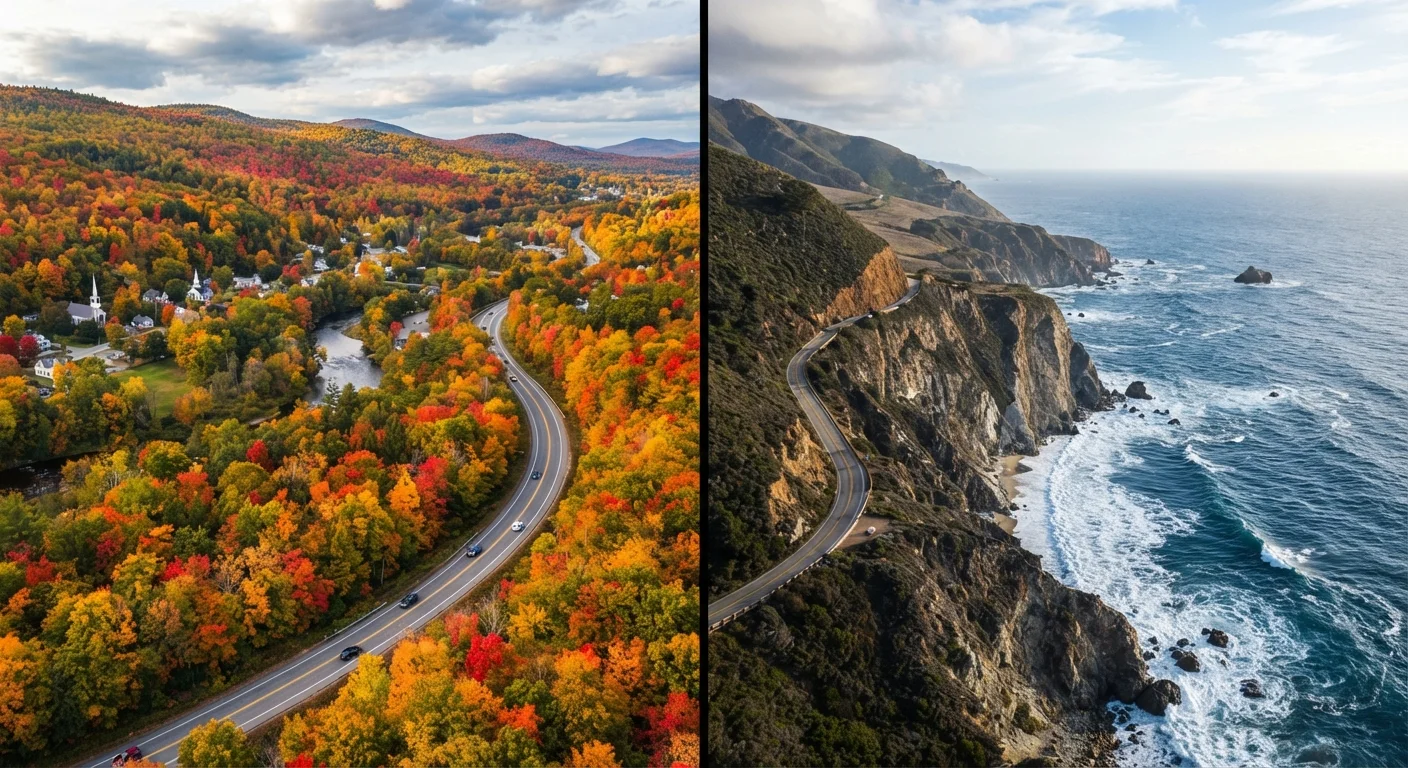
America's two great road trip corridors don't just look different — they feel different behind the wheel. The East Coast is dense, layered, and historically saturated. Drive the classic stretch from Boston to Miami and you're threading through one of the most populated regions on the planet, with a major city appearing every couple of hours. The West Coast, particularly the run from Seattle to San Diego along coastal highways, opens up into something more elemental: salt air, sea cliffs, redwoods, and long, contemplative silences between towns.
Neither is better outright. They're structured around completely different travel philosophies. The East rewards curiosity about people, politics, and the past. The West rewards patience, presence, and a tolerance for the genuinely vast.
| Criterion | East Coast Road Trip | West Coast Road Trip |
|---|---|---|
| Primary appeal | History, cities, culture | Nature, scenery, open road |
| Iconic route | I-95 + US-1 corridor | Pacific Coast Highway (CA-1) |
| Distance between major stops | 1–3 hours typically | 3–6+ hours in rural sections |
| Traffic congestion risk | High around major metros | Moderate; rural stretches clear |
| Service availability | Very frequent | Sparse in remote areas |
| Peak travel season | Summer + fall foliage | Summer (coastal California) |
| Best for first-time road trippers | Yes — urban safety net | With some preparation, yes |
If you're still weighing whether a road trip makes sense for your trip at all, the road trip vs. flying comparison breaks down the honest tradeoffs between driving and flying across different traveler types.
Driving Conditions, Distances, and Road Character
On the East Coast, expect I-95 to be your backbone — a utilitarian interstate that moves efficiently but rarely inspires. The real road trip character lives on the detours: US-1 hugging the Maine coast, the Blue Ridge Parkway cutting through Virginia and North Carolina, or A1A threading Florida's barrier islands. Traffic congestion around New York, D.C., and Boston is a genuine planning factor, not a minor inconvenience.
The West Coast offers more iconic driving in its base routes. The Pacific Coast Highway (California State Route 1) is one of the most photographed roads in the country — and for good reason. A mile-by-mile breakdown of the PCH reveals that the drive varies considerably in character, with some sections requiring careful navigation on narrow, cliffside roads. Gas stations and cell coverage can be sparse in rural Oregon and Northern California — always fill up when you can.
~1,300 mi
Boston to Miami driving distance
The classic East Coast corridor spans roughly 1,300 miles — passable in under a week if you push, but far richer over two to three weeks.
~1,650 mi
Seattle to San Diego coastal driving distance
The full West Coast run covers approximately 1,650 miles, with significant variation depending on which inland or coastal highways you choose.
63
US National Parks nationwide
The West Coast corridor alone passes near or through several nationally recognized parks, according to National Park Service designations.
Both corridors have designated scenic byways that reward drivers willing to go off the interstate. Understanding what a scenic byway designation actually means can help you identify which detours are worth the extra time.
Cultural Stops, Food, and the Human Element
The East Coast's density is its greatest cultural asset. Within a single week, you can walk the Freedom Trail in Boston, stand at the Lincoln Memorial, eat a cheesesteak in Philadelphia, and watch the sun rise over Cape Hatteras. Roadside diners, crab shacks, and Jewish delis sit within a few miles of world-class museums. The cultural texture is extraordinarily compressed.
The West Coast trades compression for breadth. Food culture in Portland, San Francisco, and Los Angeles is globally celebrated — farm-to-table, Pacific Rim fusion, and street food scenes that rival any city in the world. Between these anchors, though, the cultural stops thin out. Small coastal towns like Bodega Bay or Cannon Beach charm with their fishing heritage and local art galleries, but the stretches between them are where the West Coast really lives: in the landscape itself.
For a road trip corridor that splits the difference — rich storytelling, coastal scenery, and deep regional food culture — the Gulf Coast route from New Orleans to Florida offers a compelling third option that many travelers overlook.
Planning Your Trip: Timing, Pacing, and First-Timer Advice
Both corridors have peak seasons that significantly affect accommodation availability and crowd levels. The East Coast peaks in summer and fall foliage season (late September through October in New England). The West Coast — particularly coastal California — sees summer congestion, while spring and early fall offer milder crowds and temperatures. Always verify current national park reservation requirements before you go, as timed-entry permits have become common at high-traffic sites.
Pacing differs meaningfully too. East Coast city stops naturally anchor your schedule — it's easy to plan three to four nights per city with day trips in between. The West Coast rewards a slightly looser approach, letting the landscape set the tempo. Build in unscheduled days for spontaneous coastal hikes or roadside discoveries.
Whether you're heading East or West, the fundamentals of preparation stay consistent. The guide to planning your first US road trip covers route selection, packing, and budgeting without overcomplicating the process — an ideal starting point before you commit to either corridor.
Travel conditions, road closures, entry requirements, and park reservation policies change regularly. Always verify current information with official state tourism boards and the National Park Service before traveling.