

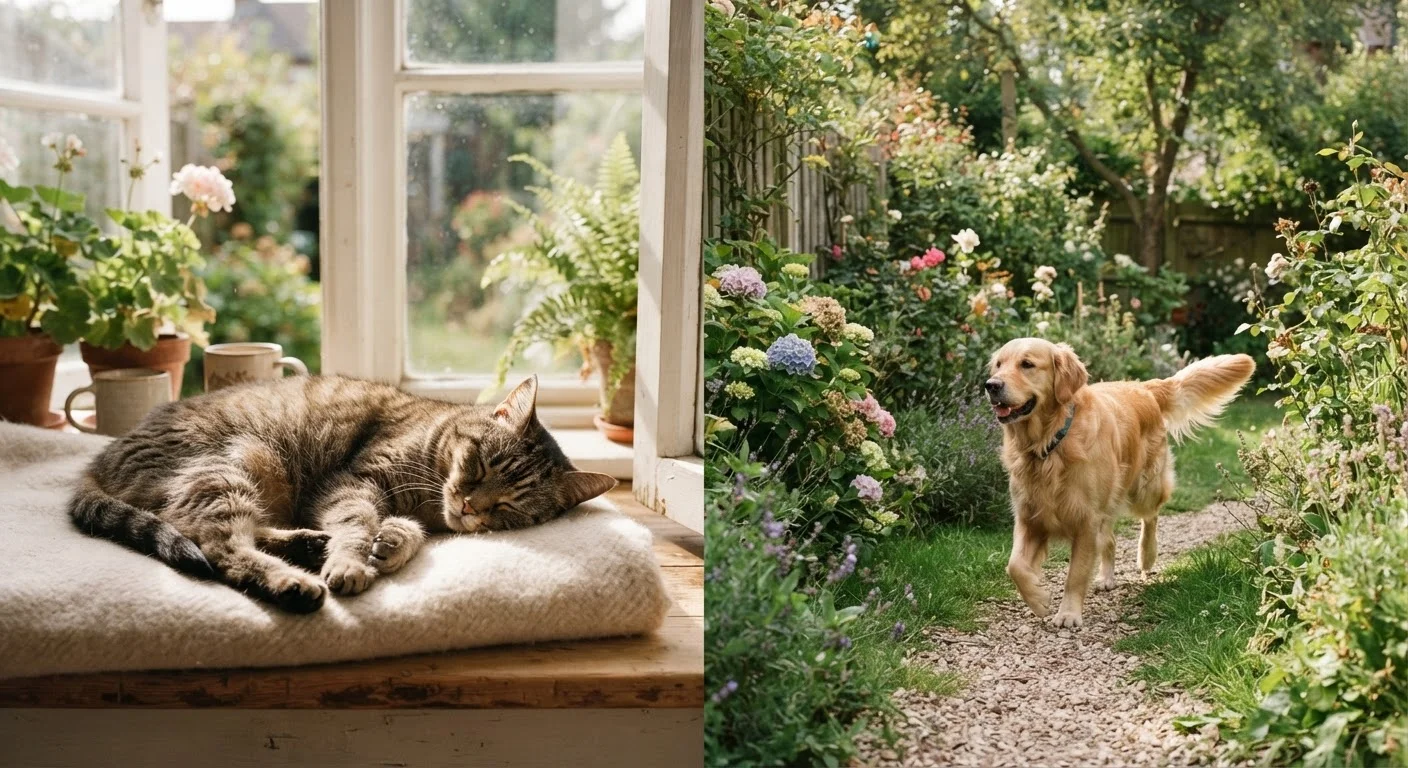
Key Takeaways
Option A
Indoor Lifestyle
The controlled, lower-risk environment.
Best for: Pets in urban settings, those with health vulnerabilities, or animals whose species and temperament favour predictable, enriched indoor environments.
Option B
Outdoor Lifestyle
The stimulating, naturalistic alternative.
Best for: Pets with high exercise demands, working animals, or those kept in rural or suburban settings with secure, managed outdoor access.
If your pet lives in a dense urban area with heavy traffic
Indoor Lifestyle
Urban outdoor environments expose pets to vehicle hazards, toxins, and disease transmission that are significantly harder to manage than in rural settings.
If you have a high-energy working-breed dog with space to roam safely
Outdoor Lifestyle
Physical exercise and environmental exploration are critical for working breeds; managed outdoor access supports both physical health and behavioural balance.
If your pet is elderly, immunocompromised, or recovering from illness
Indoor Lifestyle
Controlled indoor conditions reduce exposure to pathogens, temperature extremes, and physical stressors that can complicate recovery or worsen chronic conditions.
If you want to balance enrichment with risk reduction
Indoor Lifestyle
A well-enriched indoor environment with supervised outdoor sessions offers the lowest overall risk while still addressing stimulation needs.
If you keep small animals such as rabbits or guinea pigs
Indoor Lifestyle
Small prey animals face acute predation risks outdoors; secure indoor housing with supervised outdoor play periods is the broadly recommended approach.
Why the Indoor vs. Outdoor Question Matters
Where a pet spends the majority of its time shapes nearly every dimension of its health — from parasite exposure and injury risk to mental stimulation and social development. This isn't a question with a single correct answer; it depends on species, individual temperament, local environment, and the owner's realistic capacity to manage each lifestyle's demands.
For cats, the debate is particularly well-documented. Indoor vs. outdoor cats present meaningfully different risk profiles, and veterinarians increasingly discuss both sides with owners rather than issuing blanket recommendations. Dogs and small animals introduce their own distinct considerations. Understanding the core tradeoffs equips owners to make informed, context-specific decisions.
| Criterion | Indoor Lifestyle | Outdoor Lifestyle |
|---|---|---|
| Infectious disease risk | Lower — limited contact with carriers | Higher — exposure to wildlife and strays |
| Injury and trauma risk | Low — controlled environment | Higher — traffic, predators, fights |
| Parasite exposure | Minimal — rare tick or flea contact | Frequent — regular preventive treatment needed |
| Physical activity level | Lower — requires intentional exercise | Higher — natural movement throughout day |
| Obesity risk | Higher without managed diet and play | Lower in active outdoor animals |
| Behavioural stimulation | Requires deliberate enrichment | Naturally varied sensory environment |
| Owner monitoring ease | High — pet remains visible | Lower — outdoor time harder to supervise |
| Lifespan (cats, estimated) | 12–18 years on average | Often shorter due to cumulative hazards |
Health and Safety: The Core Tradeoffs
Indoor environments limit exposure to several well-established hazards: infectious diseases spread by wildlife or other free-roaming animals, external parasites such as ticks and fleas, vehicular trauma, predation, and ingestion of pesticides or toxic plants. These are not trivial risks — feline immunodeficiency virus (FIV) and feline leukemia virus (FeLV), for example, spread primarily through contact with infected outdoor cats.
However, indoor living carries its own health liabilities. Reduced physical activity is associated with higher rates of obesity, which in turn contributes to diabetes, joint disease, and reduced lifespan. Pet obesity is widely underdiagnosed, and sedentary indoor routines are a contributing factor owners often underestimate. Outdoor pets, particularly dogs in managed settings, tend to maintain healthier body weights through natural movement.
Preventive care requirements also shift with lifestyle. Dogs and cats have different wellness schedules, but outdoor animals generally require more frequent parasite screening and a broader vaccination profile than their indoor counterparts.
10–15 yrs
Average indoor cat lifespan
Indoor cats typically live significantly longer than outdoor cats, according to general estimates cited by the American Veterinary Medical Association and feline welfare organisations.
~60%
US pet cats reported as overweight
Surveys by the Association for Pet Obesity Prevention have consistently found that a majority of domestic cats in the US are overweight or obese, with indoor sedentary lifestyles as a noted contributing factor.
2–5 yrs
Estimated outdoor-only cat lifespan reduction
Veterinary and animal welfare sources estimate that unrestricted outdoor access can reduce a cat's average lifespan by several years, primarily due to trauma, disease, and predation.
Behavioural Wellbeing and Enrichment Needs
The mental and emotional wellbeing of pets is increasingly recognized as a serious welfare concern. Boredom, frustration, and under-stimulation can manifest as destructive behaviour, excessive vocalisation, or repetitive movements — signs that an animal's environmental needs aren't being met.
Outdoor access provides unprompted novelty: varied scents, sounds, textures, and opportunities for species-typical behaviour such as foraging, hunting, or patrolling territory. These inputs are difficult to fully replicate indoors. That said, they are not impossible to approximate. Deliberate indoor enrichment — puzzle feeders, climbing structures, scent work, and scheduled play — meaningfully reduces boredom-related stress and supports cognitive health across species.
Individual temperament matters considerably. Some animals adapt readily to indoor life; others show persistent signs of frustration regardless of enrichment efforts. Owners should treat behavioural signals as useful data rather than inconveniences, and consult a veterinarian or certified animal behaviourist when stress indicators persist. For further context on how pets communicate stress and satisfaction, the Animal Behavior hub offers additional guidance.
Practical Considerations for Owners
Lifestyle choice also has tangible practical implications. Indoor environments are generally easier to monitor but require intentional design — adequate space, safe materials, and enrichment resources. Outdoor environments demand different infrastructure: secure fencing, shelter from weather extremes, and regular checks for environmental hazards such as toxic plants. Understanding which garden plants are safe for pets is a meaningful consideration for any owner with outdoor space.
Many veterinarians and animal welfare organisations now advocate for a hybrid model: primarily indoor housing with supervised or controlled outdoor sessions. Leash walks, secure catios, and enclosed garden runs allow animals to access outdoor stimulation while substantially limiting the associated risks. This approach requires more active owner involvement but offers a practical middle ground supported by welfare research.
Ultimately, no lifestyle choice substitutes for attentive, responsive care. Consistent veterinary visits, a nutritionally appropriate diet — see our overview of pet nutrition approaches — and genuine observation of your animal's behaviour are the foundations of wellbeing regardless of where your pet spends most of its time.
This article provides general information for educational purposes and is not a substitute for professional veterinary advice. Consult a licensed veterinarian for guidance tailored to your individual animal's health and circumstances.