

Key Takeaways
Our Verdict
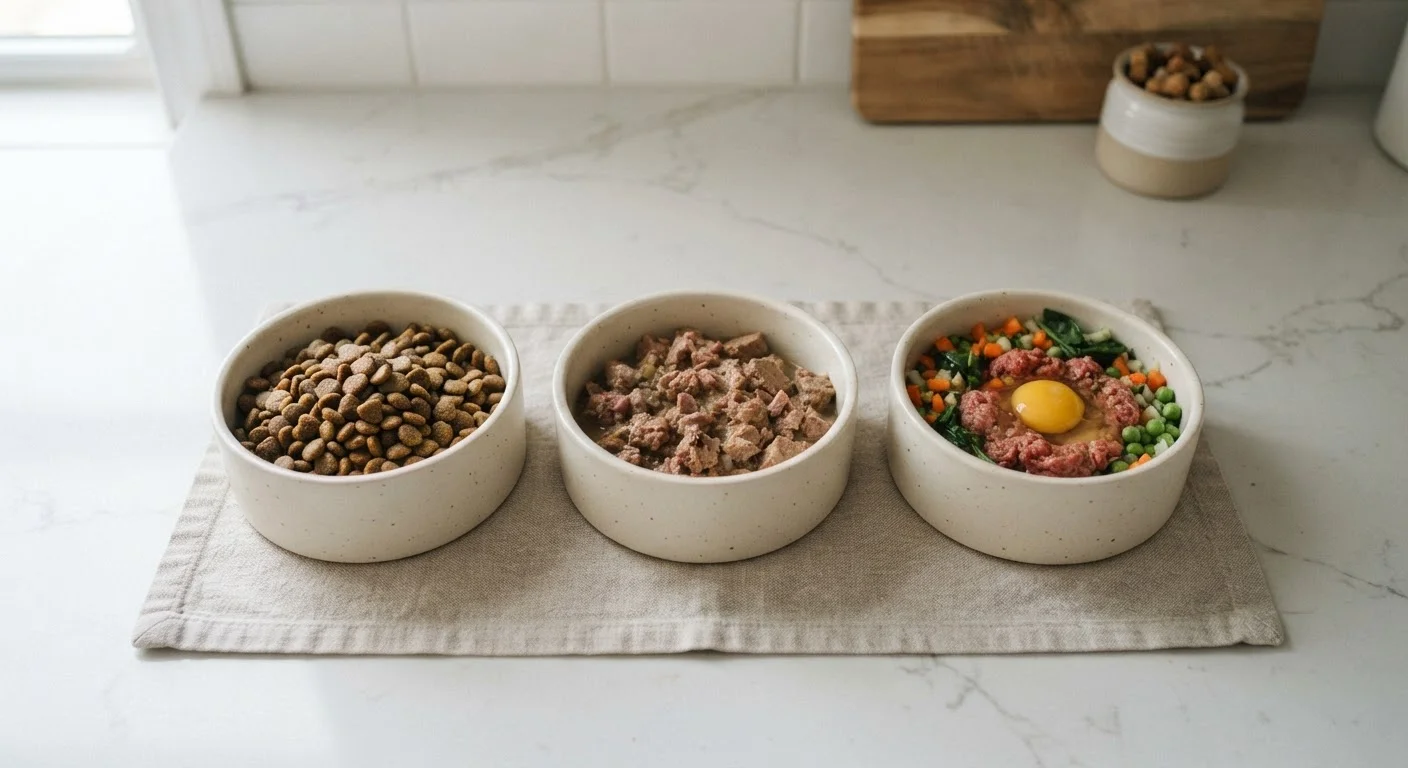
Dry food remains the most practical and cost-effective daily option for most households, while wet food offers meaningful advantages for cats or pets with urinary or hydration concerns. Raw diets may appeal to owners seeking minimally processed options, but the safety and completeness risks mean they require the most careful oversight. The ideal choice depends on your specific animal, your veterinarian's guidance, and your capacity to handle each format safely.
| Best for | Recommended |
|---|---|
| Budget-conscious owners seeking everyday convenience | Dry food (kibble) |
| Cats or pets prone to urinary tract issues or low water intake | Wet food |
| Owners wanting minimally processed diets with dedicated time and preparation space | Raw diet (with veterinary supervision) |
| Pets with mixed needs or picky appetites | Mixed (wet + dry combination) |
Why Pet Food Format Matters
The format of your pet's food — dry, wet, or raw — does more than determine texture. It shapes moisture intake, caloric density, ingredient processing, microbial safety, and even behavioral engagement at mealtime. For dogs and cats with different evolutionary nutritional profiles, these distinctions carry real health implications.
Understanding each approach requires looking past marketing language and into what the food actually delivers. For a deeper look at how to interpret what's on the packaging, see our guide on reading pet food labels and the more detailed breakdown at decoding pet nutrition labels.
| Dry Food | Wet Food | Raw Diet | |
|---|---|---|---|
| Moisture content | 6–10% | 70–80% | 60–75% (varies) |
| Cost (per day, typical) | Low | Moderate to high | Moderate to very high |
| Shelf stability | High (months to years) | Low once opened | Low (frozen); moderate (freeze-dried) |
| Food safety risk | Low | Low to moderate | High (pathogens) |
| Nutritional completeness | Reliable if AAFCO-approved | Reliable if AAFCO-approved | Variable; home-prep often deficient |
| Palatability | Moderate | High | High |
| Dental benefit | Modest abrasion effect | Minimal | Minimal (commercial) |
| Preparation effort | Minimal | Low | High (especially home-prepared) |
Dry Food: Convenience With Caveats
Dry kibble dominates the US pet food market for practical reasons. It's shelf-stable, portion-friendly, and generally lower in cost per calorie than the alternatives. Many complete-and-balanced dry formulas meet AAFCO nutrient profiles, providing a reliable nutritional baseline.
One frequently cited advantage is dental abrasion — the mechanical action of crunching kibble may help reduce plaque buildup, though the American Veterinary Dental College notes this effect is modest and no substitute for dedicated dental care. The significant drawback is moisture: dry food typically contains only 6–10% water, which can be problematic for cats, who evolved as desert animals with a naturally low thirst drive. Chronically low water intake has been linked to higher risk of feline lower urinary tract disease.
Increasing Water Intake on a Dry Diet
If your cat or dog is on dry food exclusively, consider adding a pet water fountain — studies suggest moving water encourages cats especially to drink more. You can also add a small amount of water or low-sodium broth directly to kibble to increase moisture intake without changing the diet format entirely. Consult your vet before making significant changes, particularly if your pet has a known urinary or kidney condition.
Wet Food: Hydration and Palatability
Canned and pouch-based wet foods typically contain 70–80% moisture, making them a meaningful source of daily hydration — particularly valuable for cats and dogs recovering from illness or those reluctant to drink sufficient water. Higher moisture content also means fewer calories per gram, which can support weight management when portions are managed carefully.
Wet foods tend to be more palatable, making them useful for picky eaters or animals with reduced appetite. They are also generally easier to chew, benefiting senior pets or those with dental discomfort. The trade-offs include higher cost per serving, refrigeration requirements after opening, and a shorter window before spoilage.
Combining wet and dry food is a common and nutritionally sound approach when both components are complete-and-balanced — owners simply need to adjust portion sizes to avoid overfeeding.
Raw Diets: Potential Benefits and Real Risks
Raw feeding — including commercial raw frozen or freeze-dried products and home-prepared raw meals — appeals to owners who want a minimally processed diet closer to what canids and felids ancestrally consumed. Proponents point to potential improvements in coat quality, stool volume, and energy, though large-scale peer-reviewed evidence on these outcomes remains limited.
The risks, however, are well-documented. Raw meat, poultry, and fish can harbor pathogens including Salmonella, Listeria, and E. coli. The FDA and major veterinary organizations including the American Veterinary Medical Association have published advisories cautioning against raw protein diets, citing risks to both animal health and zoonotic transmission to humans — particularly children, elderly individuals, and immunocompromised household members.
Home-prepared raw diets also carry a documented risk of nutritional imbalance. Studies published in veterinary nutrition journals have found that the majority of home-prepared raw recipes are deficient in key nutrients, including calcium, zinc, and certain vitamins. If you are considering a raw diet, working with a board-certified veterinary nutritionist is strongly advisable.
Raw Diets and Household Safety
Handling raw meat for pet feeding carries the same cross-contamination risks as handling raw meat for human meals. Surfaces, bowls, and utensils should be disinfected thoroughly after each use. Households with young children, pregnant individuals, or immunocompromised members face elevated risk from pathogens such as Salmonella and Listeria, which can persist in pet feces even after the animal appears healthy. Discuss these household risks frankly with your veterinarian before starting a raw diet.
How to Choose the Right Approach for Your Pet
No single diet format is ideal for every pet. Life stage matters significantly — kittens and puppies have different caloric and nutrient demands than adults or seniors, and AAFCO-approved formulas specify which life stages they are validated for. Health conditions such as kidney disease, food sensitivities, or obesity may make one format considerably more appropriate than another.
Species-specific needs also apply. Cats are obligate carnivores requiring taurine, arachidonic acid, and preformed vitamin A from animal sources — nutrients dogs can synthesize but cats cannot. This is one reason why preventive care approaches for dogs and cats diverge in meaningful ways beyond nutrition alone.
Before making a significant dietary change — especially for a pet with an existing health condition — consult your veterinarian. They can evaluate your pet's current health status and help assess whether a particular format or formulation aligns with their needs. This article is intended as general educational information and does not substitute for personalized veterinary advice.