

Key Takeaways
Pet Obesity
Pet obesity refers to an excess accumulation of body fat in animals that is significant enough to impair health, mobility, or quality of life. It is generally defined as body weight that exceeds an animal's ideal weight by 20% or more, though veterinarians use body condition scoring rather than weight alone to make this assessment. Because weight gain in pets tends to be gradual, it is routinely missed until secondary health problems appear.
Veterinarians use Body Condition Score (BCS) scales — typically a 5-point or 9-point system — to evaluate fat distribution and musculature independent of breed-specific weight charts, making BCS a more reliable diagnostic tool than scale weight alone.
Why Pet Obesity Stays Hidden for So Long
Obesity is one of the most common and consequential preventable health conditions in companion animals — yet it frequently goes unrecognized by the owners most positioned to act on it. Research published in veterinary journals consistently finds that a majority of pet owners misjudge their animal's body condition, often rating overweight pets as normal or even underweight.
Several factors drive this perceptual gap. Weight gain in pets is slow and incremental, making year-over-year changes nearly invisible to those who see the animal daily. There's also a normalization effect: when many pets in a household's social circle are above ideal weight, that body shape becomes the reference point. Cultural associations between generous feeding and good caregiving compound the problem, making it emotionally difficult to acknowledge overfeeding as an issue.
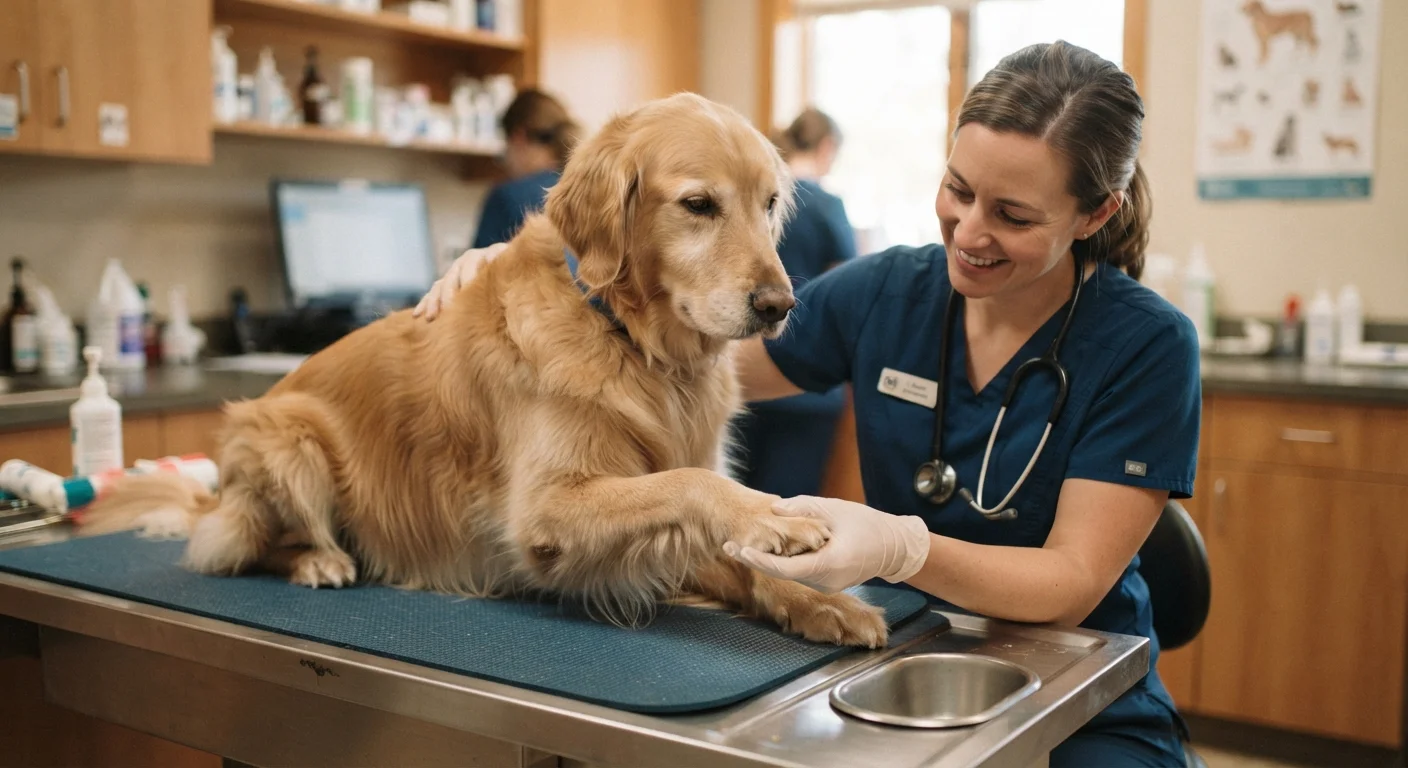
Veterinary visits offer a crucial corrective lens — but even there, weight conversations can be inconsistent. Clinicians sometimes avoid raising obesity concerns to preserve the client relationship, a pattern documented in veterinary communication research. The result is an underdiagnosis problem that shows up in practice numbers: surveys of companion animal populations in the U.S. have found that roughly half of dogs and cats are overweight or obese, yet owner awareness of this lags significantly behind.
Owner Perception vs. Clinical Reality
Studies in veterinary behavioral research show that owner perception of a pet's body condition frequently diverges from veterinary assessment. One contributing factor is that owners often compare their pet to other pets in their environment, many of which are also above ideal weight. This makes a veterinarian's objective assessment — not an at-home comparison — the most reliable reference point for body condition.
How Veterinarians Actually Assess Body Condition
Scale weight alone is a limited diagnostic tool for pet obesity. A large-breed dog that is muscular and lean may weigh more than a smaller dog with significant fat deposits. To address this, veterinary medicine relies on Body Condition Scoring (BCS) — a standardized evaluation method that assesses fat distribution across specific anatomical landmarks such as the ribs, spine, waist, and abdomen.
The most widely used scales are 5-point and 9-point systems, where mid-range scores represent ideal condition and higher scores indicate increasing fat coverage. On a 9-point scale, a score of 4–5 is typically considered ideal; scores of 6–7 indicate overweight, and 8–9 indicate obese. On either scale, a veterinarian feels for rib palpability, evaluates waist visibility from above, and looks for abdominal tuck in profile.
BCS is taught as part of standard veterinary training and, when applied consistently, provides a reproducible measure that tracks changes over time. Owners can learn a basic version of this technique to monitor their pets at home between visits — though formal assessment remains a veterinary task. Understanding what pet food labels are actually communicating is a useful complement to BCS monitoring, since caloric density varies considerably across food types.
~59%
U.S. dogs estimated to be overweight or obese
According to Association for Pet Obesity Prevention (APOP) clinical survey data, more than half of U.S. dogs fall above ideal body condition.
~61%
U.S. cats estimated to be overweight or obese
APOP surveys have consistently found that cats have an even higher prevalence of overweight and obese body conditions than dogs in the U.S.
~1.8 years
Median lifespan reduction in overweight Labradors
A long-term controlled study on Labrador Retrievers found that dogs maintained at ideal body weight lived nearly two years longer than their heavier counterparts.
30–50%
Daily calories treats can contribute in small pets
Veterinary nutritionists note that in small dogs and cats, frequent treats can represent a substantial and often untracked share of daily caloric needs.
The Long-Term Health Consequences of Excess Body Weight
The clinical consequences of obesity in pets are well-documented and span multiple organ systems. In dogs, excess body fat is associated with osteoarthritis — fat tissue produces inflammatory mediators that accelerate joint deterioration independent of the mechanical load of extra weight. Obese dogs also show increased risk of cardiovascular disease, respiratory compromise (particularly in brachycephalic breeds), and certain cancers including transitional cell carcinoma.
In cats, obesity is one of the primary risk factors for type 2 diabetes mellitus. Excess adipose tissue impairs insulin sensitivity, and while some diabetic cats can achieve remission with weight loss and dietary management, the condition requires sustained veterinary involvement. Obese cats are also at elevated risk for hepatic lipidosis (fatty liver disease), urinary tract disease, and lameness.
Lifespan data are concerning as well. A landmark long-term study in Labrador Retrievers found that dogs maintained at a lean body condition lived a median of nearly two years longer than their heavier littermates — a finding that has informed veterinary recommendations on preventive weight management. These aren't edge-case risks; they represent common health trajectories for overweight companion animals.
Addressing weight can also have downstream benefits beyond the primary conditions. Owners often report improved mobility, energy levels, and temperament in pets that achieve a healthier body condition — patterns consistent with reduced pain burden and improved metabolic function. See our article on well-meaning habits that quietly undermine your pet's health for a broader look at how everyday routines affect long-term wellness.
Track Treats as Part of Daily Calories
Ask your veterinarian for the daily caloric target for your pet, then account for every treat within that budget rather than adding treats on top of meals. Many pet food packaging labels include caloric content per treat or per cup — use these numbers. If your pet's food doesn't list caloric density, your vet or the manufacturer's website can provide it.
What the Evidence Says About Weight Management in Pets
Dietary management consistently outperforms exercise as a weight-loss strategy in veterinary research. While physical activity is important for maintaining lean muscle mass, reducing cardiovascular risk, and supporting mental health, caloric restriction drives meaningful fat reduction. For dogs, structured feeding with measured portions replaces free-choice or estimated-volume feeding — a simple shift that produces significant results.
Treats represent a frequently underestimated variable. In small dogs and cats, even a handful of treats daily can represent 30–50% of recommended caloric intake. Tracking treat calories alongside meal portions — using the pet food's caloric density information — gives owners a more accurate picture of actual intake.
Prescription weight-loss diets, available through veterinarians, are formulated to maintain satiety and micronutrient adequacy at reduced caloric intake. These are distinct from standard lower-calorie commercial foods and are typically used under veterinary supervision with scheduled weigh-ins. Rapid weight loss protocols — especially in cats — carry their own risks and should always involve professional oversight.
The Pet Care Basics hub is a useful starting point for owners building a preventive care routine that encompasses feeding, exercise, and regular health monitoring. For a full picture of your pet's wellness, dental health is another frequently overlooked dimension worth discussing with your veterinarian at the same visit.
This article is for general informational and educational purposes only and does not constitute veterinary or medical advice. Always consult a licensed veterinarian for guidance specific to your pet's health needs.