

Key Takeaways
Why Older Vehicles Need a Different Kind of Attention
Standard maintenance schedules are written for vehicles in their prime — engines with fresh seals, rubber that's still pliable, and fluids that haven't seen years of thermal cycling. Once a car climbs past the 100,000-mile mark, those intervals often stop telling the whole story.
Age affects materials independently of mileage. A rubber hose on a lightly driven 12-year-old vehicle can be more compromised than one on a well-used seven-year-old car. Heat, moisture, and time do their own work — and the systems they affect most tend to be the ones that don't trigger a warning light until something has already gone wrong.
If you own an older vehicle — or are thinking about keeping one on the road longer — the list below covers the maintenance tasks most commonly missed once a car moves beyond its factory warranty years. For a broader foundation, our guide to car maintenance for first-time owners covers the essential starting points every driver should know.
Ask for a multi-point inspection
When dropping your older vehicle off for any service, ask your mechanic to do a multi-point inspection of wear items like hoses, belts, and suspension components at the same time. Many shops include this at no extra charge, and it's one of the most efficient ways to catch ageing components before they fail. See which tasks are safe to DIY and which need a pro to know when to seek help.
The Overlooked Maintenance Tasks Worth Prioritising
Coolant hoses and the cooling system
Radiator and heater hoses are made from rubber compounds that degrade over time regardless of how carefully a vehicle has been maintained. On older cars, these hoses can feel firm on the outside while the interior lining is beginning to separate or collapse — a condition that can restrict coolant flow or cause a sudden failure.
Beyond the hoses, coolant itself has a service life. Over years of use, its corrosion inhibitors break down, and the fluid can become acidic enough to attack metal components inside the engine and radiator. A qualified mechanic can test coolant concentration and pH with an inexpensive test strip. Plan to have the cooling system inspected thoroughly, including the thermostat and pressure cap, on any vehicle beyond eight years old. See how to check your fluids at home for what you can monitor yourself between visits.
A hose that looks fine externally may be deteriorating inside — age matters as much as appearance.
Brake fluid condition
Brake fluid is hygroscopic, meaning it absorbs moisture from the air over time. As water content rises — even a few percent — the fluid's boiling point drops significantly. Under hard braking, that absorbed moisture can vaporise, creating compressible gas bubbles in the lines and reducing pedal firmness exactly when you need it most.
Most manufacturers recommend replacing brake fluid every two years, but this interval is frequently ignored on vehicles that otherwise seem to be braking fine. A mechanic can test moisture content with a simple tool. On older vehicles especially, this is a low-cost check with a meaningful safety payoff.
Brake fluid absorbs moisture over time, quietly reducing your stopping power without any obvious warning.
Suspension and steering rubber components
Bushings, ball joints, tie rod ends, and sway bar links are the rubber and metal components that connect your suspension and steering. On newer vehicles, they rarely need attention. On older ones — particularly those driven on rough roads or in climates with extreme temperature swings — they can crack, compress, or wear enough to affect handling and tire wear without producing a dramatic symptom.
Worn bushings often announce themselves as a knock or clunk over bumps, but they can also cause a vehicle to feel vaguely imprecise without any obvious noise. A suspension inspection during an annual service is the right time to check these. A trained mechanic can spot torn rubber or excessive play that a driver wouldn't notice during normal driving.
Worn suspension bushings can degrade handling and tire wear long before they feel dramatically wrong.
Spark plugs and ignition components
Modern vehicles often use long-life iridium or platinum spark plugs rated for 60,000 to 100,000 miles. That's a useful interval — but it assumes the plugs and their associated ignition wires or coil boots are in good condition throughout. On older vehicles, the rubber boots that seal around spark plugs can harden and crack, allowing moisture in and causing misfires, rough idle, or poor fuel economy that's easy to misattribute to other causes.
If your vehicle has traditional spark plug wires rather than individual coil-on-plug units, inspect the insulation for cracking when you change plugs. Ignition problems on older vehicles are common, fixable, and often overlooked because the symptoms develop gradually.
Cracked ignition wire insulation on older vehicles can cause misfires that are gradual enough to go unnoticed.
Fuel system components
Fuel injectors, fuel filters, and fuel pressure regulators all face cumulative wear. Fuel filters in particular are often on a replacement interval that gets ignored — some manufacturers specify changes every 30,000 miles, but on older vehicles this may not have happened consistently. A clogged filter forces the fuel pump to work harder, shortening its life and potentially leading to a much costlier repair.
Older rubber fuel lines are also worth inspecting for cracking or seeping — a fuel leak is both a fire risk and an emissions concern. This is work best left to a qualified mechanic, who can check fuel pressure and inspect lines safely on a lift.
A neglected fuel filter forces the pump to overwork — often the real cause behind an unexpected pump failure.
Underbody rust and drainage channels
Surface rust is cosmetic. Structural rust — on frame rails, subframe mounting points, brake lines, or fuel lines — is a safety and roadworthiness issue. Vehicles in the northern US, where road salt is used extensively in winter, are particularly vulnerable. Even vehicles that have spent time in humid coastal environments can develop corrosion in areas that aren't visible from above.
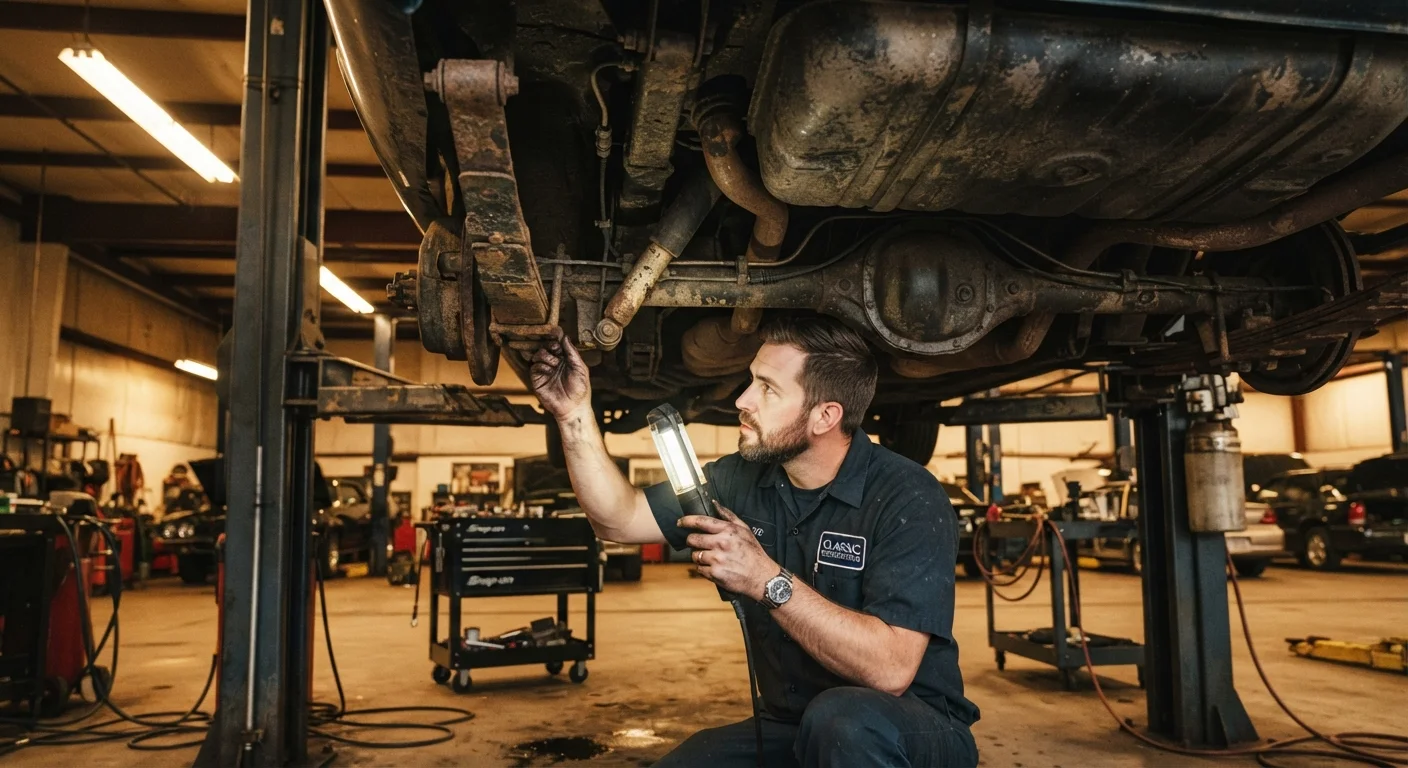
An annual undercarriage inspection, ideally done while the vehicle is on a lift, can catch rust before it reaches structural components. Brake and fuel lines made from steel can corrode from the outside in, and a line failure can have serious consequences. Seasonal checks are an ideal time to flag this with your mechanic.
Structural rust on brake and fuel lines is a genuine safety issue that develops silently beneath the vehicle.
Scheduled servicing still matters
The tasks listed here supplement — not replace — your vehicle's standard service schedule. Scheduled servicing remains the foundation, covering oil changes, filter replacements, and manufacturer-specified checks. On older vehicles, think of these overlooked items as a second layer of attention that a standard service may not fully address.
Staying Ahead on an Ageing Vehicle
None of these tasks are complicated to monitor, but they do require a more proactive mindset than a newer car demands. The core principle is simple: on an older vehicle, inspection frequency matters as much as the service itself.
Keeping a simple maintenance log is one of the most practical habits you can build — it helps you spot recurring issues, track fluid change dates, and give any mechanic a clear picture of what's been done. Pair that habit with small daily habits that extend vehicle lifespan, and an older car can remain reliable for many miles yet. When something does seem off, acting on small repairs early almost always costs less than waiting.