

Key Takeaways
The Real Cost of Waiting
Most vehicle repairs don't arrive without warning. A squeal, a slow leak, a dashboard light, a slight vibration — these are the early signals that a system is beginning to fail. The problem is that they're easy to dismiss, especially when money is tight or the car still seems to drive fine.
The financial reality is straightforward: small problems addressed early almost always cost less than the cascading failures that result from ignoring them. A cooling system leak caught and sealed can cost under $100. The same leak, left to cause an overheating event that warps the engine's cylinder head, can result in a repair bill that exceeds the vehicle's value.
Understanding which small issues tend to snowball — and why — puts you in a much stronger position as a vehicle owner. The mistakes below represent some of the most common and costly patterns mechanics see regularly.
Ignoring a slow tyre leak and topping up air repeatedly instead of having it inspected.
Why it happens: Refilling a tyre takes two minutes and feels like a solution. Drivers often assume a slow leak is a minor nuisance rather than a sign of a puncture, damaged valve stem, or compromised bead seal.
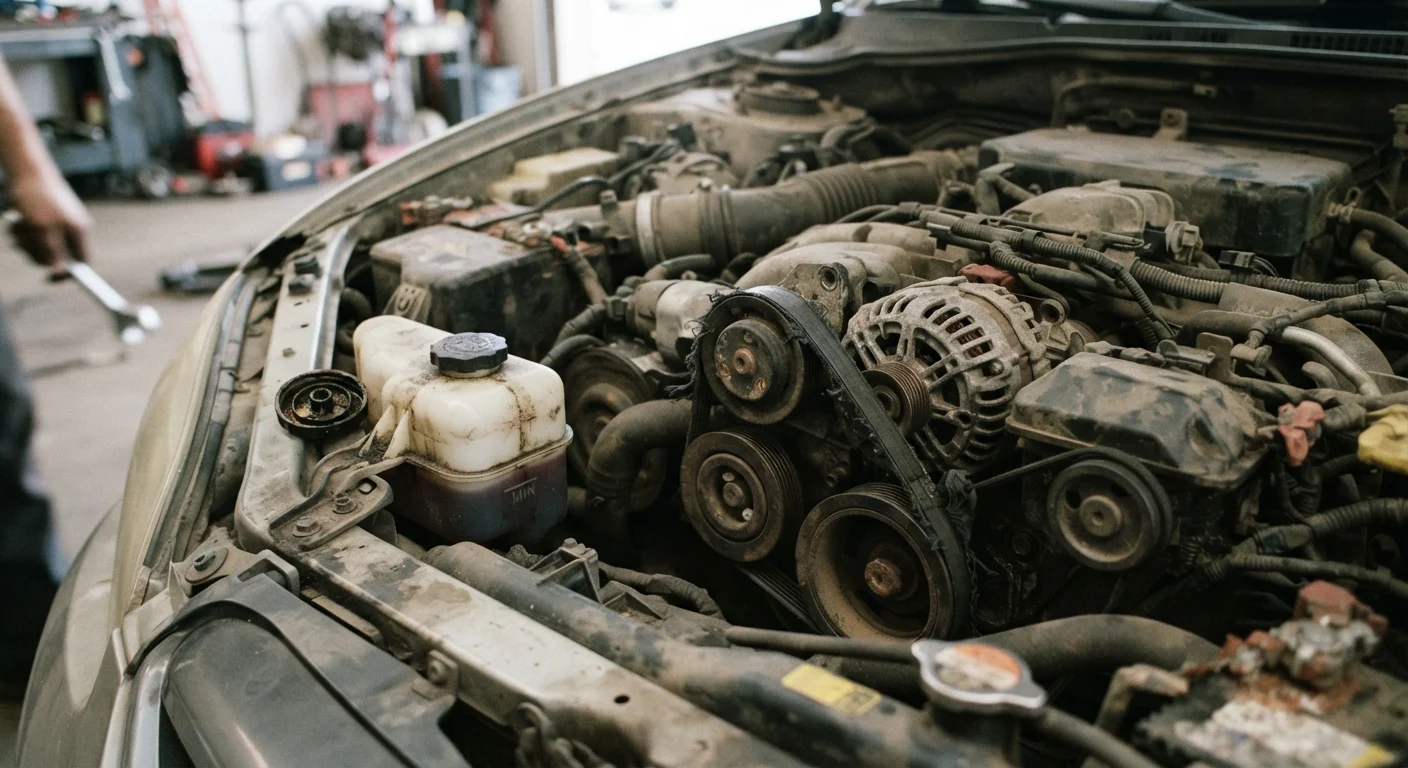
Putting off a serpentine or timing belt replacement past the manufacturer's recommended interval.
Why it happens: Belts look intact to the untrained eye until very late in their lifespan. Without visible fraying or squealing, many drivers assume there's no urgency, especially when the quoted replacement cost feels like a large expense.
Letting engine coolant drop below the minimum line without investigating the cause.
Why it happens: Coolant levels can drop gradually through a small leak or natural evaporation, and drivers often top it off without asking why the level fell in the first place.
Deferring brake pad replacement after hearing early squealing or feeling a soft pedal.
Why it happens: Brake noise doesn't always feel urgent, especially if the car still stops adequately. Drivers frequently delay the repair until the next oil change or until the noise becomes impossible to ignore.
Skipping oil changes or extending them significantly beyond the recommended interval.
Why it happens: The old 3,000-mile rule has led many drivers to assume any oil change schedule is conservative and flexible. Some interpret that as permission to push well beyond what the vehicle's manufacturer actually recommends.
Building Better Habits Before Problems Start
The most effective defence against escalating repair bills is a consistent habit of basic observation. A monthly walk-around of your vehicle — checking tyre pressure with a gauge, glancing at fluid levels, listening for new sounds — takes under ten minutes and catches most problems before they worsen.
Warning Lights Are Not Optional
A dashboard warning light is your car's way of flagging a problem before it becomes a breakdown. Driving for weeks with an active check engine or oil pressure light can turn a minor electronic fault or low oil condition into a destroyed engine. Have warning lights diagnosed promptly — many auto parts retailers offer free code reading.
Scheduled maintenance visits also give a qualified mechanic the opportunity to spot wear before it becomes failure. Items like brake pad thickness, belt condition, and coolant concentration can't be reliably assessed from the driver's seat — but they can be checked quickly during a routine service visit.
Don't Estimate Tyre Pressure by Eye
A tyre can lose 20–30% of its recommended pressure and still look visually normal. Underinflated tyres wear unevenly, reduce fuel efficiency, and are more susceptible to blowouts at highway speed. Use a calibrated gauge monthly — the correct pressure is listed on the sticker inside your driver's door jamb, not on the tyre sidewall.
For drivers of higher-mileage vehicles, the stakes are particularly high. Systems that were marginal at 80,000 miles often reach their limit by 100,000. Maintenance tasks that older vehicles specifically need can differ meaningfully from standard checklists designed for newer cars.
Developing simple habits that extend vehicle lifespan — smooth braking, correct tyre inflation, timely fluid checks — compounds over time into significantly fewer unexpected repair events and a car that stays reliable longer.
$1,200+
Average timing belt failure repair cost
According to industry repair-cost data, replacing a timing belt that has snapped — and damaged engine valves in the process — typically runs well over $1,000, versus roughly $150–$400 for a scheduled preventive replacement.
85%
Of roadside breakdowns considered preventable
AAA has reported that the vast majority of roadside breakdowns involve components — tyres, batteries, and cooling systems — that show warning signs well before they fail completely.