

| Recommended bag weight limit | Under 15 lbs for a full day bag (General ergonomic travel guidance) |
| Battery bank capacity (suggested) | 10,000–20,000 mAh for 1–2 device charges |
| TSA liquid rule (carry-on) | 3.4 oz (100ml) or less per container, all in one 1-quart bag (TSA.gov) |
| Most forgotten item by travelers | Phone/device charger or adapter (Commonly cited in travel survey data) |
| Ideal snack types | Nuts, dried fruit, protein bars — compact and non-perishable |
| Documents to keep in physical copy | Passport, ID, insurance card, reservations |
The Core Layer: What Goes in Every Bag, Every Trip
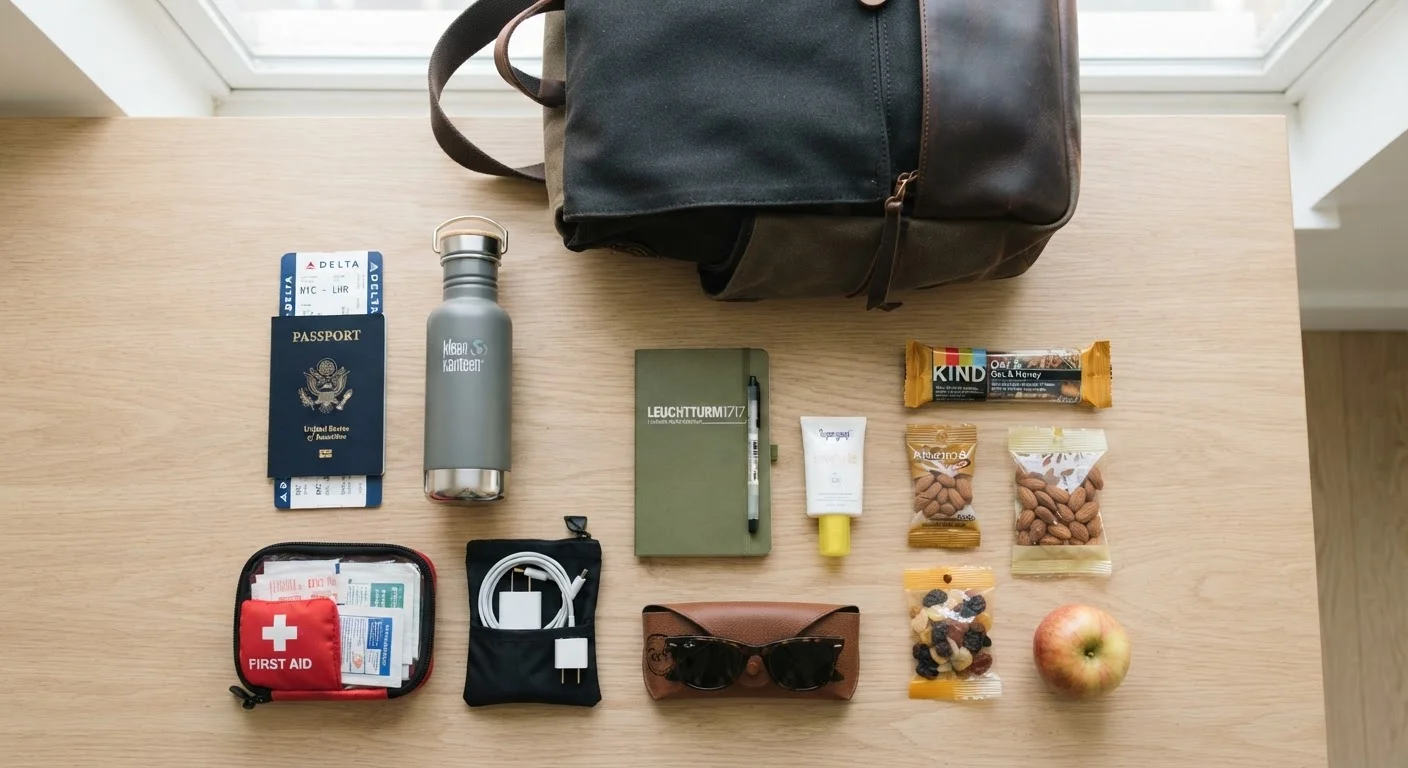
No matter where you're headed — a weekend road trip through the Rockies or a transatlantic flight — certain items earn a permanent spot in your travel day bag. Think of this as your non-negotiable foundation.
| Recommended bag weight limit | Under 15 lbs for a full day bag (General ergonomic travel guidance) |
| Battery bank capacity (suggested) | 10,000–20,000 mAh for 1–2 device charges |
| TSA liquid rule (carry-on) | 3.4 oz (100ml) or less per container, all in one 1-quart bag (TSA.gov) |
| Most forgotten item by travelers | Phone/device charger or adapter (Commonly cited in travel survey data) |
| Ideal snack types | Nuts, dried fruit, protein bars — compact and non-perishable |
| Documents to keep in physical copy | Passport, ID, insurance card, reservations |
Documents and ID: Carry a physical copy of your passport, driver's license, travel insurance card, and any reservation confirmations. Keep digital backups in a cloud folder you can access offline. For international travel, review entry requirements and customs rules well before departure.
Money and cards: Bring a small amount of local cash plus at least two payment cards (kept separately in case one is lost or blocked). Notify your bank before traveling internationally.
Phone and charger: A portable battery bank is arguably the most-overlooked essential. A dead phone means no boarding passes, no maps, and no way to reach anyone.
Reusable water bottle: Hydration affects energy, focus, and comfort — especially on long travel days. Empty it before airport security, then refill once through.
Snacks: Delays happen. A few compact, non-perishable snacks prevent hunger-driven bad decisions at overpriced terminals.
Adjust by Trip Type and Climate
Once your core layer is set, customize based on where you're going and what you're doing. A city day-tripper has different needs than a hiker or a beach-bound traveler.
Day bag
A smaller bag — typically a backpack, tote, or crossbody — carried during day excursions or used as a carry-on for short-haul travel. Distinct from checked luggage.
Carry-on
A bag small enough to fit in an overhead bin or under the seat in front of you on a plane. Size limits vary by airline, so always verify before flying.
Dry bag
A waterproof bag or pouch that seals to keep contents dry. Useful for beach days, water activities, or anywhere there's a risk of getting wet.
Offline maps
Downloaded map data that works without an internet or cellular connection. Apps like Google Maps and Maps.me allow specific regions to be saved before travel.
Compression socks
Snug-fitting socks designed to encourage blood circulation in the legs during long periods of sitting. Often recommended for extended flights, though individuals with health conditions should consult a doctor.
City exploration: Comfortable walking shoes matter more than almost anything else. Add a compact crossbody or anti-theft bag for crowded transit, a transit card or app, and a small umbrella. A portable phone mount is useful for navigating unfamiliar streets.
Outdoor and hiking days: Sun protection (sunscreen, a hat, UV-blocking sunglasses) becomes critical. Include a basic first aid kit — adhesive bandages, blister pads, and pain reliever. Trekking poles, if needed, are better rented at destination to avoid bag bulk.
Beach or water-adjacent: A dry bag or zip-lock pouches keep electronics safe. Reef-safe sunscreen, a light cover-up, and a microfiber towel compress well without adding much weight.
Cold climates: Layering beats bulky outerwear every time. A packable puffer, gloves, and a beanie take minimal space but make a real difference. Hand warmers are a compact addition worth the ounce.
For road trips specifically, your day bag should also include a physical map or downloaded offline maps — cell service in rural areas is often unreliable. See our pre-departure car review checklist for what else to prep before a long drive.
Scale for Journey Length and Travel Day Logistics
A two-hour domestic hop and a 14-hour international journey call for different bag strategies. The goal is never to pack everything — it's to pack the right things for the actual time you'll spend in transit.
Short journeys (under 4 hours): Trim to documents, phone, a card, one snack, and earbuds. Every extra item is dead weight.
Medium journeys (4–10 hours): Add a neck pillow, sleep mask, a small toiletry pouch (lip balm, hand cream, nasal spray for pressurized cabins), and a change of socks. These make an enormous difference in how you arrive.
Long-haul travel (10+ hours): Consider compression socks to support circulation on extended flights — consult a healthcare provider if you have any circulatory concerns. Add a light layer for temperature-controlled cabins, noise-canceling headphones or quality earplugs, and entertainment downloaded offline.
Solid pre-trip preparation reduces what you need to carry on the day. If you haven't already, run through the pre-trip research checklist before finalizing any international itinerary. And when you're ready to map out the days themselves, building a realistic itinerary ensures your energy matches your ambitions.
A well-chosen day bag isn't about having everything — it's about never being caught without the essentials that actually matter.