

Key Takeaways
Our Verdict
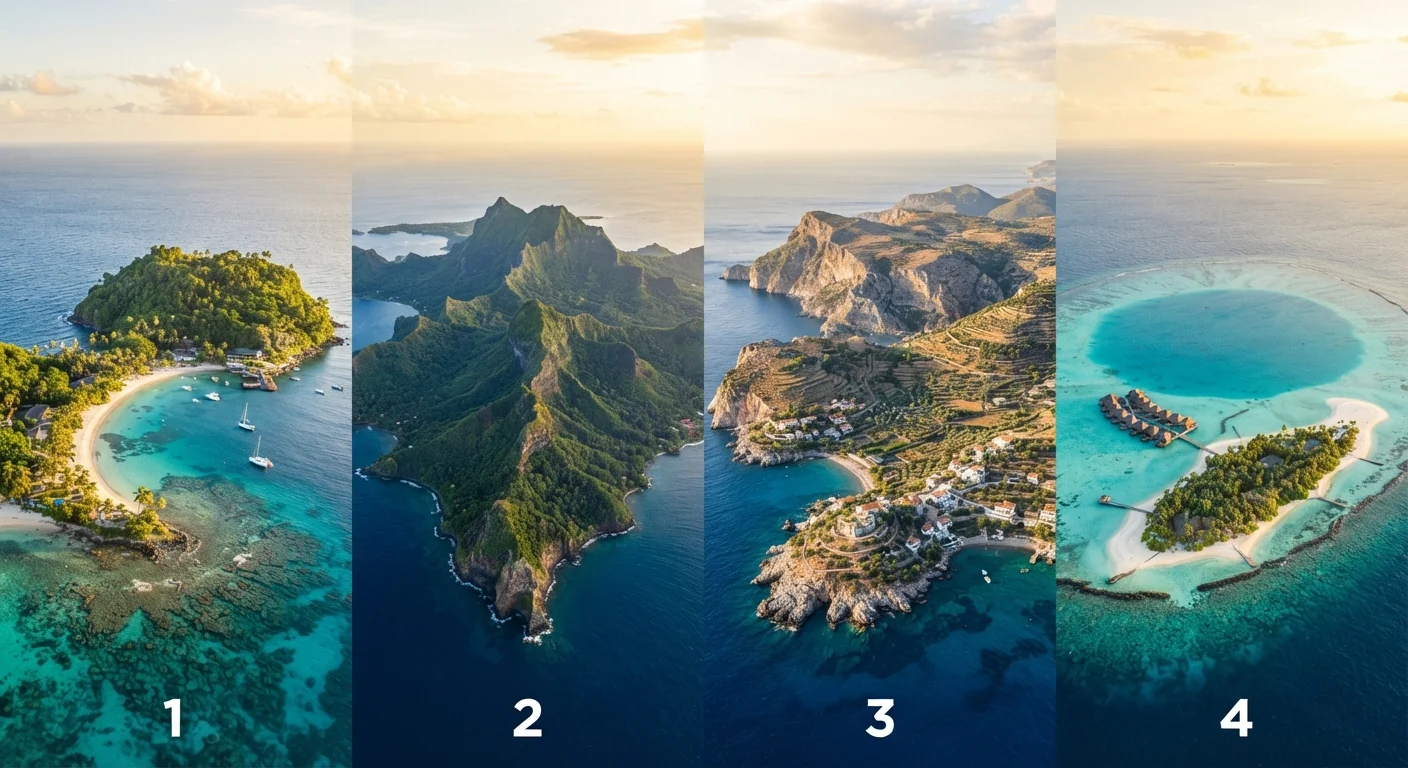
No single island region is universally superior — each excels in a distinct category of experience. The Caribbean wins on accessibility and lively culture; the Pacific on raw natural spectacle; the Mediterranean on layered history and gastronomy; and the Indian Ocean on untouched seclusion. Matching your priorities to the right region is the key to a truly rewarding island trip.
| Best for | Recommended |
|---|---|
| First-time international island travelers from the US | Caribbean |
| Adventure seekers and nature lovers | Pacific Islands |
| History, food, and culture enthusiasts | Mediterranean Islands |
| Those seeking remote luxury and biodiversity | Indian Ocean Islands |
Why Island Type Matters More Than You Think
Most people picture white sand and palm trees when they imagine an island vacation — and while that's not wrong, it's just the beginning. The world's island regions are shaped by wildly different forces: geology, colonial history, ocean currents, trade routes, and indigenous culture. Two islands can both have turquoise water and still deliver completely different experiences. Understanding which type of island suits you can save you from disappointment and open up destinations you might not have otherwise considered.
Just as knowing whether you want wildlife or landscapes transforms an African trip — as explored in our overview of African safari destinations — knowing your island type steers every other decision that follows.
| Caribbean | Pacific Islands | Mediterranean Islands | Indian Ocean Islands | |
|---|---|---|---|---|
| Accessibility from US | Very high — short flights | Moderate to long flights | Long-haul from US | Very long-haul |
| Cultural depth | High — diverse colonial heritage | Moderate to high | Very high — ancient history | Moderate — rich but smaller populations |
| Natural drama | Moderate | Very high — volcanic, reef | Moderate | Very high — reefs, endemic species |
| Typical budget level | Moderate | Moderate to high | Moderate | High to very high |
| Best travel season | Dec–May | Year-round varies | May–Jun, Sep–Oct | May–Nov (varies by island) |
| Crowd levels at peak | High | Moderate | Very high | Moderate |
Caribbean Islands: Culture, Energy, and Convenient Access
For travelers based in the US, the Caribbean is often the most practical island choice. Short flight times, no passport required for US territories like Puerto Rico and the US Virgin Islands, and a dense concentration of options make it a logical starting point. But the Caribbean's real draw is cultural richness. Each island has its own distinct personality shaped by British, French, Spanish, Dutch, and African influences. The music, food, and local festivals vary dramatically from island to island.
Hurricane season (roughly June through November) is a planning consideration, and some popular spots can feel crowded during peak winter months. Travelers who dig deeper — into local neighborhoods, smaller islands, and off-season timing — often find the Caribbean far more layered than its resort reputation suggests.
Pacific Islands: Volcanic Drama and Oceanic Vastness
The Pacific is staggeringly large, and its islands reflect that scale in diversity. Hawaii offers volcanic hiking, diverse microclimates, and a well-developed tourism infrastructure — making it one of the most geologically dramatic destinations on earth. Further afield, Fiji delivers a warmer, slower pace with world-class diving and genuinely welcoming local culture. French Polynesia — Tahiti, Bora Bora, the Marquesas — offers overwater bungalows and remote atolls that feel genuinely far from the rest of the world.
Pacific travel generally requires longer flights and higher budgets than the Caribbean, but the payoff in natural spectacle is substantial. Travelers who want to feel the geological pulse of the planet — active volcanoes, coral reef systems, dramatic ridge lines — will find the Pacific deeply rewarding. Japan's Okinawa also straddles this world, blending Pacific reef ecosystems with distinct Japanese culture, as outlined in our guide to Japan's regional geography.
Match Season to Your Pacific Destination
The Pacific spans multiple climate zones, so timing matters more here than almost anywhere else. Hawaii's North Shore sees its biggest surf in winter, while the South Pacific's cyclone season runs roughly November through April. Research individual island weather patterns rather than treating the Pacific as a single climate. A travel professional or official tourism board can provide current seasonal guidance.
Mediterranean Islands: History Layered Onto Every Shoreline
Greece, Sicily, Corsica, Malta, Sardinia, Cyprus — the Mediterranean's islands are inseparable from human history. Ancient ruins sit alongside working fishing ports. Every meal tells a story about trade routes and agricultural tradition. The sea is calmer and often cooler than tropical oceans, and the landscape alternates between arid limestone cliffs and fragrant pine forest.
Mediterranean islands tend to be most crowded in July and August, when European summer holidays peak. Shoulder seasons — May, June, September, October — offer better conditions for exploring historical sites and local life without the density of high season. These islands are particularly compelling for travelers who want their beach time balanced with meaningful cultural context.
Indian Ocean Islands: Seclusion, Coral, and Extraordinary Biodiversity
The Maldives, Seychelles, Mauritius, and Réunion occupy a different category entirely. These destinations are defined by biological richness — giant tortoises, whale sharks, pristine coral ecosystems — and a sense of genuine remoteness even when resorts are present. The Seychelles' granite boulders and endemic wildlife make it unlike any other island landscape on earth. Mauritius blends Indian, Creole, French, and British influences into a layered cultural identity that surprises visitors who expect only a beach resort.
Indian Ocean islands are generally among the more expensive island destinations to reach and stay on, particularly the Maldives. But for travelers prioritizing natural immersion, snorkeling and diving, or simply the feeling of being far from the familiar, the investment tends to feel justified. Verify current entry requirements, vaccination recommendations, and travel advisories with official government sources before booking, as conditions can change.
700+
Islands in the Bahamas alone
The Caribbean basin contains hundreds of distinct islands, cays, and islets, with the Bahamas accounting for over 700 of them.
25%
World's coral reefs in Pacific
The Pacific Ocean is home to roughly a quarter of the world's coral reef ecosystems, according to marine conservation estimates.