

Key Takeaways
Japan's Regional Geography
Japan is divided into eight main regions — Hokkaido, Tohoku, Kanto, Chubu, Kinki (Kansai), Chugoku, Shikoku, and Kyushu/Okinawa — each with distinct geography, climate, cuisine, dialect, and cultural character. These aren't just administrative lines on a map; they reflect genuine differences in how people live, what the landscape looks like, and what a traveler experiences on the ground. Understanding them before you book helps you set realistic expectations and choose destinations that match your travel style.
Japan stretches roughly 1,860 miles (3,000 km) from north to south, spanning multiple climate zones from subarctic to subtropical — a range comparable to traveling from Canada to the Gulf of Mexico.
Why Japan's Regions Are So Different From One Another
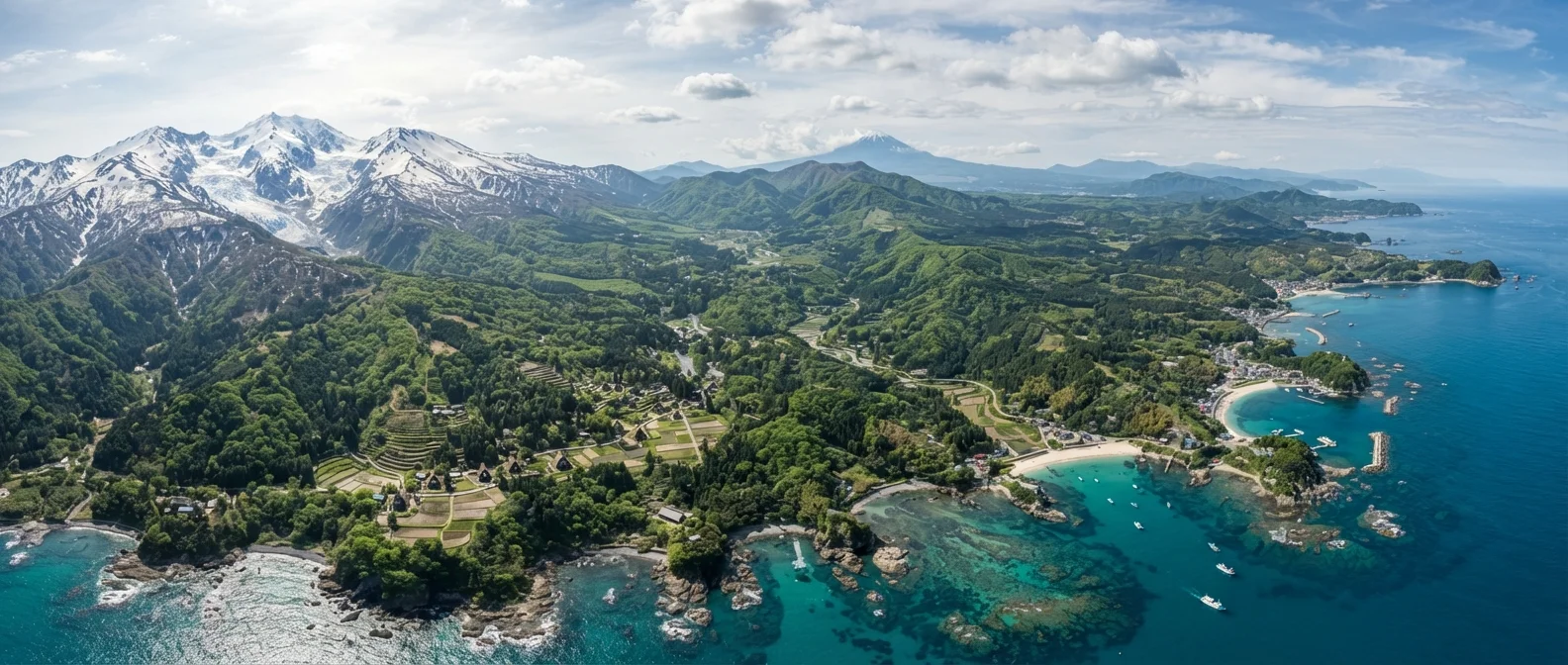
Most travelers picture Japan as a single, coherent destination — Tokyo's neon skylines, Kyoto's temples, perhaps a bullet train flashing past Mount Fuji. But that mental image collapses the enormous diversity packed into this island nation. Japan's main archipelago runs from northeastern latitudes comparable to Montreal down to subtropical zones closer to Miami, and that range produces radically different landscapes, climates, and ways of life.
The eight regions aren't just tourist-board marketing divisions. They reflect genuine geographic and cultural fault lines shaped by centuries of local history, agriculture, and isolation. Dialects diverge enough that regional accents are occasionally hard for other Japanese speakers to follow. Food cultures are fiercely local — the ramen of Hokkaido bears little resemblance to the tonkotsu broth defining Kyushu's style. Understanding this before you plan is one of the most practical things you can do.
~1,860 mi
North-to-south span of the Japanese archipelago
Japan's geographic length creates a dramatic climate range, from subarctic conditions in northern Hokkaido to subtropical warmth in Okinawa.
47
Prefectures across Japan's eight regions
Japan's 47 prefectures are grouped into eight culturally and geographically distinct regions, each with its own identity and character.
320 km/h
Maximum speed of Shinkansen bullet trains
Japan's Shinkansen network connects most major regions at high speed, making multi-region travel logistically practical for visitors.
A Quick Tour of the Eight Regions
Hokkaido sits at Japan's northern edge — wide open, sparsely populated, and defined by dramatic winters and cool summers that attract skiers, wildflower chasers, and food lovers drawn to its dairy products and fresh seafood. Tohoku, just south of Hokkaido on Honshu, is rugged and rural, with onsen (hot spring) towns, samurai castle towns, and far fewer foreign tourists than the country's major hubs.
Kanto — anchored by Tokyo — is the country's dense urban and economic heart. It's where most international visitors land and where the pace is relentless. Immediately to the west, Chubu contains the Japanese Alps, the historic Nakasendo trail villages, and the gateway to Kyoto via the Tokaido corridor.
Kinki (Kansai) is the cultural and historical core of Japan — Kyoto, Nara, Osaka, and Kobe cluster here, each with a distinct personality within an easy train ride of each other. To the west, Chugoku and Shikoku are quieter, slower-paced regions that reward travelers willing to move off the well-worn path. Finally, Kyushu in the southwest offers active volcanoes, distinctive cuisine, and a warmer climate — while Okinawa, a chain of subtropical islands far to the south, feels like a country unto itself, with coral reefs, distinct Ryukyuan heritage, and a beach culture that surprises visitors expecting traditional Japan.
“Japan is not one place — it is many places that happen to share a passport. The traveler who understands this leaves far more satisfied than the one who tries to see it all at once.”
— Travel & Adventure Editorial Team, Editors specializing in Asia-Pacific travel
How Climate and Seasonality Shape Your Trip
Seasonal timing is arguably the most important variable in Japan travel planning — and it plays out differently across regions. When Tokyo's cherry blossoms are peaking in late March, Hokkaido's trees may still be weeks away from blooming. When Okinawa is already hot and humid in May, Tohoku's mountains may still carry snow. This staggered seasonality is actually a gift for travelers: it means that if you miss peak bloom in one area, you haven't necessarily missed Japan.
This also makes the concept of "off-season" complicated. As explored in what off-season travel really means in different parts of the world, low season in one destination can be high season in another — and Japan is a textbook example. January in Kyoto is quiet and cold; January in Okinawa is mild and pleasant. Hokkaido's February ski season draws its own surge of visitors even as the rest of Japan experiences a winter lull.
Always research regional weather, festivals, and crowd patterns independently for each area you plan to visit rather than relying on general Japan travel advice.
Practical Tips for Planning a Multi-Region Japan Trip
Japan's Shinkansen network is one of travel's great logistical miracles — fast, punctual, and connecting most major regions efficiently. A Japan Rail Pass (purchased before departure from Japan) can make multi-region travel cost-effective depending on your itinerary; verify current pricing and eligibility through official JR sources before committing.
The most common planning mistake is over-ambition. Two to three regions explored thoughtfully will produce a richer experience than six regions skimmed. If Okinawa's tropical island character appeals to you, treating it as a standalone destination is a sound approach — its geography and atmosphere are genuinely distinct, more akin to what you'd find when comparing different island destination types around the world than to mainland Japanese tourism.
Pick a Regional Focus Before You Book
Before locking in flights and hotels, decide which one or two regions align most closely with what you want to experience — mountains, cities, coastlines, or cultural history. This single decision will shape everything from your accommodation choices to your ideal travel season. Japan rewards travelers who go deep into a region rather than skimming across many.
Always verify visa requirements, current entry conditions, and any travel advisories through official government sources before booking international travel. Conditions can change, and no article can substitute for up-to-date official guidance.