

Key Takeaways
Why Battery Myths Persist — and Why They Matter
Battery advice has been circulating online for years, and much of it originated as legitimate guidance for older battery technologies. The problem is that smartphone batteries have changed dramatically, while the folklore hasn't kept pace. Acting on outdated advice won't necessarily destroy your phone, but it can mean unnecessary hassle — or missing the habits that actually do make a difference.
Understanding how lithium-ion batteries actually work gives you a more useful mental model than a list of rules. These cells store energy through a reversible chemical reaction, and their long-term health is affected primarily by three factors: how deeply they're cycled, how hot they get, and how long they sit at extreme charge levels (near 0% or near 100%). Everything else is mostly noise.
Myth
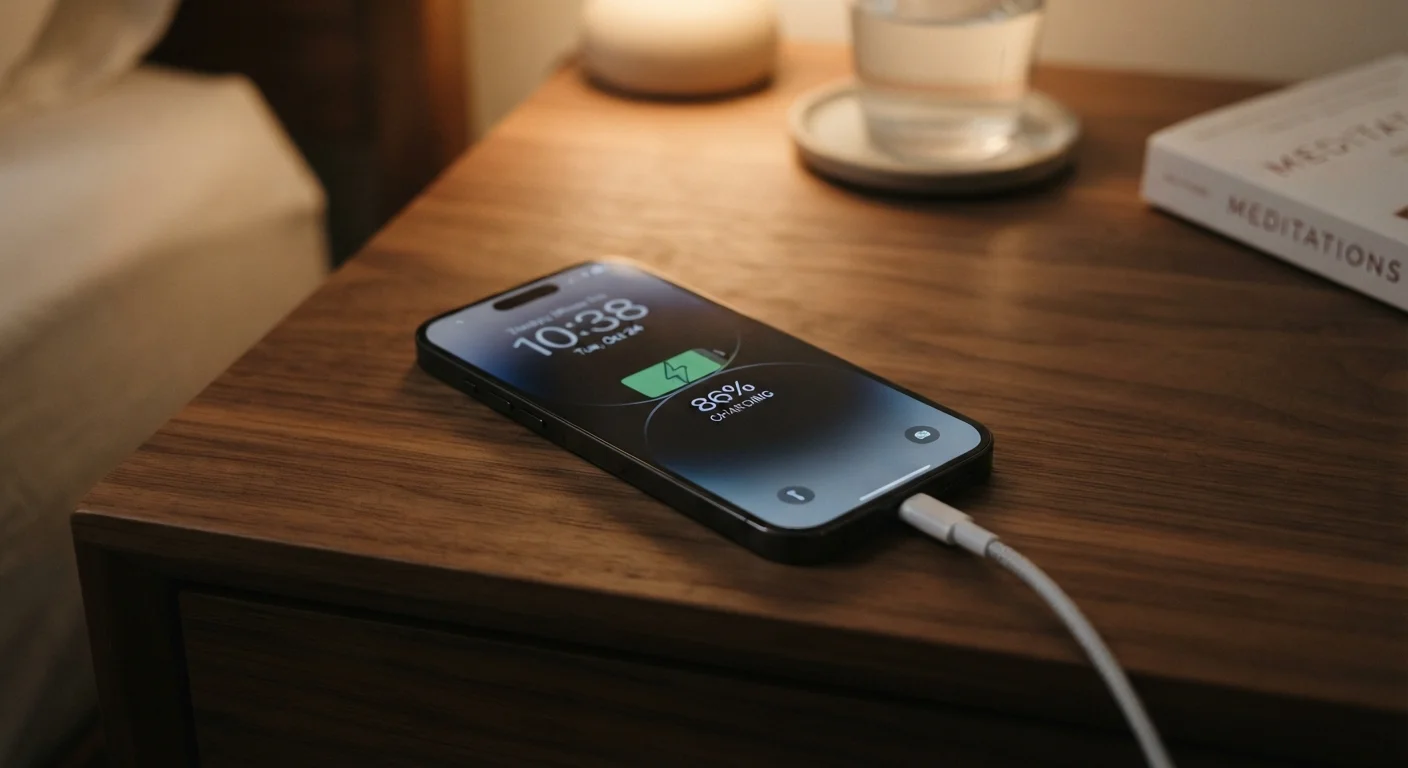
Charging your phone overnight destroys the battery because it keeps charging past 100%.
Fact
Modern smartphones have built-in battery management systems that stop drawing power once the battery is full — no continuous overcharging occurs.
This myth made sense in an earlier era of nickel-cadmium batteries, which genuinely suffered from overcharging. Lithium-ion cells — the type in virtually every smartphone today — include a dedicated charge controller chip. This chip monitors voltage precisely and halts the charging current when the battery reaches capacity. The phone may trickle tiny amounts of charge to compensate for natural self-discharge, but it does not keep pumping power into an already-full battery. The real concern with overnight charging is a secondary one: keeping a battery sitting at 100% for extended periods does cause mild, gradual stress on the cells. Most modern phones from major manufacturers address this with software features that learn your sleep schedule and delay reaching 100% until just before you typically wake up.
Myth
You should fully drain your phone battery to 0% before recharging it.
Fact
Full discharge cycles stress lithium-ion batteries; shallow, partial charges are actually better for long-term health.
The full-drain routine was useful advice for older nickel-cadmium and nickel-metal hydride batteries, which developed a "memory effect" if not fully discharged. Lithium-ion chemistry works differently. These cells prefer partial charge cycles — topping up from 30% to 70% is far less stressful than running the battery flat and charging from zero. Battery researchers often describe lithium-ion longevity in terms of charge cycles, where a full 0-to-100 cycle counts as one cycle, but two 50% charges also equal one cycle. Frequent deep discharges add wear without any benefit, and allowing the battery to sit at 0% for extended periods can cause irreversible chemical damage. See our guide to charging habits that extend device life for practical day-to-day strategies.
Myth
Using your phone while it charges is dangerous and damages the battery.
Fact
Normal phone use during charging is safe and causes no meaningful extra damage under typical conditions.
The concern here is partially valid but often overstated. Using a power-intensive app — like a graphically demanding game — while charging can cause the phone to generate more heat than it would while simply charging at rest. Heat, as noted elsewhere, does stress lithium-ion cells. But casual use during charging: browsing, texting, watching video — generates little extra heat and poses no documented safety risk when using a quality charger. The danger scenario that circulates online typically involves cheap, uncertified chargers combined with heavy use, not standard behavior with a quality cable.
Myth
Any charger with the right plug will work just as well as the original.
Fact
Charger quality and certification matter significantly for both safety and battery health.
Voltage regulation is what separates a quality charger from a potentially harmful one. A well-made charger delivers steady, clean power within the tolerances your device expects. Poorly manufactured chargers can deliver inconsistent voltage spikes that the phone's own protection circuitry must manage — adding wear over time and, in worst cases, creating heat or electrical hazards. This does not mean you must use only the charger that came in the box, but it does mean choosing chargers from reputable sources with recognized safety certifications. USB-IF (the USB Implementers Forum) certifies USB cables and chargers to published standards, which is one useful marker of quality.
Myth
Battery percentage readings are a precise, accurate measure of remaining charge.
Fact
Battery percentage is an estimate calculated by software — it can drift and become inaccurate, especially as batteries age.
Your phone doesn't directly measure "how much charge is left" the way a fuel gauge reads a tank level. Instead, it uses algorithms that track voltage, temperature, and historical charge behavior to estimate remaining capacity. As a battery ages and its total capacity shrinks, these estimates can become less reliable — which is why older phones sometimes jump from 20% to shutdown, or show a percentage that doesn't match actual runtime. Recalibrating the estimate occasionally (by letting the battery drain low and then charging fully) can help software algorithms re-sync, though this should not be done habitually for the reasons explained above.
What Actually Affects Your Battery's Long-Term Health
If you want to get more usable years out of your phone's battery, the evidence points toward a few consistent behaviors. Keeping your charge in the 20–80% range when convenient, avoiding prolonged exposure to high heat during charging, and using quality certified chargers are the habits with the strongest backing.
Heat Is the Biggest Battery Threat
Charging your phone while it sits in direct sunlight, on a thick blanket, or inside a case that traps heat accelerates battery aging far more than most other habits. If your phone feels unusually hot during charging, remove the case and move it to a cooler surface. Sustained high temperatures reduce a battery's total charge capacity over time.
Software features on most modern phones now support battery-conscious charging automatically. Look in your phone's battery settings for options labeled "Optimized Battery Charging" or similar — these use machine learning to limit time spent at 100% based on your daily routine. Enabling this feature costs nothing and requires no change to your existing charging habits.
For a broader look at how devices in your home consume power, including what happens when gadgets are plugged in but idle, see our piece on devices that draw power even when you think they're off.
Cheap Chargers Are a Real Risk
Uncertified third-party chargers can lack proper voltage regulation, creating a genuine safety hazard — not just for your battery, but potentially for fire risk. Look for chargers certified by recognized safety bodies such as UL or carrying your device manufacturer's approval. This is one area where cutting corners has documented consequences.
Battery health is not something most people need to obsess over — modern phones are designed to handle typical real-world use. But separating genuine concerns from inherited myths helps you focus attention where it actually counts. Myths about batteries aren't unique to phones, either; similar misunderstandings appear around car battery lifespan and care.
~500
Typical full charge cycles before noticeable capacity loss
Battery manufacturers and device makers commonly cite around 500 full charge cycles as the point where lithium-ion capacity may drop to roughly 80% of original — though real-world results vary widely.
20–80%
Recommended charge range for battery longevity
Battery researchers generally suggest keeping lithium-ion cells in this range to minimize electrochemical stress and extend useful lifespan.
~40°C
Temperature threshold where battery aging accelerates
Lithium-ion cells degrade measurably faster when consistently exposed to temperatures above approximately 40°C (104°F), according to published battery chemistry research.