

Key Takeaways
Why Pet Dental Health Is Chronically Underestimated
Dental disease rarely makes it onto the average pet owner's wellness checklist. Unlike a limping gait or vomiting episode, a pet's deteriorating oral health unfolds silently — and animals are behaviorally wired to mask discomfort. The result is that periodontal disease, the most commonly diagnosed condition in veterinary medicine, is also among the most routinely missed by well-intentioned owners.
Part of the problem is perception. Teeth don't register as a vital organ system the way the heart or kidneys do, even though the mouth is the entry point for everything that sustains life. Poor oral health is also a gateway condition — left unmanaged, it creates a burden that extends well beyond the gumline. As part of routine preventive care, oral health deserves the same priority as vaccination and parasite control.
80%
Dogs with periodontal disease by age 3
According to the American Veterinary Medical Association (AVMA), periodontal disease is the most common clinical condition in adult dogs.
70%
Cats affected by dental disease by age 3
The American Veterinary Dental College estimates that most cats develop some form of dental disease before middle age.
1 in 3
Pet owners who never brush their pet's teeth
Surveys of US pet owners consistently show that routine tooth brushing remains a minority practice despite veterinary guidance.
How Periodontal Disease Progresses
Periodontal disease begins with plaque — a soft film of bacteria that forms on tooth surfaces within hours of eating. If not disrupted mechanically (through brushing or abrasive chewing), plaque mineralizes into tartar, which adheres firmly to enamel and cannot be removed by brushing alone. From there, bacteria migrate below the gumline, triggering an inflammatory response that progressively destroys the supporting structures of the tooth: the periodontal ligament, cementum, and alveolar bone.
Veterinary dentists stage the disease from 0 (normal) to 4 (severe bone loss and tooth mobility). Stage 1 — gingivitis — is fully reversible with cleaning. Stages 2 through 4 involve permanent structural damage. The trajectory from mild gingivitis to advanced disease can span months to years depending on breed, genetics, diet, and the presence or absence of home care.
Dental Disease Can Affect Internal Organs
Bacteria associated with advanced periodontal disease can enter the bloodstream and have been linked to inflammatory changes in the heart, kidneys, and liver. This is not a cosmetic issue — it is a systemic health concern. Owners who delay dental care may be managing a condition that is actively affecting their pet's organ health.
Signs Your Pet May Have Dental Disease
Pets rarely signal dental pain in obvious ways. Refusing to eat is a late-stage sign; by the time an animal stops eating, disease is typically severe. More common early indicators include:
- Persistent bad breath — not occasional, but chronic and notably foul
- Yellow or brown tartar buildup visible along the gumline
- Red, swollen, or receding gums
- Pawing at the mouth or facial rubbing
- Chewing on one side or dropping food
- Increased salivation or blood-tinged saliva
Because these signs can be subtle, a well-meaning owner may attribute behavioral changes like reduced playfulness or food pickiness to aging rather than oral discomfort. When in doubt, a veterinary oral exam is the only reliable way to assess disease stage.
At-Home Dental Care: What Actually Works
Daily tooth brushing remains the gold standard for home-based prevention — the mechanical disruption of plaque before it can mineralize is the foundational principle. Consistency matters more than technique. A 30-second brush of the outer tooth surfaces, using a veterinary toothpaste, provides meaningful benefit when done daily.
Never Use Human Toothpaste on Pets
Human toothpastes frequently contain xylitol, fluoride at high concentrations, or foaming agents — all of which are potentially toxic to dogs and cats when swallowed. Only use toothpaste formulated specifically for veterinary use. These are designed to be swallowed safely and come in flavors pets tend to accept.
For pets who cannot tolerate brushing, the evidence hierarchy for adjunct products runs roughly as follows: water additives and gels with demonstrated antimicrobial properties, dental diets with a proven abrasive texture, and dental chews meeting VOHC standards. These are supplements to brushing, not equivalents. Incorporating dental care into a consistent daily routine significantly improves adherence.
Start tooth brushing with your pet as young as possible — even brief, positive sessions of 30 seconds build the habit before resistance sets in.
Behavioral conditioning is far easier in puppies and kittens. Animals introduced to oral handling early are significantly less likely to resist brushing as adults.
If your pet won't tolerate a brush, ask your veterinarian about Veterinary Oral Health Council (VOHC)-accepted alternatives before defaulting to dental chews alone.
The VOHC evaluates products against a defined standard of plaque and tartar reduction — a meaningful filter for separating evidence-based aids from marketing claims.
Professional Cleanings: What to Expect
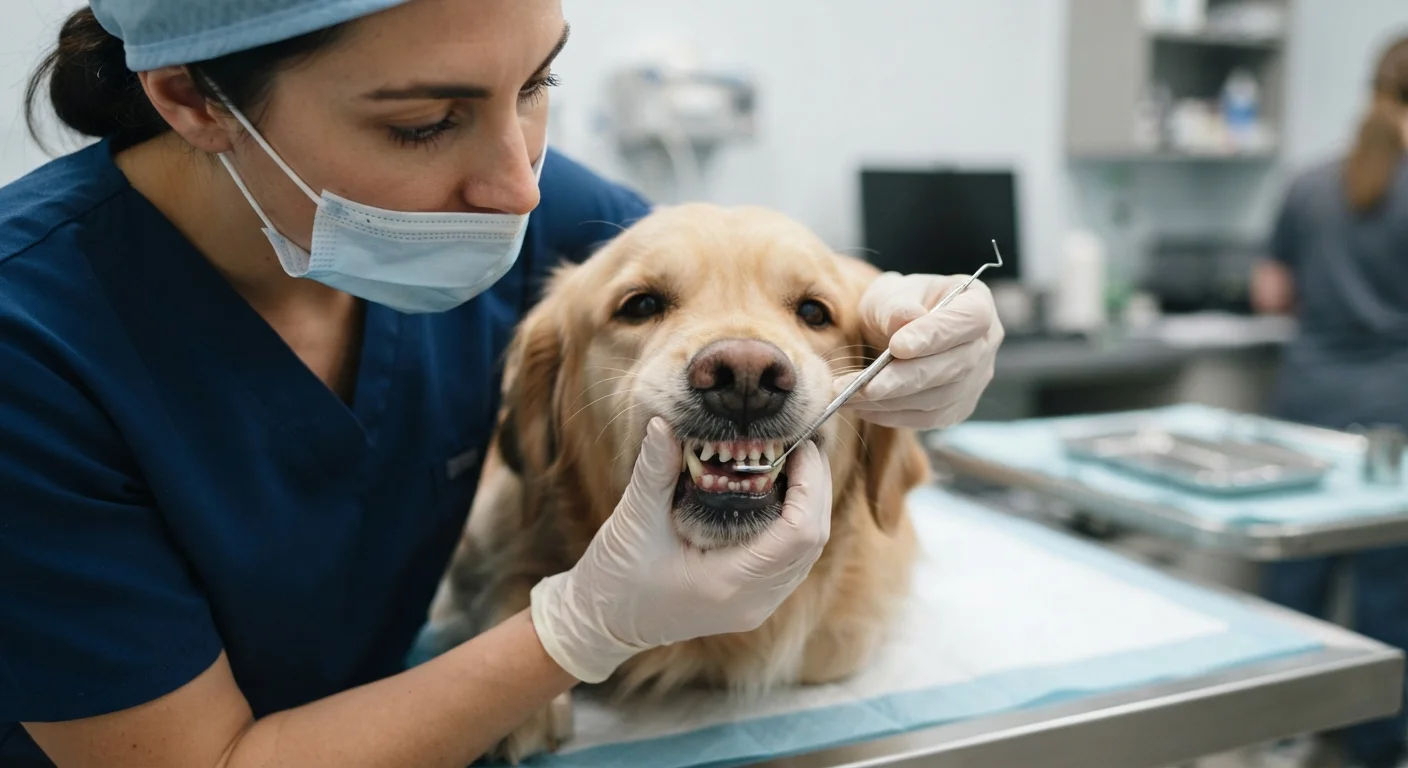
Professional dental cleanings — formally called comprehensive oral health assessments and treatments (COHATs) in veterinary dentistry — involve scaling above and below the gumline, dental radiographs (X-rays), probing of periodontal pockets, and tooth-by-tooth charting. This cannot be accomplished on an awake animal.
Anesthesia for Dental Cleanings Is Standard Practice
It is not possible to perform a thorough dental cleaning — including subgingival scaling and probing — on a conscious pet safely or effectively. Anesthesia-free cleanings remove visible tartar only and cannot address disease below the gumline where it matters most. The American Veterinary Dental College does not recommend anesthesia-free procedures as a substitute for professional cleanings.
Most veterinarians recommend an initial dental evaluation during the first wellness exam, with subsequent professional cleanings determined by the individual animal's disease stage and home care compliance. Small and toy breeds, brachycephalic (flat-faced) dogs, and certain cat breeds are at higher risk and may need annual cleanings. Larger breeds with good home care may need less frequent intervention. Cost varies by region and disease severity; owners should ask for an estimate that includes potential extractions, as these are often discovered under anesthesia.
“Periodontal disease is the most commonly diagnosed problem in veterinary medicine, yet it is also one of the most preventable. The gap between how often we see it and how often it could have been avoided is the central challenge of veterinary dentistry.”
— American Veterinary Dental College, Leading professional body for veterinary dental specialists in the United States
Dogs vs. Cats: Meaningful Differences in Dental Risk
Dogs and cats develop dental disease at comparable rates, but the disease patterns differ in clinically important ways. Dogs are more commonly affected by classic periodontal disease driven by plaque accumulation. Cats are additionally prone to tooth resorption — a painful condition in which the tooth structure is progressively destroyed, often with no visible external sign until the lesion is advanced. Feline tooth resorption is estimated to affect roughly half of adult cats and requires X-rays to diagnose reliably.
Cats are also significantly harder to brush than dogs, making professional cleanings even more critical in feline preventive care. For a fuller comparison of how dental care fits into species-specific wellness, see our article on preventive care differences between dogs and cats. Owners establishing care with a new pet should include an oral health baseline assessment within the first 90 days of ownership.
Make Dental Checks Part of Every Wellness Visit
Ask your veterinarian to assess your pet's oral health at every annual or biannual exam, not just when problems are obvious. Early-stage gingivitis is reversible; stage 3 or 4 periodontal disease is not. Catching disease at the gingivitis stage means simpler, less expensive treatment and better long-term outcomes.
This article is for general informational purposes only and does not constitute veterinary medical advice. Always consult a licensed veterinarian for guidance specific to your pet's health needs.