

Key Takeaways
Soil pH
Soil pH is a measure of how acidic or alkaline your garden soil is, scored on a scale from 0 to 14. A reading of 7 is neutral; anything below 7 is acidic and anything above 7 is alkaline. Most garden plants grow best in the slightly acidic to neutral range of 6.0 to 7.0, where nutrients are most available to roots.
pH directly affects the solubility of mineral ions in soil water. Outside the optimal range, certain nutrients become chemically locked into the soil and cannot be absorbed by plant roots, even if those nutrients are physically present in abundance.
Why Soil pH Is the Hidden Variable in Every Garden
Gardeners often blame poor plant health on pests, disease, or inadequate watering. Yet one of the most common culprits goes completely unnoticed — the pH level of the soil itself. When pH drifts out of a plant's preferred range, nutrients that are physically present in the soil become chemically unavailable. The plant starves despite sitting in seemingly fertile ground.
Think of soil pH as a gate controlling access to the nutrient pantry. Even a well-fed soil can lock away iron, manganese, phosphorus, and other essentials if the pH is wrong. This is why yellowing leaves may persist even after repeated fertilizing — you're adding food the plant literally cannot eat.
pH Varies by Soil Type and Region
Soils in the Pacific Northwest and parts of the Southeast tend to be naturally acidic due to high rainfall and organic matter decomposition. Soils in arid Western states often skew alkaline because of low rainfall and underlying limestone geology. Knowing your regional baseline helps you anticipate pH challenges before planting.
Understanding this relationship also puts soil additives in perspective. Our article on soil additive claims explains why products promising dramatic results often fail when pH is not first addressed.
Reading the Distress Signals Your Plants Send
Plants communicate pH stress through visible symptoms, and learning to read them can save a season of frustration.
- Interveinal chlorosis — yellowing between leaf veins while the veins remain green — is a classic sign of iron or manganese deficiency, both of which are locked out in alkaline soil above pH 7.5.
- Overall pale yellowing across young leaves points to nitrogen or sulfur deficiency, more common in very alkaline conditions.
- Purple or reddish leaf undersides can indicate phosphorus lockout, which worsens below pH 5.5.
- Stunted roots and slow overall growth often result from acidic soil mobilizing aluminum and manganese to toxic levels.
It's important to rule out overwatering before assuming a pH issue, since waterlogged roots mimic several of the same symptoms. See our guide on why overwatering causes more damage than drought to compare the signs.
6.0–7.0
Optimal pH range for most garden plants
According to cooperative extension guidelines widely used across US land-grant universities, the majority of vegetables, herbs, and ornamentals perform best within this range.
4.5–5.5
Preferred pH range for acid-loving plants
Plants such as blueberries, azaleas, and rhododendrons require this more acidic range to absorb iron and produce healthy foliage and fruit.
1 unit
Maximum pH shift recommended per season
Soil scientists and extension agronomists generally advise limiting pH adjustments to no more than one unit per growing season to protect soil biology.
Testing Your Soil and Making Adjustments
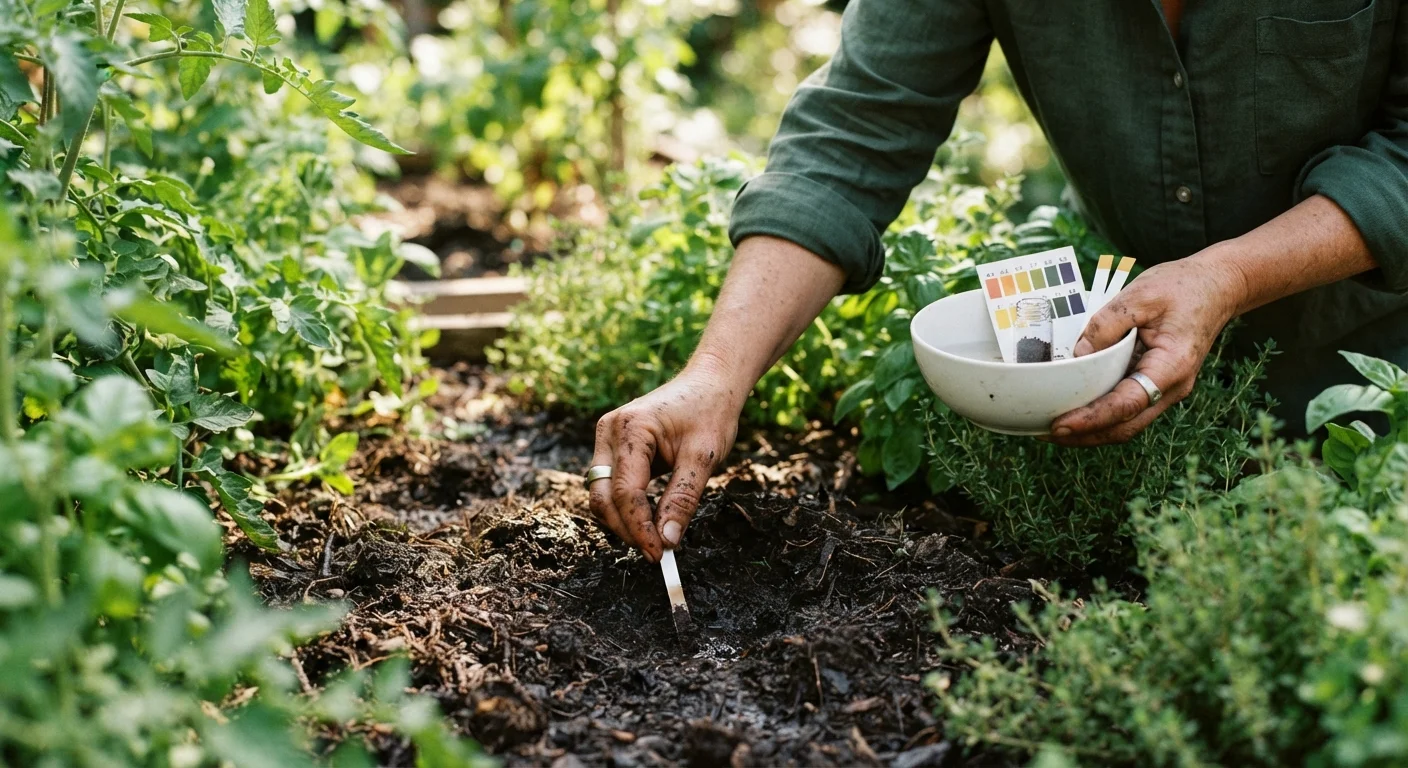
The most reliable starting point is a soil test. Basic pH test kits give color-coded results in minutes, while cooperative extension lab tests provide a complete nutrient profile and tailored amendment advice for your region.
Once you have a reading, correction depends on which direction you need to move:
- To raise pH (make less acidic): Apply ground agricultural limestone (calcitic or dolomitic lime). Dolomitic lime also adds magnesium, which benefits gardens with low magnesium levels. Work it into the top few inches of soil and water thoroughly.
- To lower pH (make more acidic): Elemental sulfur is the most reliable long-term option. Soil bacteria convert it into sulfuric acid gradually over weeks. Acidifying fertilizers and composted pine bark can support this shift over time.
Aim for small, measured corrections — no more than one pH unit per season. Drastic changes disrupt beneficial soil microbes and can trigger new imbalances. Always retest after 6 to 8 weeks before applying more amendment.
When buying plants, reading the tag carefully helps you match them to your soil from the start. Our guide on decoding plant labels walks through how to interpret pH preference and other soil requirements before you plant.
Test in Multiple Spots for Accuracy
Soil pH can vary considerably within a single garden bed, especially near concrete foundations, old compost piles, or areas that have received lime or sulfur in the past. Collect soil samples from at least three locations in each bed, mix them together, and test the combined sample for a more reliable average reading.