

Key Takeaways
Motor Oil Degradation
Motor oil degradation is the gradual breakdown of engine oil's protective properties through heat, pressure, and contamination during normal driving. Fresh oil is clear and chemically stable; over time it becomes acidic, thickens with soot particles, and loses its ability to protect metal surfaces. This process happens continuously from the moment oil is put into service.
Oxidation and thermal breakdown alter the oil's viscosity index, while combustion byproducts introduce acids that corrode bearing surfaces — processes that accelerate in stop-and-go or extreme-temperature driving.
What Fresh Oil Is Actually Doing in There
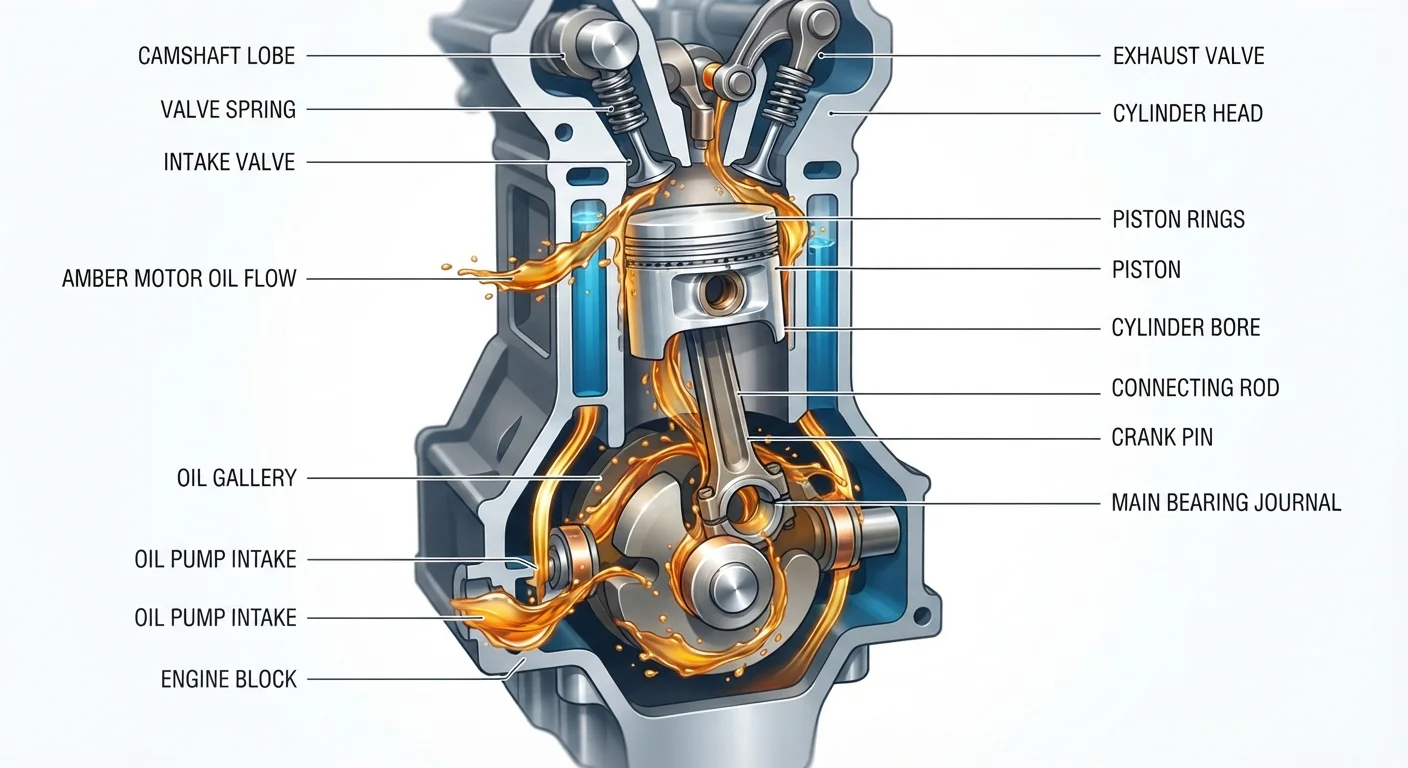
When you pour fresh motor oil into your engine, you're introducing a precisely engineered fluid that performs several jobs at once. Its most obvious role is lubrication — oil forms a thin film between metal surfaces like pistons, crankshaft bearings, and camshaft lobes, preventing direct metal-to-metal contact that would cause rapid wear.
But oil also carries heat away from parts the cooling system can't easily reach, suspends tiny contaminant particles so they don't scratch surfaces, neutralizes acids produced by combustion, and helps seal the small gaps between piston rings and cylinder walls. These functions are made possible by a blend of base oil and chemical additives — detergents, antioxidants, anti-wear compounds, and viscosity modifiers — each doing a specific job.
Understanding this helps explain why oil change intervals exist: every one of those protective functions degrades at its own rate.
The Slow Breakdown: What Changes Mile by Mile
Degradation starts on the first drive and accelerates each time the engine reaches operating temperature. Three processes drive most of the damage:
- Oxidation: Heat causes oil molecules to react with oxygen, forming varnish and sludge precursors that thicken the oil and reduce its ability to flow into tight clearances.
- Contamination: Combustion in the cylinders is never perfectly contained. Blow-by gases — a mix of unburned fuel, water vapor, and soot — slip past piston rings and enter the crankcase, mixing with the oil. This dilutes the oil, introduces acids, and loads it with abrasive carbon particles.
- Additive depletion: The chemical additives that neutralize acids, prevent oxidation, and protect surfaces are consumed as they do their work. Once depleted, the base oil is largely unprotected.
The combined effect is oil that becomes darker, thicker, more acidic, and progressively less effective — even if it looks merely dirty rather than visibly ruined.
~40%
Engine wear occurring at cold start
Industry engineering estimates suggest a significant proportion of total engine wear occurs in the first seconds after a cold start, when oil hasn't yet fully circulated — a period made worse by degraded, thickened oil.
7,500–10,000 mi
Typical synthetic oil change interval
Many modern vehicles using full synthetic motor oil are factory-specified for intervals well beyond the old 3,000-mile guideline, according to manufacturer owner's manuals.
3x faster
Oil degradation rate in severe vs. normal service
Automotive engineers classify frequent short trips, towing, and extreme temperatures as "severe service," which can degrade oil significantly faster than normal highway-dominant driving.
When Degraded Oil Leads to Real Damage
Stretching oil changes beyond your vehicle's recommended interval doesn't just mean driving on tired oil — it opens the door to compounding damage. The most serious consequence is engine sludge: a thick, tar-like substance that accumulates when oxidized oil, combustion byproducts, and moisture combine under heat. Sludge can clog narrow oil passages and oil pickup screens, effectively starving critical components of lubrication.
Bearings are particularly vulnerable. They rely on a continuous pressurized oil film to prevent metal contact; when that film is compromised by thickened, depleted oil, wear accelerates measurably. Over time this can lead to scored bearing surfaces, increased engine noise, and in severe cases, catastrophic bearing failure.
Short Trips Are Harder on Oil Than You Think
When an engine doesn't reach full operating temperature, moisture and unburned fuel accumulate in the crankcase rather than being burned off. Over many short trips, this contamination builds up faster than mileage alone would suggest. If most of your driving involves short urban errands, it's worth checking whether your owner's manual specifies a shorter interval for "severe" driving conditions — many do.
Drivers who frequently make short trips — under five miles — face an elevated risk because the engine rarely reaches the temperature needed to boil off moisture and fuel contamination from the oil. This "severe service" driving actually degrades oil faster than long highway runs, even at lower total mileage. See our guide to service schedule intervals for more on how driving conditions affect maintenance timing.
Following the Right Interval — and Why It Isn't One-Size-Fits-All
The old "change your oil every 3,000 miles" rule is outdated for most modern vehicles. As explained in our look at car maintenance myths that cost drivers money, that guideline predates improvements in both engine engineering and oil chemistry. Many current engines running full synthetic oil are specified for intervals of 7,500 to 10,000 miles or more.
The correct answer for your car lives in the owner's manual — it specifies the oil type, viscosity grade, and change interval for your specific engine. Many newer vehicles go further, using an onboard oil life monitoring system that tracks temperature cycles, engine load, and mileage to calculate when an oil change is actually needed based on how you drive.
For older or high-mileage vehicles, the calculus can shift. Our overview of maintenance for older vehicles covers why ageing engines sometimes benefit from more frequent checks. And if you're weighing oil types, our piece on synthetic vs. conventional motor oil explains how your choice affects both interval length and engine protection.
Check Your Oil Level Between Changes
Oil level and oil condition are two separate things. Some engines consume a small amount of oil between changes — especially older or high-performance engines — and running low on oil accelerates wear dramatically. Getting in the habit of checking the dipstick every few fuel fill-ups takes under a minute and can catch a developing problem long before your next service is due.