

Key Takeaways
Option A
Synthetic Motor Oil
The engineered, high-performance formulation.
Best for: Drivers with modern vehicles, turbocharged engines, extreme climates, or longer oil-change intervals.
Option B
Conventional Motor Oil
The refined, time-tested petroleum base.
Best for: Owners of older or low-mileage vehicles with straightforward driving habits and standard service schedules.
If you drive a modern vehicle with a turbocharged or high-performance engine
Synthetic Motor Oil
Turbochargers run extremely hot and require oil that maintains its protective properties under sustained heat stress. Synthetic oil's engineered stability makes it the appropriate choice here.
If you own an older vehicle with high mileage and no manufacturer synthetic requirement
Conventional Motor Oil
Many older engines were designed and broken in on conventional oil. Unless your mechanic or manual says otherwise, conventional oil can serve these engines reliably and cost-effectively.
If you live in a region with very cold winters or very hot summers
Synthetic Motor Oil
Synthetic oil flows more readily at low temperatures and resists thermal breakdown at high temperatures, providing better cold-start protection and summer performance.
If you prefer longer intervals between oil changes
Synthetic Motor Oil
Synthetic oil is generally more resistant to oxidation and degradation, supporting extended service intervals — though you should always follow your vehicle manufacturer's schedule.
What Sets These Two Oils Apart
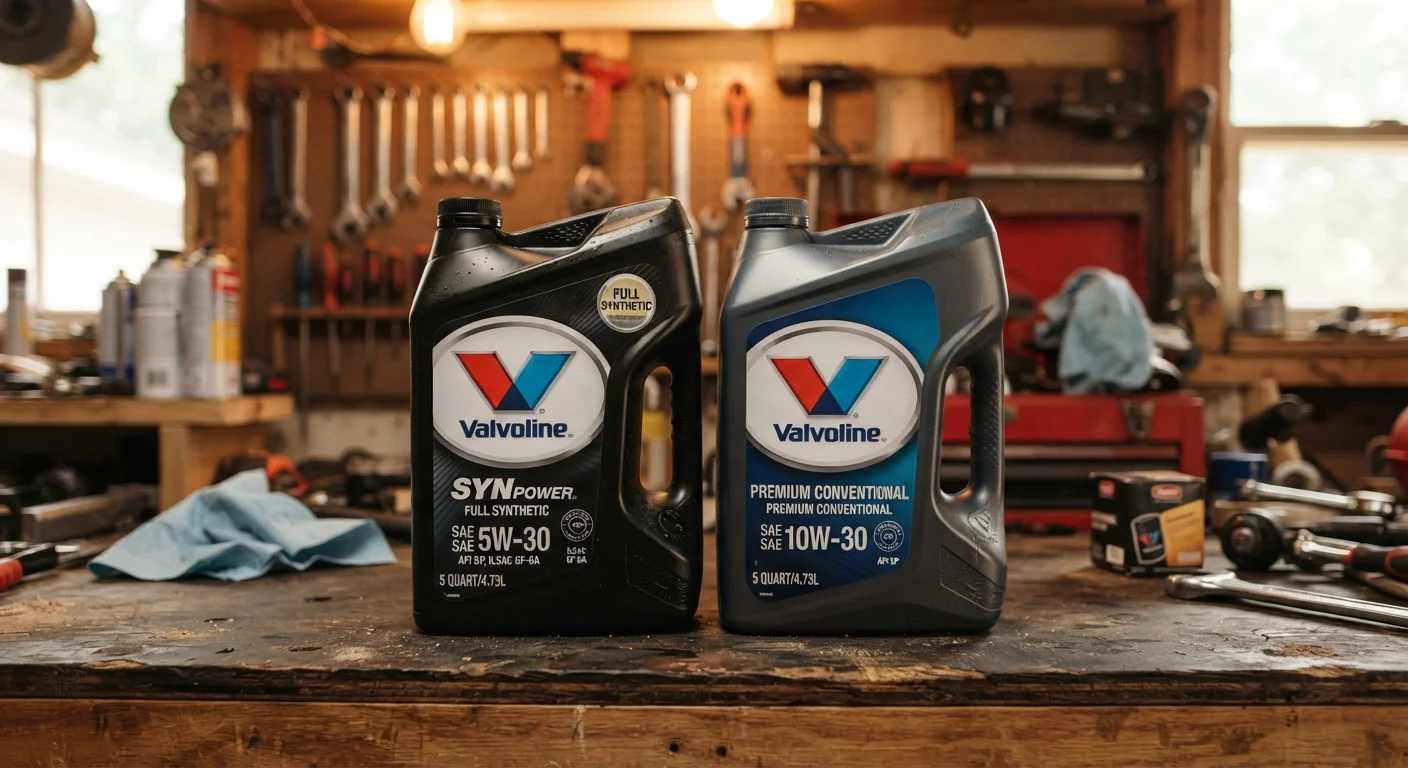
Motor oil has one fundamental job: to lubricate the moving metal parts inside your engine, reducing friction, carrying away heat, and suspending contaminants until your next oil change. Both synthetic and conventional oils do this — but the way they're made determines how well they hold up under pressure.
Conventional motor oil starts as crude petroleum pumped from the ground. It goes through a refining process that removes many impurities, but the resulting base oil still contains a natural mix of hydrocarbon molecules of varying shapes and sizes. That inconsistency isn't necessarily a problem for engines designed around it, but it does mean conventional oil can break down faster under extreme heat or cold.
Synthetic motor oil is built differently. Its base oil is either chemically synthesized from scratch or heavily processed to produce a far more uniform molecular structure. This uniformity translates to more predictable, stable performance — the oil flows more readily at cold temperatures, resists oxidation at high temperatures, and generally degrades more slowly over time.
There's also a middle option worth noting: synthetic-blend oil mixes conventional base stock with synthetic base stock, offering some synthetic benefits at a lower price point. It's a reasonable middle ground for drivers whose vehicles don't require full synthetic but who want added protection.
| Criterion | Synthetic Motor Oil | Conventional Motor Oil |
|---|---|---|
| Base material | Chemically engineered or highly refined | Refined crude petroleum |
| Molecular consistency | Highly uniform | Naturally variable |
| Cold-weather flow | Flows faster at low temps | Thickens more in cold |
| Heat resistance | Stronger resistance to breakdown | Degrades faster under sustained heat |
| Typical drain interval | Often 7,500–15,000 miles (per manufacturer) | Often 3,000–7,500 miles (per manufacturer) |
| Cost per quart | Generally higher | Generally lower |
| Best engine fit | Modern, turbocharged, high-performance | Older, naturally aspirated engines |
Engine Protection: Where Each Oil Wins and Loses
The performance gap between synthetic and conventional oil is most visible at the extremes. On a bitter winter morning, conventional oil thickens more than synthetic, meaning it takes longer to flow through your engine at startup — the period when wear is most likely to occur. Synthetic oil's engineered uniformity allows it to reach critical components faster in cold conditions.
At the other end of the scale, engines running under heavy load — towing, frequent highway driving, or high-performance use — generate sustained heat that accelerates the oxidation of conventional oil. Synthetic resists this breakdown more effectively, maintaining its viscosity (thickness and flow characteristics) for longer.
That said, conventional oil is not a second-rate product. For many passenger cars with naturally aspirated engines (no turbocharger or supercharger) and normal driving patterns, conventional oil provides adequate protection when changed on schedule. The key phrase is on schedule. What happens inside your engine between oil changes makes clear why stretching service intervals beyond manufacturer recommendations carries genuine risk regardless of oil type.
~95%
New US vehicles recommended for synthetic or synthetic-blend
Industry estimates suggest the vast majority of vehicles built in the last decade are factory-filled with or specified for synthetic oil, reflecting a broad shift in engine design.
Up to 2x
Longer drain intervals with full synthetic vs. conventional
Many manufacturer-approved synthetic schedules extend to 10,000–15,000 miles, compared with conventional intervals often set at 5,000–7,500 miles — though individual vehicle specs vary.
It's also worth dispelling one persistent myth: switching to synthetic after years on conventional will not, by itself, cause leaks or engine damage in most modern engines. Several common oil-change myths have cost drivers unnecessary money and worry — your owner's manual remains your most reliable guide.
How to Choose the Right Oil for Your Vehicle
The single most important step is straightforward: open your owner's manual. Manufacturers specify both the oil type (conventional, synthetic-blend, or full synthetic) and the viscosity grade — that two-number code like 5W-30 or 0W-20 printed on the bottle. The first number describes cold-temperature flow; the second describes performance at operating temperature. Using the wrong viscosity can affect fuel economy and engine protection.
If your manual specifies full synthetic, use it — there's no cost-effective workaround that delivers equivalent protection. If it permits conventional, that remains a legitimate, manufacturer-sanctioned choice.
Your driving conditions also matter. Frequent short trips, towing, extreme climates, or a turbocharged engine all put extra demands on oil and tend to push toward synthetic as the more protective option. If you're uncertain, this is an area where a qualified mechanic's input is genuinely useful. Knowing when to consult a professional versus handle maintenance yourself can save both money and headaches.
High-Mileage Formulations Are a Separate Category
If your vehicle has over 75,000 miles, you may notice oils labeled 'high-mileage' on store shelves. These formulations — available in both synthetic and conventional base stocks — include additives designed to condition aging seals and address the needs of higher-mileage engines. They are not universally necessary, but some mechanics recommend them for older vehicles showing minor oil consumption. As always, consult your owner's manual and a trusted mechanic before switching.
Finally, don't conflate oil type with oil quality. Both synthetic and conventional oils are sold in grades that meet industry standards set by organizations such as the American Petroleum Institute (API) and the International Lubricant Standardization and Approval Committee (ILSAC). Look for the API donut symbol and the appropriate service category on the label to confirm the oil meets current standards for your engine.