

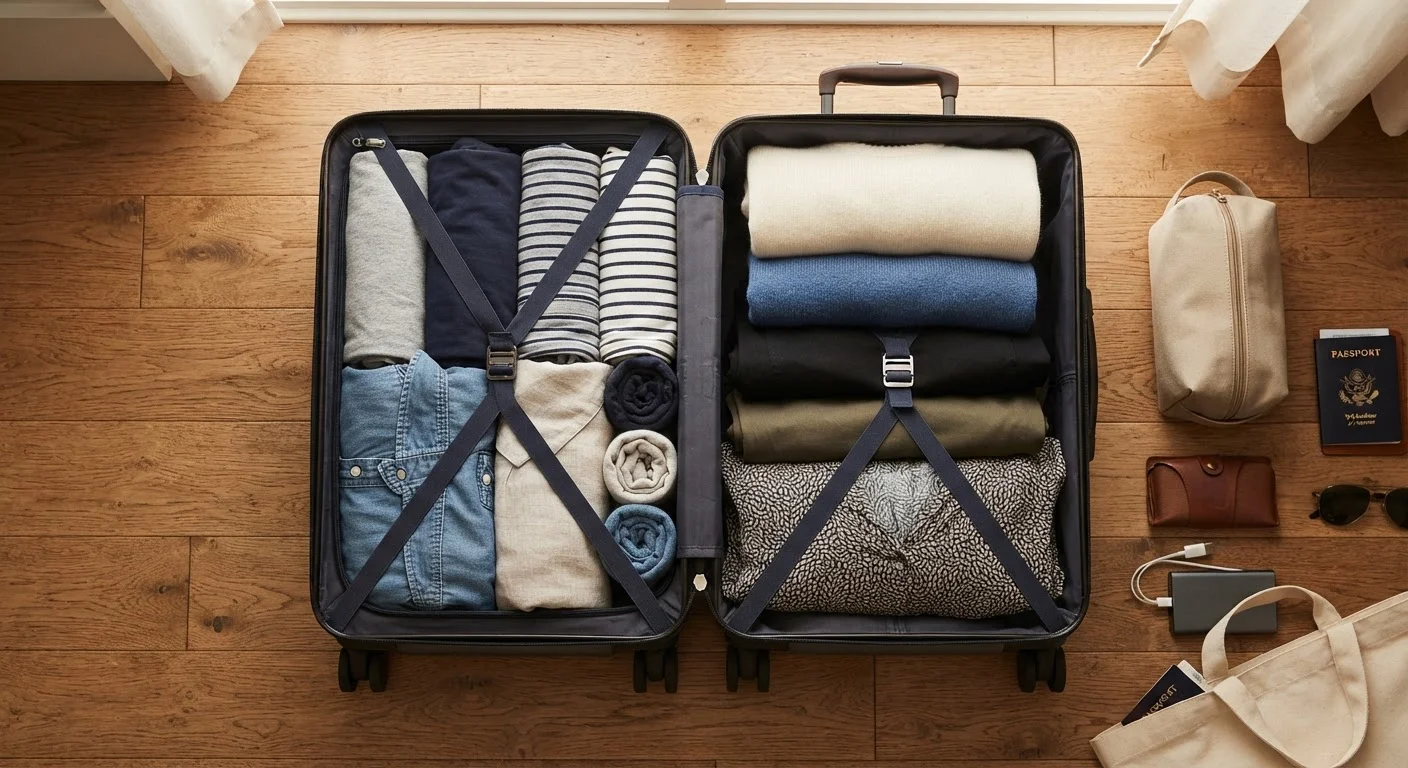
Key Takeaways
Option A
Rolling
The space-conscious traveler's go-to technique.
Best for: Casual wear, soft fabrics, and anyone trying to maximize carry-on space.
Option B
Folding
The structured, wrinkle-friendly method for polished packers.
Best for: Formal attire, structured garments, and trips where presentation matters.
If you're packing mostly casual clothes for a weekend trip
Rolling
Rolled t-shirts, jeans, and activewear compress efficiently and leave fewer air gaps, making the most of limited carry-on space.
If your trip requires business or formal attire
Folding
Structured garments like blazers and dress shirts hold their shape better when folded flat, reducing wrinkles that rolling can't avoid.
If you're packing for a longer trip with mixed wardrobe needs
Rolling
Use rolling for casual layers and fold only the items that genuinely need it — the hybrid approach consistently outperforms either method alone.
If you're checking a large, rigid suitcase
Folding
Flat-bottom hard-shell suitcases are designed with folding in mind; rolled clothes can shift in transit and leave wasted space at the sides.
If you want to stay organized and find items quickly
Rolling
Rolling clothes upright in packing cubes gives you a clear view of every item without disturbing the rest of the bag.
What the Research Actually Shows
Travel forums have debated this for years, but the answer isn't quite as clear-cut as rolling advocates might claim. Studies and packing experiments generally find that rolling saves space for soft, casual fabrics — think cotton t-shirts, jeans, and lightweight sweaters — while folding holds an edge for structured clothing that wrinkles easily.
The underlying reason is simple physics: rolling removes air pockets by compressing fabric as you go, whereas folding stacks flat layers that retain trapped air between them. For a lightweight linen shirt, that difference is noticeable. For a structured wool blazer, rolling can actually introduce creases that a careful fold would prevent.
One variable that often gets overlooked in this debate is the bag itself. If you're still weighing whether to travel carry-on only or with checked luggage, that decision shapes which technique works best — see our breakdown of carry-on vs. checked luggage for a fuller picture.
| Criterion | Rolling | Folding |
|---|---|---|
| Space efficiency | Better for soft fabrics | Better for structured garments |
| Wrinkle risk | Higher for delicate fabrics | Lower when done carefully |
| Best bag type | Soft-sided bags and backpacks | Hard-shell and rigid suitcases |
| Item visibility | Excellent when stored upright | Requires digging through layers |
| Best fabric types | Cotton, jersey, denim, fleece | Wool, linen, silk, structured wear |
| Speed of packing | Slightly slower to roll tightly | Faster for simple flat stacking |
| Works with packing cubes | Yes — ideal combination | Yes — keeps stacks compressed |
When Rolling Wins — and When It Doesn't
Rolling earns its reputation in soft-sided backpacks and carry-on bags where every cubic inch counts. When you roll a t-shirt tightly and stand it upright in a packing cube, you can see every item at a glance without disturbing the rest of your bag. That visibility is a genuine quality-of-life upgrade for multi-day trips.
Where rolling struggles: delicate fabrics and structured garments. A silk blouse rolled tightly may emerge with circular creases that a steamer can't fully fix. A blazer rolled around itself will likely need pressing before you wear it. If your trip involves any professional or formal setting, rolling your entire wardrobe is a gamble.
~30%
Extra space rolling can recover
Packing experts and frequent traveler surveys consistently estimate rolling soft clothes saves roughly 30% more space compared to flat folding in the same bag.
2 in 3
Travelers who pack more than they need
A widely cited travel industry survey found the majority of travelers admit to overpacking on at least half of their trips, regardless of packing method.
Rolling also shines in soft duffel bags and backpacks where the bag's shape naturally accommodates cylindrical bundles. Rigid, boxy suitcases with flat interiors are less forgiving — rolled items shift in transit and can create odd pressure points.
The Case for Folding (and the Hybrid Approach)
Folding isn't just for people who iron everything — it's the smarter choice for any item with structure. Dress pants, blazers, button-down shirts, and anything with pleats or lapels belong in flat, neatly folded stacks. The key is minimizing fold lines by matching seams and folding along natural creases rather than across them.
The most practical approach for most travelers is a hybrid system: roll the soft stuff, fold the structured stuff, and use packing cubes to keep both organized. This isn't a compromise — it's genuinely the most space-efficient method for a mixed wardrobe.
Packing cubes deserve a mention here because they amplify whichever method you choose. Whether your cubes contain rolls or flat stacks, they compress contents, prevent shifting, and make unpacking at your destination far faster. They're especially useful if you tend to live out of your suitcase rather than unpack entirely.
For those who've built efficient packing habits at home, that same organizational mindset translates directly to travel. The principle of using every available space thoughtfully — something that applies equally to home organization — works just as well inside a suitcase.