Social Media Algorithms: What They Prioritise and Why Your Feed Looks the Way It Does

Key Takeaways
Social Media Algorithm
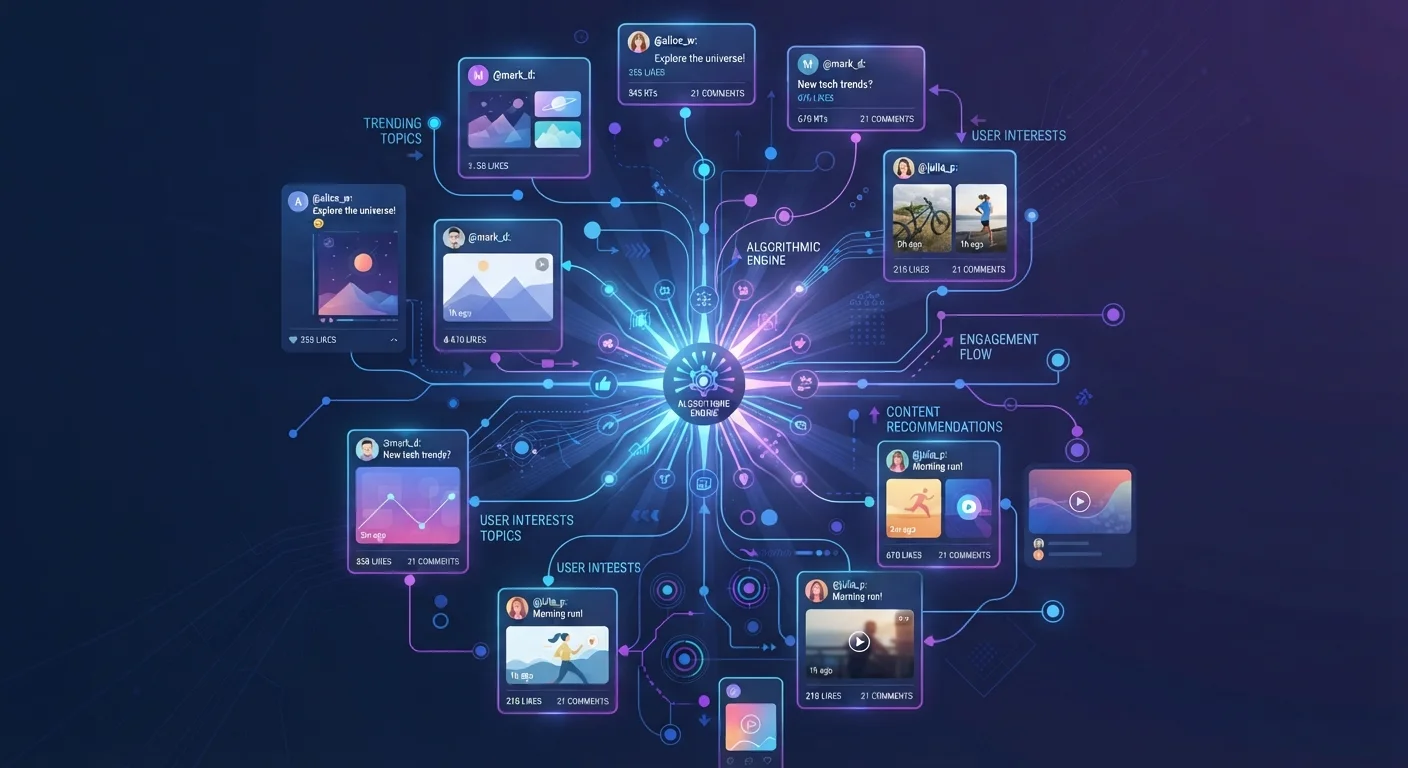
A social media algorithm is a set of rules and calculations a platform uses to decide which posts, videos, and ads appear in your feed — and in what order. Rather than showing content chronologically, algorithms rank and filter everything based on signals like your past behavior, the type of content, and how other users have engaged with it. The goal is to surface content the platform predicts you're most likely to interact with.
Most modern feed algorithms use machine learning models trained on billions of user interactions; they continuously update rankings in near real-time based on new signals.
From Chronological to Curated: How Feeds Changed
In the early days of social media, feeds were simple: you saw posts in the order they were published. That changed as platforms grew. When your network expands to hundreds of connections, a pure timeline becomes noisy and unmanageable. Platforms responded by introducing ranking systems that attempt to surface the content you'd find most relevant.
The shift wasn't purely altruistic. Algorithmic feeds keep users engaged longer, which increases advertising revenue. Understanding this incentive is fundamental to understanding why your feed looks the way it does — the algorithm's definition of "relevant" is heavily shaped by what keeps you on the platform, not necessarily what's most useful or accurate.
70%
Of YouTube watch time driven by recommendations
YouTube has publicly stated that its recommendation algorithm drives the majority of video views on the platform.
500M+
Daily active Instagram Stories users
Meta has reported this figure, illustrating the scale at which algorithmic decisions affect content distribution daily.
6–10
Signals considered per post ranking
Researchers studying platform transparency reports estimate most feed algorithms weigh at least this many distinct behavioral signals per piece of content.
The Core Signals Algorithms Use to Rank Content
Every major platform weighs a combination of signals to decide what you see. While the exact formulas are proprietary, the broad categories are well-documented:
- Relationship strength: How often you interact with a person or page. Frequent comments and direct messages signal a close relationship and boost that source's visibility in your feed.
- Engagement type: Not all interactions are equal. Saves, shares, and meaningful comments typically carry more weight than a quick like, because they suggest deeper engagement with the content.
- Content type preference: If you regularly watch videos to completion, the algorithm notes that and serves you more video. If you tend to linger on long articles, that's logged too.
- Timeliness: Newer posts generally receive a boost, though virality can override this — a week-old post that suddenly attracts attention may outperform something posted an hour ago.
- Post performance: How quickly a post accumulates engagement after being published. A fast surge of reactions early on signals quality and triggers wider distribution.
These signals interact simultaneously, which is why two people following the exact same accounts can see entirely different feeds.
What Algorithms Tend to Amplify — and What They Suppress
Algorithms don't just rank content passively — they actively shape what thrives on a platform. Content that provokes strong emotional reactions (outrage, awe, humor) tends to generate rapid engagement, which algorithms interpret as quality signal. This is one reason sensational or emotionally charged posts often spread further than measured, nuanced ones.
On the flip side, posts with low engagement in the first hour can effectively disappear. Accounts with smaller followings face a harder climb: their posts reach fewer initial viewers, limiting the chance of early engagement that would trigger broader distribution.
“Algorithms are not neutral. They reflect the choices made by the people who designed them, and those choices determine what millions of people see every day.”
— Eli Pariser, Author of 'The Filter Bubble' and co-founder of Upworthy
Platform-level decisions also matter. If a company is actively promoting a new content format — say, short-form video — its algorithm will typically reward creators who adopt that format with wider reach. Being an early adopter of a platform's favored format has historically provided significant visibility advantages, though this changes as the format matures.
How to Take Back Some Control of Your Feed
You're not powerless here. Algorithms are trained on your behavior, which means deliberate behavior shifts do move the needle over time. A few approaches that genuinely work:
- Use platform tools actively: Most platforms offer options like "See less of this," "Snooze," "Unfollow," or topic preferences. These are direct inputs into your ranking model — they're more effective than simply scrolling past content you don't want.
- Engage with what you actually want to see more of: If you want your feed to include more science journalism and fewer viral arguments, spend time genuinely engaging with science-related content and ignoring the rest.
- Follow sources directly: On some platforms, enabling notifications for specific accounts bypasses the algorithm for those posts, ensuring you see them regardless of ranking.
- Be mindful of what you share: Every share is a training signal — not just for your own feed, but for how your network sees content. Your choices ripple outward in ways that affect others' feeds as well.
It's also worth reviewing your privacy settings periodically. Platforms use behavioral data — including activity on third-party sites — to refine your profile. See our guide to overlooked privacy settings for practical steps to limit what's collected. And if you share a device or social account with family members, be aware that their activity influences your feed too — an issue explored in our piece on family privacy online.