

Key Takeaways
Annual Wellness Exam
An annual wellness exam is a scheduled, head-to-tail physical evaluation performed by a licensed veterinarian, typically once a year for healthy adult pets. It covers your pet's weight, organ function, dental health, vaccination status, and parasite prevention needs. The goal is to catch emerging health issues early, update preventive care, and give you a clear picture of your pet's overall condition.
Some veterinarians recommend biannual exams for senior pets or breeds prone to specific conditions, since pets age more rapidly than humans and health status can shift significantly within six months.
What the Vet Is Actually Doing During the Exam
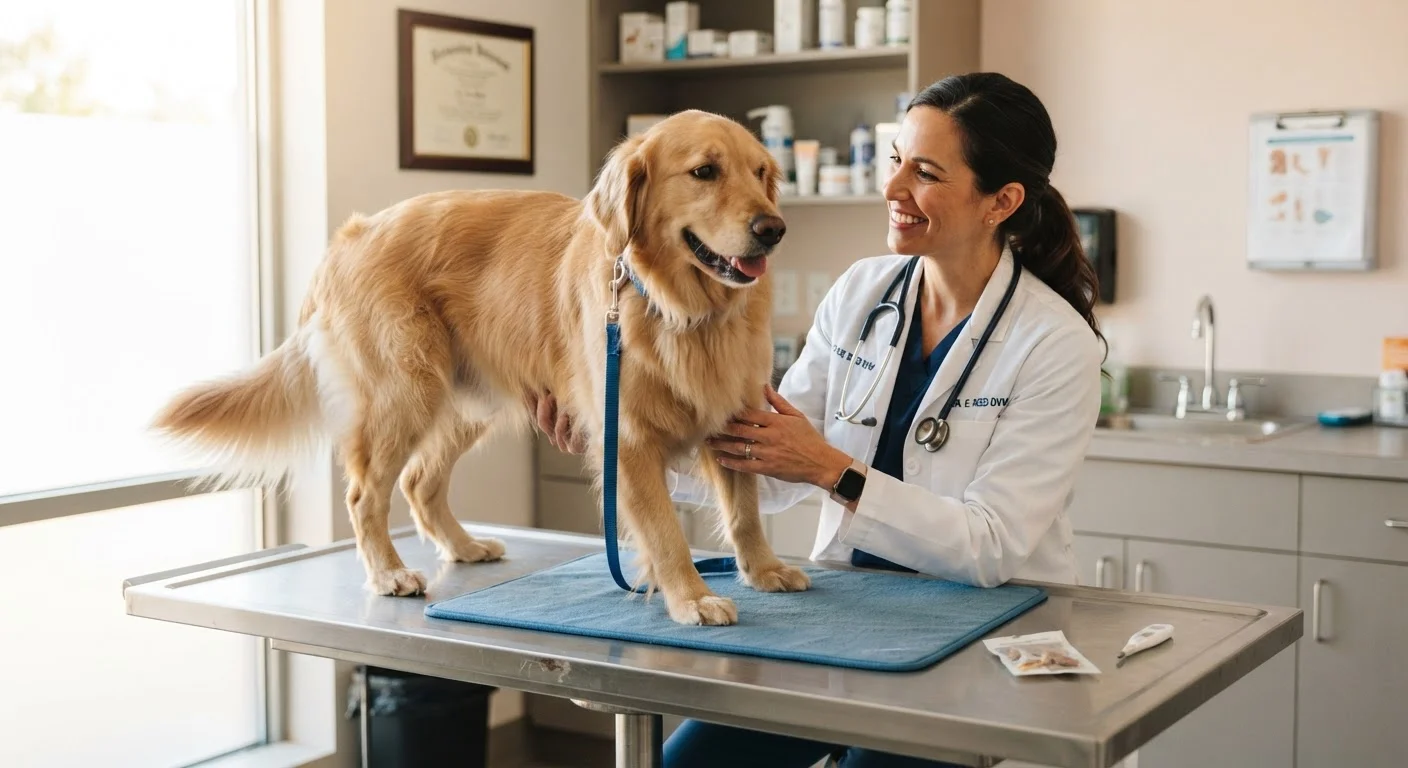
The annual wellness visit often looks deceptively simple from the outside — the veterinarian listens, presses, and peers at your pet for several minutes. In practice, they are running through a systematic, head-to-tail physical assessment designed to catch subtle changes that owners are unlikely to notice at home.
A typical exam covers:
- Weight and body condition score — comparing current weight to previous visits and assessing muscle mass and fat distribution
- Eyes, ears, and nose — checking for discharge, cloudiness, inflammation, or signs of infection
- Mouth and teeth — evaluating tartar buildup, gum color, and signs of periodontal disease, which affects the majority of pets over age three
- Lymph nodes and skin — palpating for swelling, lumps, or coat changes that may signal systemic issues
- Heart and lungs — listening for murmurs, arrhythmias, or abnormal breath sounds
- Abdomen — palpating organs to detect enlargement, pain, or irregularities
- Musculoskeletal — observing gait and checking joints for stiffness or discomfort
This structured approach is why routine exams catch conditions like early kidney disease, heart murmurs, and dental infections long before they become emergencies. Understanding why preventive vet care matters puts the value of each step in context.
Vaccinations, Parasite Control, and Lab Work
Beyond the physical exam itself, the annual visit typically addresses three preventive pillars: immunizations, parasite management, and diagnostic screening.
Vaccinations are not automatically administered at every visit. Your vet reviews your pet's history and determines which, if any, are due. Core vaccines protect against diseases with widespread risk regardless of lifestyle; non-core vaccines are tailored to individual exposure. How those decisions are made is worth understanding before your appointment.
Parasite prevention is reassessed annually because risk factors change with your pet's environment, travel history, and the season. Fleas, ticks, heartworm, and intestinal worms each require different prevention strategies. Your vet will review what is appropriate for your region and your pet's specific lifestyle. For a fuller picture, see our article on parasite prevention in pets.
Diagnostic lab work — such as a heartworm test, fecal parasite screen, or blood panel — may be recommended based on age, species, and risk profile. These tests provide objective data that a physical exam alone cannot supply, particularly for internal organ function in middle-aged and senior animals.
How to Make the Most of Your Appointment
The appointment window is finite, and the more context you provide, the more useful your vet's guidance becomes. Preparing before you arrive is one of the most practical things you can do as a pet owner.
Consider tracking your pet's weight, appetite, water intake, stool consistency, and any behavioral changes in the weeks before the visit. A pet health journal gives your vet the kind of longitudinal context that a single appointment rarely captures on its own.
Come with a written list of questions. Common productive topics include:
- Whether your pet's weight trend is appropriate for their age and breed
- Any changes in behavior, energy level, or sleep patterns
- Dental cleaning needs and when to schedule them
- Whether current parasite prevention is still appropriate
- Age-appropriate screening tests to consider
If you have a new pet, the first-90-days wellness checklist outlines the foundational appointments and actions that set long-term health up for success.
This article is for general informational purposes only and does not constitute veterinary advice. Always consult a licensed veterinarian for guidance specific to your pet's health needs.