

Key Takeaways
Lower upfront cost with fees often bundling key services
Most shelters include spay/neuter surgery, initial vaccinations, and microchipping in the adoption fee, reducing the total first-year expense compared to purchasing a pet.
Directly addresses shelter overcrowding
Adopting frees up space for another animal in need and reduces euthanasia rates in high-intake facilities, making the decision meaningful beyond the individual household.
Adult animals often arrive with known behavioral baselines
Many shelters conduct temperament assessments, giving adopters useful — if general — information about how an animal reacts to common household situations.
Wide variety of species, breeds, and ages available
Shelters and rescue networks house dogs, cats, rabbits, birds, and small mammals, offering options across life stages from young to senior.
Many animals are already spayed, neutered, or vaccinated
This reduces the immediate medical workload and cost for new owners and helps prevent unintended litters.
Limited early history can complicate care planning
Animals from shelters may have unknown backgrounds, making it harder to predict hereditary health conditions, prior trauma, or breed-specific tendencies that affect training and management.
Health screening standards vary by facility
Not all shelters have the resources to conduct thorough veterinary assessments, and some conditions may not manifest until after adoption, leading to unexpected veterinary costs.
Reputable breeders provide documented health certifications
Ethical breeders test parent animals for heritable diseases relevant to the breed — such as hip dysplasia in large breeds — and provide documentation that informs long-term health management.
Predictable size, temperament, and coat traits
For owners with specific needs — such as low-shedding coats for allergy-sensitive households or breed-specific working ability — purebred animals from screened litters offer more reliable outcomes.
Higher upfront financial investment
Quality breeding with proper health testing is expensive to conduct responsibly, and those costs are reflected in purchase prices, which can run into the thousands for some breeds.
Risk of unethical operations is significant
The term 'breeder' covers a wide spectrum; puppy mills and backyard breeders operate with poor welfare standards and often produce animals with serious health and behavioral problems.
Longer wait times for responsibly bred litters
Ethical breeders produce limited litters from health-tested parents, meaning waitlists of six months to over a year are common for popular breeds.
Our Verdict
Neither adoption nor purchasing from a reputable breeder is universally superior — each pathway carries real advantages and genuine trade-offs. The most responsible choice is the one made with honest self-assessment of your household, lifestyle, and capacity to meet a specific animal's needs. Whichever route you take, prioritizing ethical sourcing and thorough preparation sets the foundation for a healthy, lasting relationship.
Adoption is often ideal for flexible households open to an adult animal of uncertain background, while working with a screened breeder may suit owners seeking predictable traits for a specific purpose or living situation.
Understanding the Two Paths
Deciding where to get a pet is one of the most consequential choices a prospective owner will make. The two primary routes — shelters and rescues on one side, and responsible breeders on the other — each represent a different set of commitments, costs, and outcomes. Neither is inherently right or wrong, but understanding what each actually involves helps you make a decision grounded in reality rather than sentiment or marketing.
Shelters and rescues house animals that have been surrendered, abandoned, or found as strays. Many are adults with some behavioral history, though puppies and kittens do appear regularly. Breeders, by contrast, intentionally mate animals to produce offspring with predictable traits — whether for working ability, temperament, conformation, or hypoallergenic coat types. The quality of breeders varies enormously, from highly ethical operations with rigorous health screening to commercial facilities with poor welfare standards. Doing your research on any individual breeder is essential.
Once you bring a pet home, the day-to-day responsibilities are largely the same regardless of source. Our guide for first-time pet owners covers the practical groundwork every new owner needs to lay.
The Case for Adoption
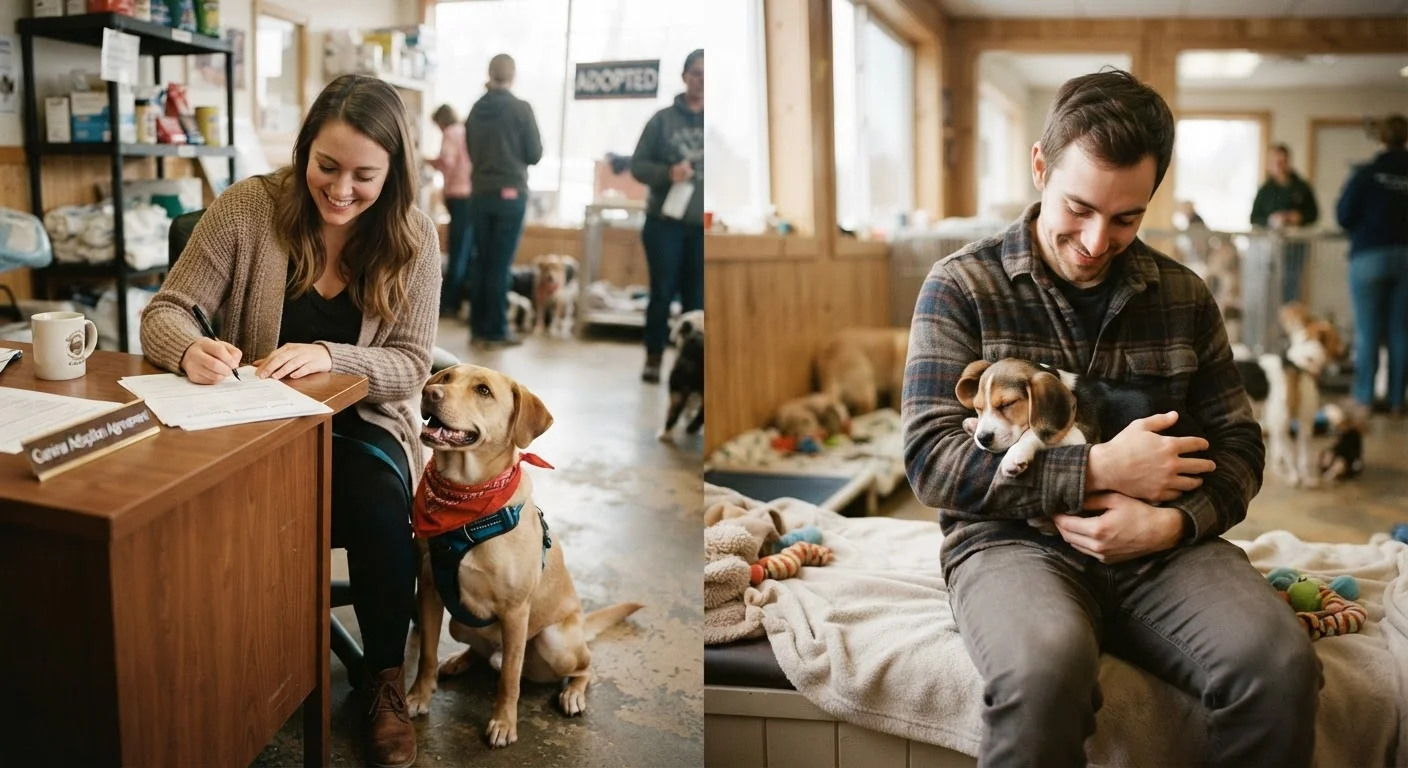
Adoption from a shelter or rescue organization offers several distinct advantages that align well with many households.
Lower upfront cost with fees often bundling key services
Most shelters include spay/neuter surgery, initial vaccinations, and microchipping in the adoption fee, reducing the total first-year expense compared to purchasing a pet.
Directly addresses shelter overcrowding
Adopting frees up space for another animal in need and reduces euthanasia rates in high-intake facilities, making the decision meaningful beyond the individual household.
Adult animals often arrive with known behavioral baselines
Many shelters conduct temperament assessments, giving adopters useful — if general — information about how an animal reacts to common household situations.
Wide variety of species, breeds, and ages available
Shelters and rescue networks house dogs, cats, rabbits, birds, and small mammals, offering options across life stages from young to senior.
Many animals are already spayed, neutered, or vaccinated
This reduces the immediate medical workload and cost for new owners and helps prevent unintended litters.
Beyond the benefits listed above, shelters often conduct behavioral assessments that give adopters useful — if imperfect — insight into how an animal behaves around other pets, children, and strangers. Adult animals also tend to have established sleep cycles and may already be house-trained, which can ease the transition significantly. For households considering adding a second animal later, understanding how multi-pet dynamics actually work is worth exploring before committing.
The Case for Working with a Reputable Breeder
For some owners and situations, working with a responsible, health-focused breeder is a legitimate and well-considered choice.
Limited early history can complicate care planning
Animals from shelters may have unknown backgrounds, making it harder to predict hereditary health conditions, prior trauma, or breed-specific tendencies that affect training and management.
Health screening standards vary by facility
Not all shelters have the resources to conduct thorough veterinary assessments, and some conditions may not manifest until after adoption, leading to unexpected veterinary costs.
Reputable breeders provide documented health certifications
Ethical breeders test parent animals for heritable diseases relevant to the breed — such as hip dysplasia in large breeds — and provide documentation that informs long-term health management.
Predictable size, temperament, and coat traits
For owners with specific needs — such as low-shedding coats for allergy-sensitive households or breed-specific working ability — purebred animals from screened litters offer more reliable outcomes.
Higher upfront financial investment
Quality breeding with proper health testing is expensive to conduct responsibly, and those costs are reflected in purchase prices, which can run into the thousands for some breeds.
Risk of unethical operations is significant
The term 'breeder' covers a wide spectrum; puppy mills and backyard breeders operate with poor welfare standards and often produce animals with serious health and behavioral problems.
Longer wait times for responsibly bred litters
Ethical breeders produce limited litters from health-tested parents, meaning waitlists of six months to over a year are common for popular breeds.
A reputable breeder will health-test parent animals for hereditary conditions common to that breed, provide transparent documentation, allow you to visit the breeding environment, and ask questions about your lifestyle in return. Breed-specific rescues exist as a middle ground for those who want a specific breed without purchasing from a breeder — they're worth researching before making a final decision. Regardless of where your pet comes from, ongoing wellness and preventive care remain central to a long, healthy life together.
Key Practical Considerations
Several practical factors should inform your decision beyond the ethical framing that often dominates this conversation.
~6.5M
Animals entering U.S. shelters annually
According to the American Society for the Prevention of Cruelty to Animals (ASPCA), approximately 6.5 million companion animals enter U.S. shelters each year.
~4.1M
Shelter animals adopted each year in the U.S.
The ASPCA estimates that roughly 4.1 million shelter animals are adopted annually, including approximately 2 million dogs and 2.1 million cats.
Varies widely
Purebred puppy price range from breeders
Prices for purebred puppies from health-screened breeders commonly range from several hundred to several thousand dollars depending on breed, lineage, and region.
Cost: Adoption fees at shelters typically range from under $50 to a few hundred dollars and often include spay/neuter, initial vaccinations, and microchipping. Purebred puppies from reputable breeders can cost anywhere from several hundred to several thousand dollars, depending on breed and lineage — and that's before first-year veterinary and supply costs.
Predictability: Breed traits in purebreds offer some predictability in size, coat type, and general energy levels, though individual temperament still varies considerably. Mixed-breed animals can be equally healthy — and sometimes more so — but physical and behavioral traits may be harder to anticipate from a young age.
Timing: Shelter availability depends on what animals are currently housed; popular breeds or small dogs may have waiting lists. Breeders may also have waitlists of six months to over a year for responsibly bred litters.
Whatever nutrition approach you adopt, feeding choices are a separate but important layer of daily care. See our overview of pet nutrition approaches for a grounded comparison of the main options.
This article is intended for general informational purposes. For guidance specific to your pet's health or behavioral needs, consult a licensed veterinarian or certified animal behaviorist.