

Key Takeaways
Our Verdict
Neither method is universally superior — the right choice depends on how and when money flows into your household. Paycheck budgeting tends to reduce day-to-day overspending and works well for those paid weekly or biweekly with variable expenses. Monthly budgeting suits salaried workers and anyone managing several fixed bills tied to calendar dates. Many people find a hybrid approach — monthly goals broken into paycheck-sized portions — gives them the best of both structures.
| Best for | Recommended |
|---|---|
| Those paid weekly or biweekly who want tight spending control | Paycheck Budgeting |
| Salaried workers with predictable monthly income and fixed bills | Monthly Budgeting |
| Anyone prone to mid-month overspending or overdrafts | Paycheck Budgeting |
| Those planning for quarterly or annual expenses | Monthly Budgeting |
What Each Method Actually Means
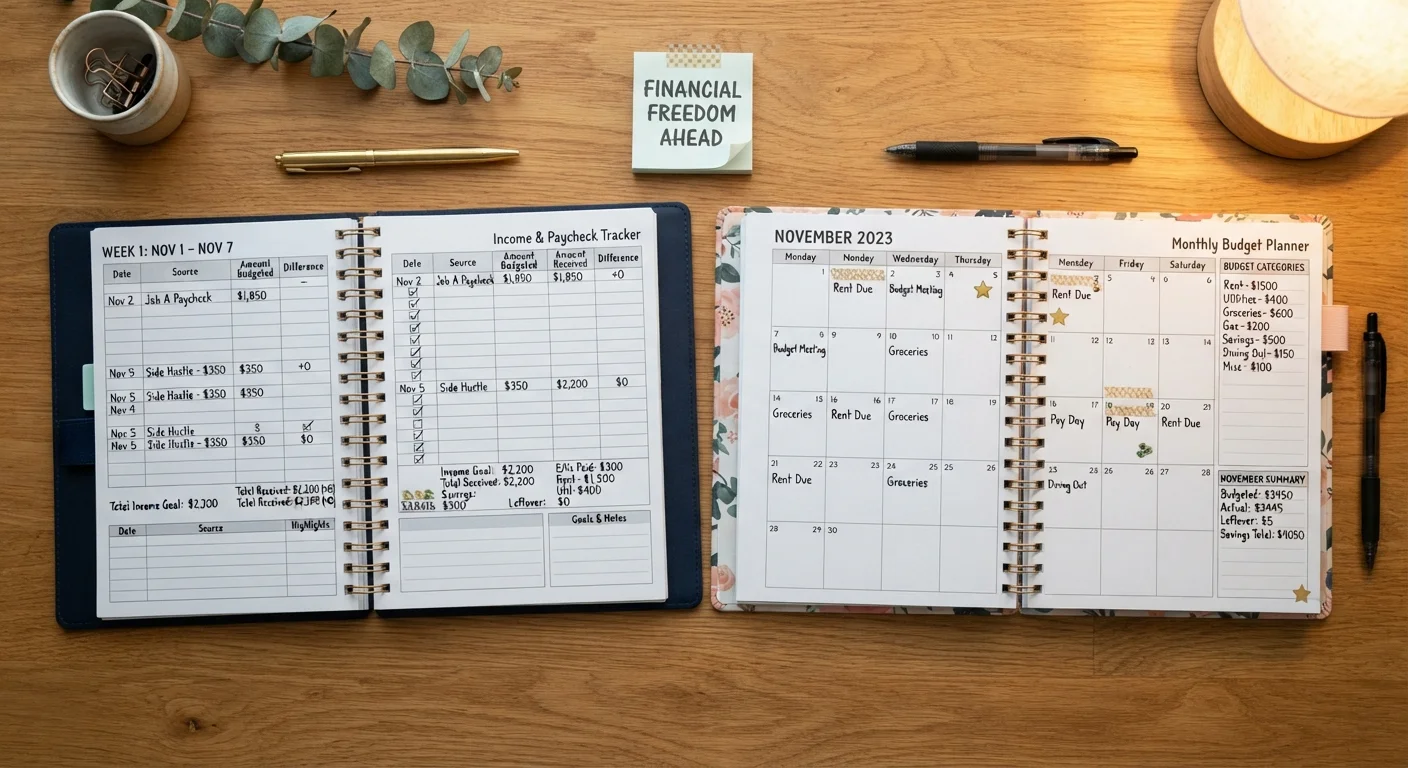
Paycheck budgeting means you create a fresh spending plan each time you're paid. Every deposit triggers a deliberate allocation: rent contribution, groceries, utilities, savings, and discretionary spending are all assigned before a dollar moves. This method keeps your budget tightly synced with actual cash on hand.
Monthly budgeting works on the calendar. You plan all income and expenses from the first to the last day of the month, regardless of when paychecks arrive. Bills, savings goals, and spending categories are set once and tracked across the full 30 or 31 days.
Both approaches ask the same core question — where does each dollar go? — but they answer it on different timelines. For a deeper grounding in spending categories before choosing a rhythm, see this plain-English guide to fixed, variable, and discretionary spending.
How Paycheck Budgeting Works in Practice
Each payday becomes a mini budget meeting. You note what came in (always use your net, or take-home, amount — budgeting from gross income is one of the most common early errors), then assign every dollar to a category before spending begins.
For someone paid biweekly, this means roughly 26 budget cycles per year. That frequency creates natural checkpoints. If you overspend on dining out in one cycle, you correct it in the next — two weeks later, not a full month later.
Try a Hybrid Approach
Set your savings targets and fixed-bill allocations on a monthly basis, then divide those amounts by the number of paychecks you receive each month. This way you get the broad visibility of monthly planning while keeping each spending decision grounded in what you've actually received. Many people find this hybrid feels less rigid and more sustainable over time.
The biggest strength here is cash-flow alignment. You're never spending money you haven't received yet. This makes paycheck budgeting especially useful for people managing tight margins or trying to avoid overdraft fees.
The challenge: some bills — rent, car insurance, quarterly subscriptions — don't follow your pay schedule. You'll need a system, often called a «bill sinking fund,» where a portion of each paycheck is set aside for those lump-sum due dates.
How Monthly Budgeting Works in Practice
Monthly budgeting treats your total monthly income as one pool. On the first of the month (or a day or two before), you map out all expected income and expenses across 30 days. This view makes it straightforward to handle bills that arrive on set calendar dates — mortgage on the 1st, utilities on the 15th, credit card on the 22nd.
It also maps naturally onto the 50/30/20 rule and zero-based budgeting — two frameworks most people learn and apply on a monthly basis.
| Paycheck Budgeting | Monthly Budgeting | |
|---|---|---|
| Planning frequency | Every pay period (weekly, biweekly) | Once per calendar month |
| Best pay schedule fit | Weekly or biweekly pay | Semi-monthly or monthly pay |
| Feedback speed on overspending | Fast — next cycle is days away | Slower — up to 30 days |
| Handling calendar-date bills | Requires sinking fund allocation | Bills map directly to calendar |
| Setup complexity | Moderate — repeats each paycheck | Lower — set once per month |
| Overdraft risk management | Strong — tied to actual deposits | Moderate — relies on projection |
| Long-term goal planning | Harder to see the big picture | Easier to track monthly totals |
The limitation is the time gap between planning and feedback. A spending mistake on the 5th might not feel significant until a review on the 30th. For people new to budgeting, that lag can allow overspending to compound. If you've watched a monthly budget fall apart after the first few weeks, the patterns behind early budget failure are worth understanding before you start again.
Choosing the Right Rhythm for Your Situation
Your pay frequency is the most logical starting point. If you're paid monthly or twice a month (semi-monthly, meaning on the 1st and 15th), a monthly budget is a natural fit — your income and the calendar already align. If you're paid every other week (biweekly) or weekly, paycheck budgeting or a hybrid approach may feel more intuitive.
Also consider your spending patterns. Do you tend to overspend in the first half of the month, assuming more money is coming? Paycheck budgeting's shorter cycles can curb that. Do you struggle to remember which big bills are due when? A monthly calendar view keeps them all visible at once.
If your income varies — you're a freelancer, contractor, or gig worker — neither standard method solves the core problem alone. Budgeting frameworks built for irregular income address that specific challenge.
Whatever rhythm you choose, build in a buffer. Unexpected expenses derail more budgets than poor planning does — these approaches to budget flexibility can help protect the plan you build.
This article is for general informational and educational purposes only and does not constitute personalized financial advice. Consider consulting a qualified financial professional for guidance tailored to your specific situation.