
Vertical Storage vs. Drawer Systems: Choosing the Right Approach for Small Spaces

Key Takeaways
Option A
Vertical Storage
The height-maximizing, space-multiplying approach.
Best for: Rooms where floor space is limited but wall height is available, and visibility of stored items is a priority.
Option B
Drawer Systems
The contained, clutter-concealing classic.
Best for: Households that prefer a tidy, enclosed look and need organised separation of smaller, everyday items.
If your room has low ceilings or limited wall space
Drawer Systems
Drawer units work within a compact footprint without relying on vertical wall runs, making them adaptable to awkward or low-ceilinged rooms.
If you want to make a small room feel more open and airy
Vertical Storage
Tall shelving draws the eye upward, creating a sense of height and freeing the floor — both of which make tight spaces feel more spacious.
If you share your home and need a system everyone can maintain
Drawer Systems
Clearly labelled drawers create individual zones that are easy for multiple people to follow, reducing household friction over tidiness.
If you store bulky or irregularly shaped items
Vertical Storage
Open shelving and tall cabinets accommodate oversized or oddly shaped objects that simply won't fit in standard drawer depths.
If aesthetics and a clutter-free look are your priority
Drawer Systems
Drawers keep contents fully hidden behind a consistent, clean facade — ideal for living rooms, bedrooms, and shared areas where visual calm matters most.
What Each Approach Actually Does
Storage decisions in small spaces are rarely about quantity — they're about how space is used. Vertical storage and drawer systems represent two distinct philosophies, and understanding each one helps you choose confidently.
Vertical storage refers to any system that builds upward rather than outward: wall-mounted shelves, tall bookcases, pegboards, floor-to-ceiling cabinets, and hanging organisers. Its core advantage is that it trades unused wall height for usable capacity without consuming extra floor area.
Drawer systems include freestanding dressers, built-in drawer units, under-bed drawer frames, and modular chest configurations. These store items horizontally in enclosed compartments, keeping them hidden, separated, and — critically — out of sight. For anyone curious about overlooked storage opportunities in your existing home, both systems often work alongside solutions you haven't yet tapped.
| Criterion | Vertical Storage | Drawer Systems |
|---|---|---|
| Floor space used | Minimal — builds upward | Moderate — wider footprint |
| Visibility of contents | High (open shelving) | Low — contents concealed |
| Clutter control | Requires ongoing tidiness | Hides disorder quickly |
| Best item types | Bulky, varied, display items | Small, flat, categorised items |
| Installation complexity | Wall anchoring often needed | Freestanding, no tools required |
| Adaptability | Highly modular and adjustable | Fixed compartment sizes |
| Visual effect | Draws eye upward, adds height | Low profile, visually calm |
Strengths and Limitations Side by Side
Each system has genuine advantages — and real trade-offs. Vertical storage is unmatched for maximising capacity in rooms with high ceilings. Open shelving in particular keeps items visible and accessible, which helps some people stay organised. The downside: open shelves collect dust, require consistent tidiness, and can feel visually busy if items aren't carefully curated.
Drawer systems shine when you need to separate smaller items — clothing, stationery, craft supplies — into logical categories. Enclosed drawers conceal disorder instantly. However, deep drawers can become chaotic if not managed with dividers, and wide drawer units still claim meaningful floor space.
Wall Anchoring Is a Safety Requirement
Tall shelving and floor-to-ceiling cabinets must be secured to wall studs or masonry — not just drywall. Unsecured tall units pose a genuine tip-over risk, particularly in households with children or pets. Always follow the manufacturer's anchoring instructions and, where in doubt, consult a professional installer rather than skipping this step.
If your household includes multiple people with different tidiness habits, the structure that suits the least tidy member tends to work best overall. Our guide to organising a home with multiple people explores practical systems that households can realistically maintain together.
How to Decide: Practical Factors to Weigh
Before committing to either approach, consider these four questions:
- What are your ceiling and wall dimensions? Rooms with ceilings above 8 feet have more to gain from vertical storage. Rooms with limited clear wall runs may suit drawer units better.
- What types of items need storing? Folded clothing, small accessories, and documents suit drawers. Books, bags, display objects, and bulky equipment suit vertical shelving.
- How often do you access items? Frequently used items belong where you can reach them without bending, rummaging, or unstacking. Open shelving or shallow drawers at eye-to-waist height work well here.
- What does the room need to feel like? A bedroom typically benefits from the calm of concealed storage. A home office or utility room may prioritise visibility and fast access over aesthetics.
For utility rooms, garages, and sheds, vertical wall-mounted systems are often the practical frontrunner. See our guide to taming overlooked storage spaces for room-specific advice.
~35%
Usable space gained by using full wall height
Interior design studies generally estimate that using wall height from floor to ceiling can increase effective storage capacity by roughly a third compared to waist-height storage alone.
8 ft
Standard US residential ceiling height
The typical US home ceiling sits at around 8 feet — enough to accommodate standard tall shelf units, though ceiling height varies widely by era and home type.
Combining Both Systems for Maximum Effect
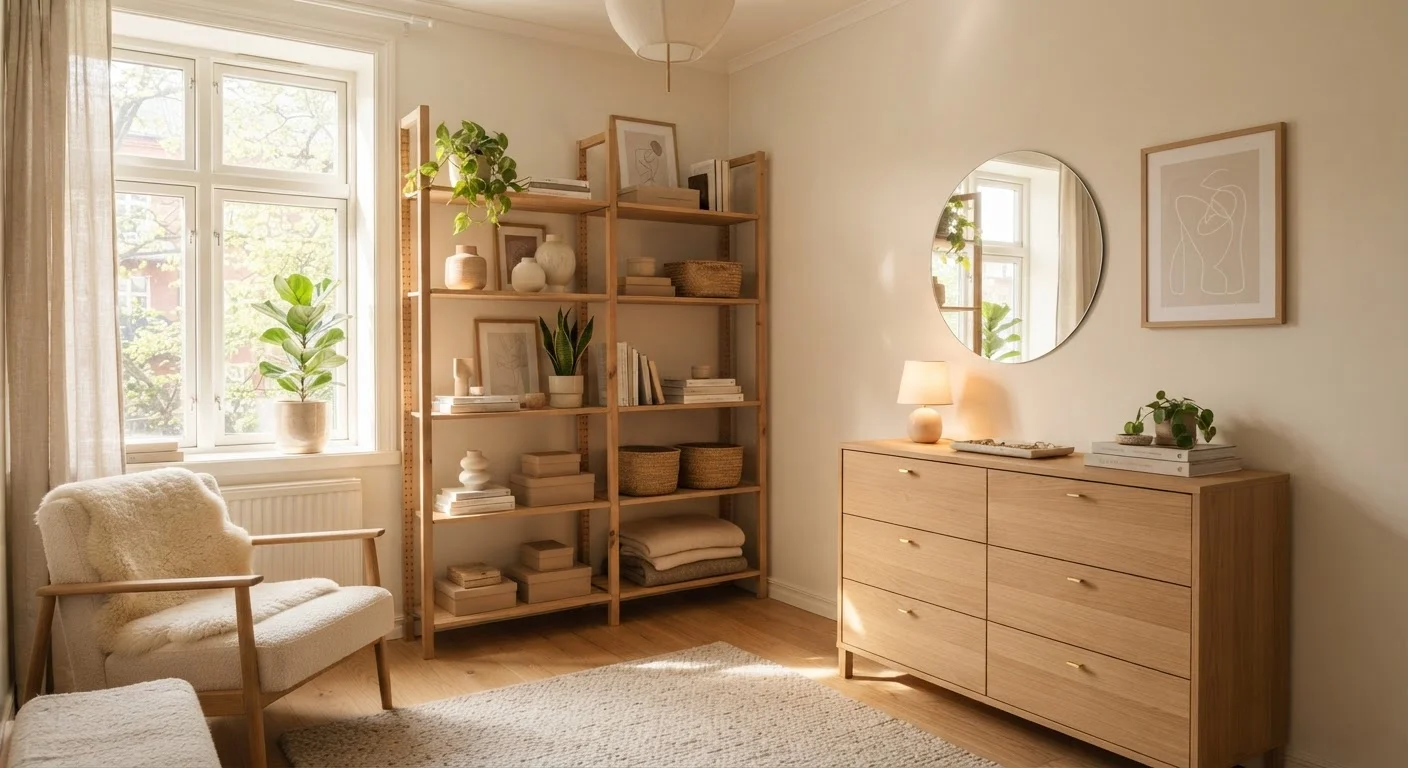
In practice, the most functional small spaces rarely rely on just one approach. A bedroom might use a tall wardrobe cabinet for vertical clothing storage alongside a low three-drawer chest for folded items and accessories. A living room might feature wall-mounted shelving for books and décor while a sideboard with drawers handles media and everyday clutter.
The key principle is to match the system to the type of item and the frequency of access — not to pick a single approach and apply it uniformly. Think in zones: what needs to be seen, what needs to be hidden, and what needs to be grabbed daily.
It's also worth considering floor choices when planning furniture placement — certain storage units work better on hard flooring than on thick carpet. Our flooring comparison guide covers how different surfaces affect furniture stability and room feel. The right combination of storage systems, thoughtfully placed, can genuinely transform how a small space functions and how calm it feels to live in.