

Key Takeaways
Why the Big Sort-Out Never Seems to Hold
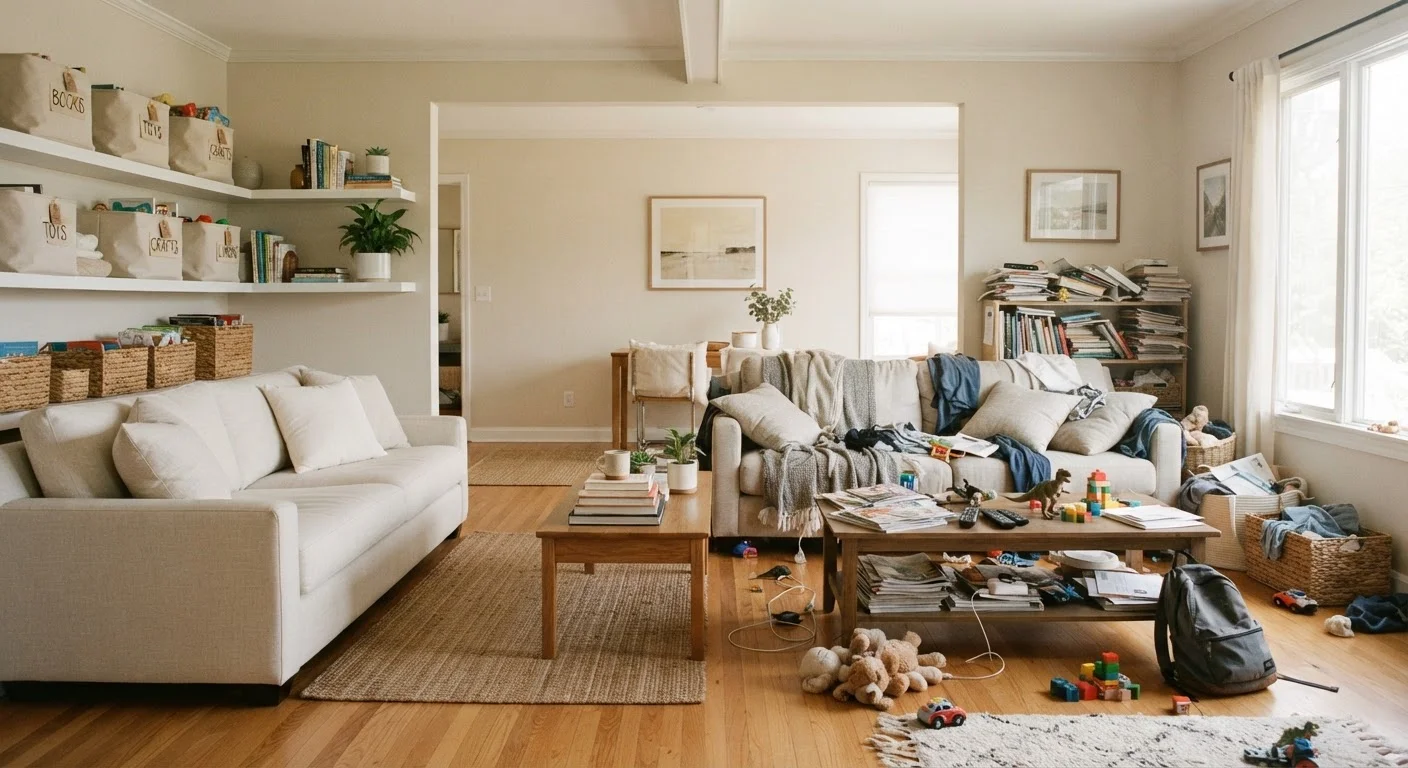
Most of us know the feeling: you spend an entire weekend decluttering, labelling storage boxes, and clearing every surface — and within a month, the chaos is creeping back. This frustrating cycle isn't a personal failure. It's the predictable result of treating organisation as a one-time event rather than an ongoing practice.
Understanding why clutter accumulates in the first place is a helpful starting point. But knowing the mistakes that undermine tidiness after a big sort-out is what actually breaks the cycle. The errors below are common, understandable — and entirely avoidable.
Organising without reducing: creating storage for everything you own rather than questioning whether you need it all.
Why it happens: Decluttering feels wasteful or emotionally difficult, so it's easier to reorganise existing items than to part with them.
Building systems based on aspirational behaviour rather than actual habits.
Why it happens: During a motivated sort-out, people plan for their ideal selves — imagining routines they don't currently have.
Skipping the maintenance plan entirely after the initial organisation effort.
Why it happens: The big sort-out feels like a finish line, so ongoing upkeep isn't factored in from the start.
Relying on willpower alone instead of environmental design to maintain tidiness.
Why it happens: We tend to overestimate our motivation and underestimate how much the physical layout of a home shapes behaviour.
Failing to involve everyone in the household in the organisation system.
Why it happens: One person typically drives the effort and designs a system that makes sense to them but isn't communicated or agreed upon with others.
Neglecting high-accumulation zones like garages, utility rooms, and entryways after the main rooms are sorted.
Why it happens: These spaces feel less visible or important, so they get deprioritised during a sort-out and become overflow destinations afterward.
Building Habits That Actually Make Organisation Stick
Avoiding these mistakes shifts your approach from reactive to proactive. Instead of waiting until disorder becomes unbearable, you're maintaining order incrementally — which takes far less effort than starting over.
80%
Of clutter is items with no designated home
Professional organisers commonly cite the absence of a fixed location as the primary driver of recurring household clutter.
10–15 min
Weekly reset time to prevent clutter build-up
Home organisation experts generally recommend brief, consistent maintenance sessions rather than infrequent large-scale sort-outs.
A few principles make the difference. First, design your systems around your real behaviour, not your ideal behaviour. If shoes genuinely always end up near the door, put storage there — don't insist they belong upstairs. Second, keep the friction of putting things away as low as possible: lids on storage boxes slow you down; open baskets don't. Third, schedule brief weekly resets (ten to fifteen minutes) to catch drift before it compounds.
If you live with others, shared organisation requires explicit agreement. Our guide on organising a home with multiple people offers practical frameworks for households where tidiness standards differ — because a system only one person maintains will always collapse.
Finally, remember that organisation and minimalism are not the same thing. You don't need to own less to live tidily, as we explore in this companion piece on minimalism versus home organisation. What you need is a place for everything — and a habit of returning things to their place.
Avoid Buying Storage Before Decluttering
One of the most common missteps is purchasing bins, baskets, and shelving units before deciding what to keep. Storage bought prematurely often doesn't fit the items you actually retain — or encourages keeping things you'd otherwise let go. Declutter first, measure your remaining items, then invest in storage solutions that fit your actual needs.
If you're not sure where to begin rebuilding after a relapse into clutter, this room-by-room prioritisation guide can help you regain momentum without feeling overwhelmed.