

Key Takeaways
Why Small Changes Add Up
Most homeowners assume a home needs a full renovation before it feels genuinely different. In practice, targeted small-scale changes — the kind you can plan on a weekend and complete in an afternoon — often deliver a more noticeable shift in how a space feels than a single large project. The reason is simple: our experience of a home is cumulative. Lighting, texture, smell, flow, and visual clutter all register together.
If you're not sure where to begin, our guide on where to start when your house needs work covers the fundamentals for first-time improvers. Once you have your bearings, the changes below are some of the most impactful places to put your attention.
Replace cabinet and door hardware
Hardware is one of the most overlooked surfaces in any home. Dated drawer pulls or tarnished door handles can make an otherwise clean kitchen or bathroom feel tired. Swapping them out — with a screwdriver and the right screw length — takes less than an hour per room and requires no special skills. Choose a finish that appears at least twice elsewhere in the room (light fixtures, faucet, mirror frame) to create a sense of intention rather than accident.
Consistent hardware finishes create a sense of intention that elevates an entire room.
Layer your lighting instead of relying on one overhead source
A single overhead fixture flattens a room. Layered lighting — combining ambient, task, and accent sources — adds depth, warmth, and flexibility. Floor lamps, table lamps, and under-cabinet strips are all straightforward additions that don't require rewiring. Dimmers, where your existing switches allow them, give you the most control over mood at any time of day. If you're considering a screen upgrade as part of a room refresh, the way ambient light interacts with your display matters more than most people expect — see how screen technology interacts with real room light.
Layered lighting adds depth and warmth that a single overhead fixture simply cannot achieve.
Add or swap out a rug
Rugs do more than protect floors. They define zones in open rooms, soften acoustics, add warmth underfoot, and anchor furniture arrangements. A room without a rug can feel unfinished even when everything else is in order. The standard guidance for living rooms is to size up rather than down: ideally, the front legs of your main seating should sit on the rug. Natural fiber, wool, and low-pile synthetic options each behave differently in high-traffic areas — consider foot traffic and ease of cleaning before choosing a material.
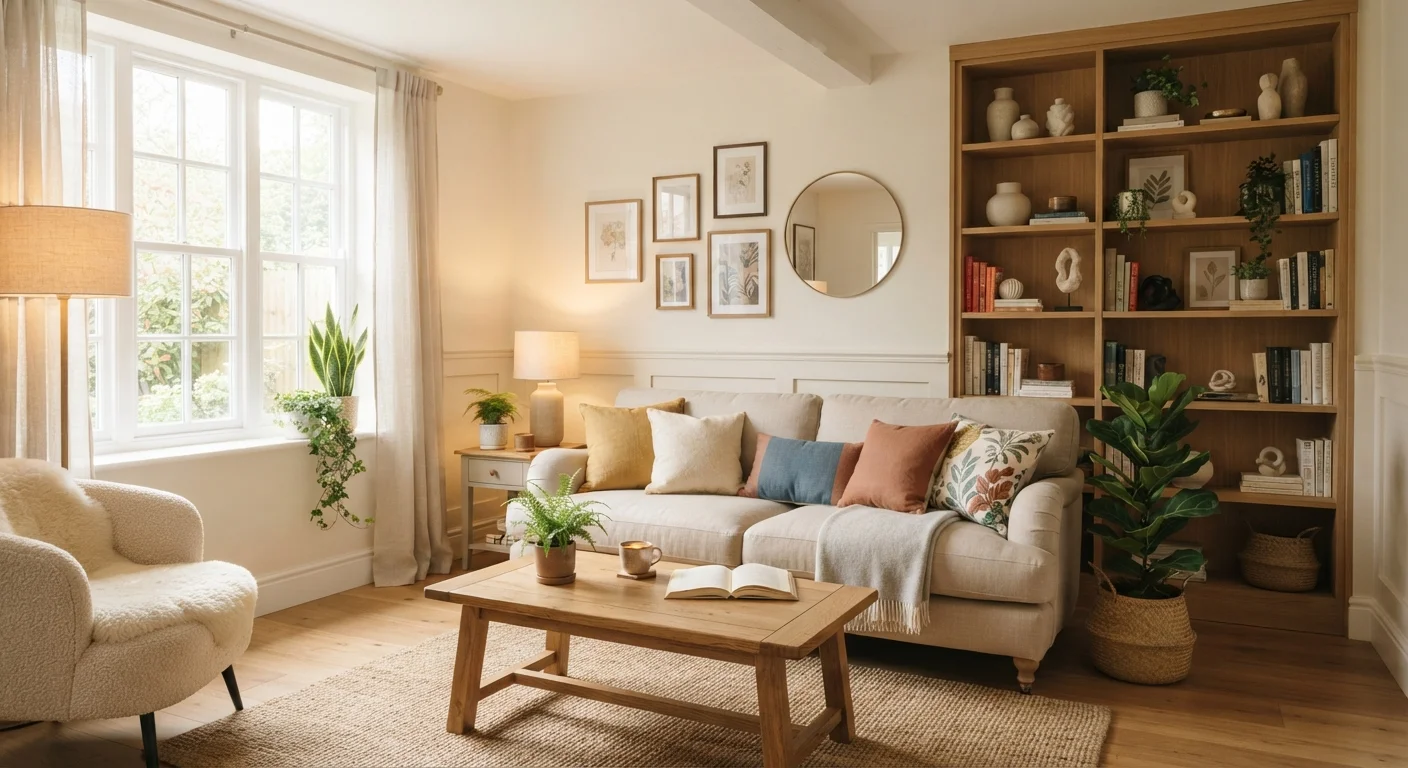
A properly sized rug anchors furniture and makes a room feel intentionally designed.
Clear and edit your surfaces
Visual clutter is tiring. Countertops, side tables, and shelves that hold too many objects simultaneously compete for attention and make a space feel smaller and more chaotic than it actually is. A useful exercise is to remove everything from a surface, clean it, and only return what you genuinely use or want to look at. The difference between minimalism and good organisation matters here: the goal isn't to own less, but to make deliberate choices about what's visible. Even one cleared counter in a kitchen changes the daily experience of that room.
Removing even a fraction of surface clutter measurably reduces the visual noise of a room.
Update window treatments
Curtains and blinds affect light quality, privacy, insulation, and perceived ceiling height — often all at once. Hanging curtain rods close to the ceiling (rather than just above the window frame) and extending them several inches beyond the window width makes windows appear larger and rooms taller. Lightweight linen or cotton panels soften a room without blocking natural light. Heavy blackout options work well in bedrooms where light control matters most. This is one of the few changes that alters how a room feels at every hour of the day.
Ceiling-height curtain rods make windows appear larger and rooms feel taller immediately.
Create a functional entryway system
The entryway sets the tone for every return home. When it lacks a clear system for keys, bags, shoes, and outerwear, those items scatter throughout the house and the entry becomes a source of low-level daily friction. A simple solution — hooks at a consistent height, a tray or basket for shoes, a small shelf for everyday items — doesn't require building anything permanent. Wall-mounted hooks and floating shelves can be installed in a single afternoon and transformed with paint or a small mirror above them. For more on making use of overlooked space, storage solutions you already have is a practical next read.
A clear entryway system reduces daily friction and immediately improves the feel of coming home.
Putting It All Together
None of these changes requires construction, permits, or specialist trades. Most can be completed with basic tools and a clear afternoon. The key is sequencing: start with what you see and touch most often — entryways, lighting, and the main gathering room — then work outward.
Start with one room at a time
Trying to refresh every area of a home simultaneously often leads to half-finished changes that feel more disruptive than helpful. Pick the room where you spend the most time and complete all relevant changes there before moving on. You'll build momentum, spend more intentionally, and notice a clear before-and-after that keeps you motivated.
If other people share your home, small organizational changes are most effective when everyone agrees on the system. Our article on organising a home with multiple people offers practical ways to build shared habits. You might also find hidden storage potential you haven't considered yet — see storage solutions you already have. Small improvements compound: each one makes the next feel easier and the home feel more like yours.