

Key Takeaways
Start here
Assess Before You Act
Next
Build Your Basic Tool Kit
Then
Know When to DIY and When to Call a Pro
Important
Safety Fundamentals Every Homeowner Should Know
Finally
Build Confidence Through Small Wins
Assess Before You Act
The most common first-time homeowner mistake isn't picking the wrong tool — it's skipping the assessment phase entirely and jumping straight to fixes. Before spending a dollar or clearing a weekend, walk through your home systematically and write down everything that needs attention.
Group your list into three categories: safety issues (anything that could harm people or cause rapid damage), maintenance items (things that will worsen if ignored), and improvements (upgrades that add comfort or value). Work through them in that order. A leaking roof joint ranks above a scuffed baseboard every time.
If you're feeling paralyzed by the sheer volume, our guide on where to start when every room needs attention offers a practical framework for building momentum room by room. And if unfamiliar terminology is slowing you down, bookmark the Home Improvement Terms Explained glossary — it's built for exactly this stage.
Take Photos Before You Start
Before any project, photograph the area from multiple angles. These images are invaluable if something goes wrong mid-project and you need to retrace your steps — or if you later need a contractor to assess your work. Store them in a dedicated home folder on your phone or computer.
Build Your Basic Tool Kit
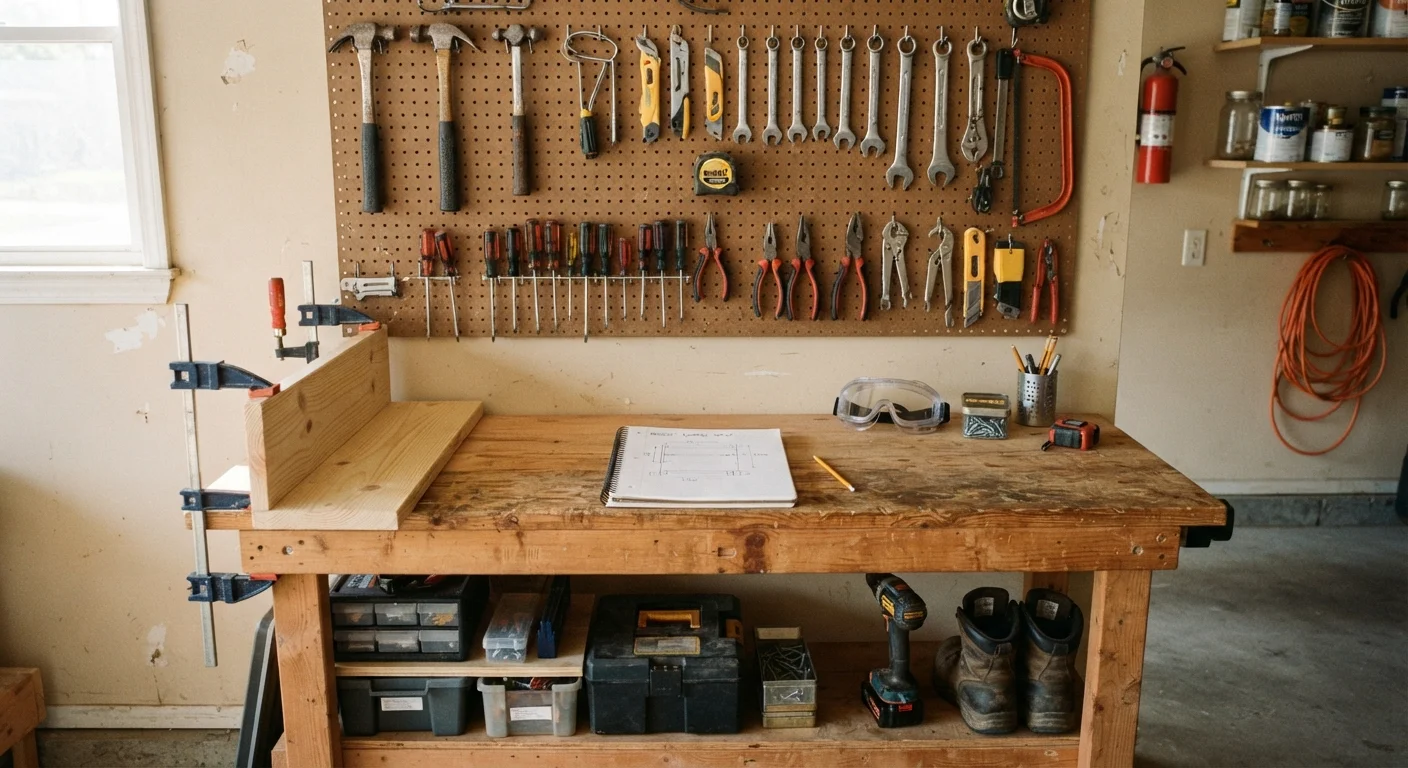
You don't need a fully stocked workshop to handle most beginner projects. A focused starter kit is more useful — and less overwhelming — than buying tools speculatively.
- Hammer — for driving nails, light demolition, and adjusting stubborn frames
- Screwdriver set — both flathead and Phillips in multiple sizes
- Tape measure — a 25-foot retractable model handles almost any residential measurement
- 4-foot level — ensures shelves, frames, and fixtures are truly straight
- Utility knife — for scoring, trimming, and cutting a wide range of materials
- Adjustable wrench and pliers — essential for plumbing fixtures and fasteners
- Cordless drill/driver — a single mid-range model covers drilling and driving tasks across dozens of projects
Buy quality where it matters most — primarily cutting and measuring tools — and keep everything in one portable bag or box so you're not hunting for gear mid-project.
Load-bearing wall
A wall that supports the weight of the structure above it. Removing or modifying one without professional guidance can compromise the integrity of your home.
Circuit breaker
A safety switch in your electrical panel that automatically cuts power to a circuit when it detects a fault or overload. Turning one off is the first step before any electrical work.
Caulk
A flexible sealant applied to gaps and joints around windows, doors, and plumbing fixtures to block air, moisture, and pests.
Building permit
Official approval from your local government required for certain construction or renovation work. It ensures the project meets safety codes and is inspected appropriately.
Stud
A vertical framing member — typically wood — inside a wall. Anchoring heavy items like shelves or TVs into studs (rather than just drywall) provides a secure hold.
Weatherstripping
Strips of material applied around doors and windows to seal gaps that let in drafts, moisture, and outside air, improving comfort and energy efficiency.
Know When to DIY and When to Call a Pro
One of the most valuable skills a homeowner can develop is knowing where their own abilities end. Attempting the wrong project doesn't just waste time — it can create safety hazards, void warranties, or generate repair bills larger than the original problem.
Generally safe for confident beginners: painting, caulking, installing hardware, patching drywall, replacing faucet washers, assembling furniture, basic landscaping, and weatherstripping.
Typically requires a licensed professional: electrical panel work, gas line connections or repairs, load-bearing structural changes, roofing beyond minor patching, and any plumbing that connects to the main supply line.
Many states also require permits and inspections for projects that might seem minor — always verify with your local building department before starting. If you do hire someone, our checklist on what to verify before hiring a tradesperson covers the key questions to ask and documents to request. Don't skip this step — a few minutes of due diligence protects you significantly.
Safety Fundamentals Every Homeowner Should Know
Technical skill matters, but safety knowledge matters more. These basics should be second nature before you begin any project.
Know Your Shutoffs
Locate your main water shutoff valve, your electrical panel (and label every breaker), and your gas meter shutoff if applicable. In an emergency, hesitation is dangerous.
Use Personal Protective Equipment
Safety glasses, work gloves, and dust masks are inexpensive and prevent the majority of common DIY injuries. Keep them accessible rather than buried in a drawer.
Respect Electrical Circuits
Always turn off the breaker — and verify power is off with a non-contact voltage tester — before touching any wiring. Never assume a switch alone makes a circuit safe.
Watch for Hidden Hazards
Older homes may contain lead paint or asbestos in insulation, floor tiles, and joint compound. If your home was built before 1980 and you're planning to cut, sand, or disturb existing materials, have them tested before proceeding. Contact your local health department or the EPA's website for guidance on certified testing.
Lead and Asbestos Are Real Risks
Homes built before 1980 may contain hazardous materials that are harmless when left undisturbed but dangerous when cut, sanded, or demolished. Do not proceed with any work that disturbs suspected materials until you've had them professionally tested. This is not an area to skip for the sake of saving time or money.
Build Confidence Through Small Wins
Home improvement is a skill that compounds over time. Every small project you complete — a replaced door handle, a patched wall, a weatherstripped door — teaches you something that makes the next task faster and less stressful.
Resist the urge to start with the most dramatic project on your list. A bathroom renovation is not a beginner project. Replacing a toilet seat is. Staining a deck is more manageable than building one. The progression matters.
Keep a simple log of what you've done, what worked, and what you'd do differently. This becomes an invaluable reference as your home ages. Also note that good habits transfer across domains — the same discipline that keeps a home well-maintained applies equally to other ownership responsibilities, whether that's staying on top of car maintenance for first-time owners or managing home systems proactively.
Finally, don't let imperfect results discourage you. Every experienced homeowner has a story about a project that didn't go to plan. What separates them from beginners isn't perfection — it's persistence and a willingness to learn from what went wrong. You'll get there.