

Key Takeaways
Option A
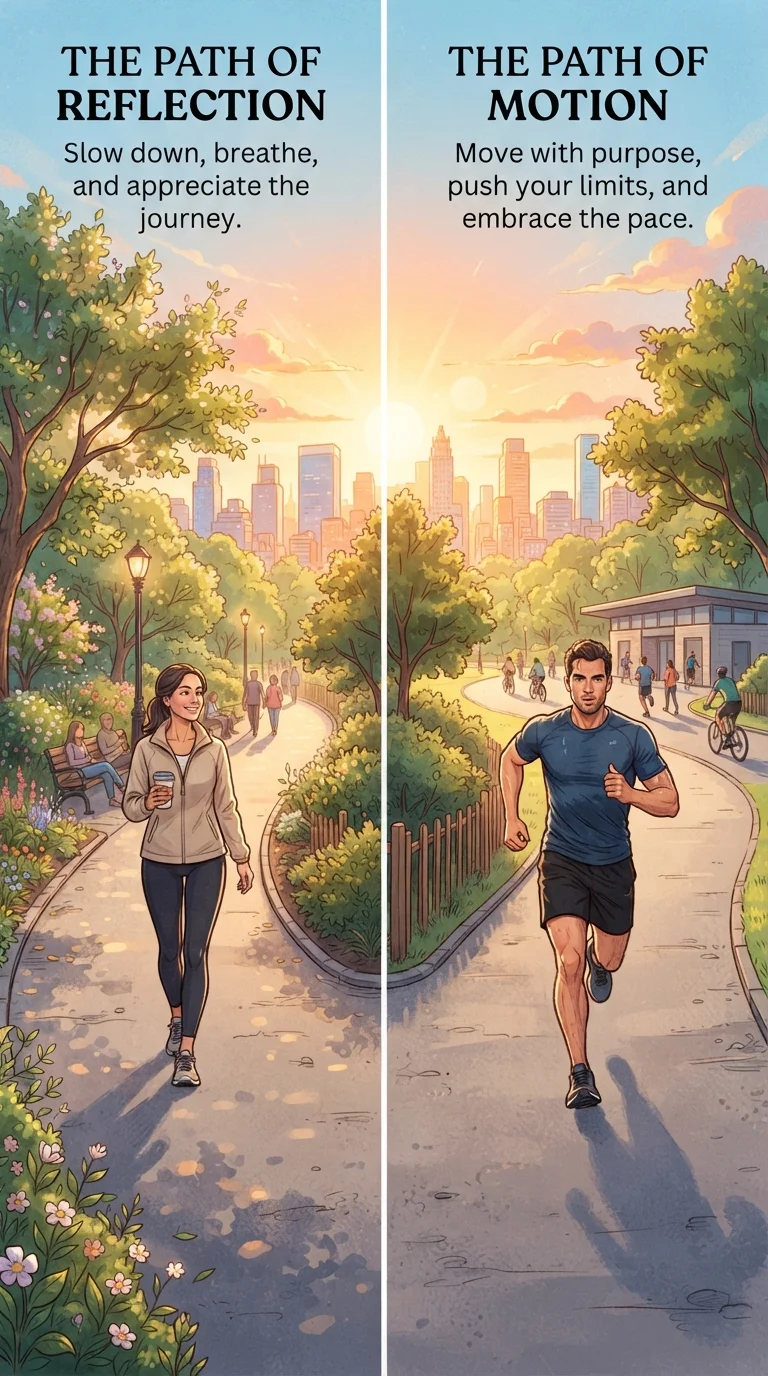
Walking
The sustainable, low-impact movement habit.
Best for: Adults seeking a gentle, joint-friendly routine they can maintain for decades without significant injury risk.
Option B
Running
The higher-intensity cardiovascular challenge.
Best for: Those looking to build cardiovascular fitness efficiently and who can tolerate the greater physical demands of higher-impact exercise.
If you're new to regular exercise or returning after a long break
Walking
Walking's low injury risk and easy entry point make it the most sustainable starting habit, allowing you to build consistency without overwhelming your body.
If you want to maximize cardiovascular fitness in limited weekly time
Running
Running produces greater cardiovascular adaptations per minute of exercise, making it more time-efficient for those who are already conditioned for it.
If you have chronic joint issues or are managing an injury
Walking
Walking imposes significantly less stress on joints than running, making it the safer long-term movement choice for those with musculoskeletal concerns.
If you want the best of both without overcommitting
Walking
Brisk walking — or a walk-run interval approach — gives meaningful health gains while keeping injury risk manageable and adherence high.
If you're an experienced exerciser prioritising longevity and variety
Running
For conditioned adults, moderate running frequency is associated with improved cardiovascular markers and longer healthspan when combined with rest and recovery.
Cardiovascular Benefits: How Each Stacks Up
Both walking and running are aerobic activities that strengthen the heart, improve circulation, and support healthy blood pressure over time. Research consistently shows that either habit — practised regularly — reduces the risk of cardiovascular disease compared to a largely sedentary lifestyle. To understand what's happening inside your body during each, see our overview of cardiovascular fitness.
The meaningful difference is one of intensity and efficiency. Running elevates heart rate more substantially, producing stronger cardiovascular adaptations in less time. A 30-minute run will typically deliver a greater aerobic training effect than a 30-minute walk at a relaxed pace. However, walking at a brisk pace — roughly 3 to 4 miles per hour — closes much of that gap, particularly for adults who haven't exercised regularly before.
| Criterion | Walking | Running |
|---|---|---|
| Cardiovascular intensity | Moderate (higher at brisk pace) | High |
| Calories burned per 30 min (approx.) | 120–180 kcal | 280–400 kcal |
| Joint impact per stride | Low (1× body weight) | High (2–3× body weight) |
| Injury risk | Low | Moderate to high |
| Entry barrier | Very low | Moderate |
| Long-term sustainability | High for most adults | Varies by individual |
| Equipment needed | Comfortable shoes | Running shoes, proper attire |
What matters most isn't which activity is superior in a lab setting, but which one you'll actually do consistently. The difference between active and sedentary daily patterns is far more significant for health than the difference between walking and running specifically.
Injury Risk and Physical Demands
Running is a high-impact activity. Each stride generates forces roughly two to three times your body weight through your joints, making knees, hips, ankles, and feet common sites of overuse injury — particularly when mileage increases too quickly. Common running-related injuries include shin splints, stress fractures, and iliotibial band syndrome.
Walking produces far lower impact forces and carries a substantially lower injury risk. This makes it accessible for a much wider range of adults, including those returning to exercise after time off, older adults, or people managing weight or joint conditions. It also means recovery between sessions is typically faster, supporting more consistent effort over weeks and months.
~1–2%
Annual injury rate for regular walkers
Research suggests recreational walkers experience injury rates significantly lower than runners, who face rates of 20–80% per year depending on training load.
~150 min
Weekly moderate activity recommended by US guidelines
The U.S. Department of Health and Human Services recommends at least 150 minutes of moderate-intensity aerobic activity — such as brisk walking — per week for healthy adults.
27%
Reduced cardiovascular disease risk from regular walking
A large analysis published in the journal Arteriosclerosis, Thrombosis, and Vascular Biology found regular walkers reduced their cardiovascular disease risk by approximately 27%.
This doesn't mean running is unsafe — for many conditioned adults, it's both manageable and rewarding. But the injury math matters for long-term habit formation. A habit interrupted repeatedly by injury is difficult to sustain. If you're weighing which to start with, injury risk is a legitimate factor, not a reason to avoid movement altogether.
Sustainability and Who Each Habit Suits
The single strongest predictor of exercise benefit is whether you keep doing it. Running demands a minimum fitness foundation, appropriate footwear, and gradual progression. It also requires more recovery time between intense sessions. For some adults, it becomes a deeply ingrained and enjoyable routine. For others, the barrier to entry — physical or psychological — makes it hard to stick with.
Walking, by contrast, requires almost no equipment, no fitness prerequisite, and fits naturally into daily life. A lunchtime walk, an evening stroll, or commuting on foot all count. This flexibility is a genuine advantage. Designing a routine around consistency rather than motivation is a core principle of lasting behaviour change — and walking often wins on that front simply because it's easier to start and resume.
A practical middle path for many adults is interval-style walking with occasional running, building intensity progressively. Tracking your activity with a wearable device can help you stay accountable, though it comes with its own trade-offs — see our balanced look at wearable health trackers for more. The goal is a pattern of movement that remains realistic across seasons, life changes, and ageing.
This article is for general informational purposes only and does not constitute medical advice. Consult a qualified healthcare professional before beginning any new exercise programme, especially if you have existing health conditions, joint problems, or cardiovascular concerns.