

Key Takeaways
Why Hazard Perception Is a Skill, Not an Instinct
New drivers are often told to "stay alert" without being shown what that actually means in practice. Alertness isn't a feeling — it's a set of scanning behaviors that experienced drivers apply continuously without thinking about them consciously.
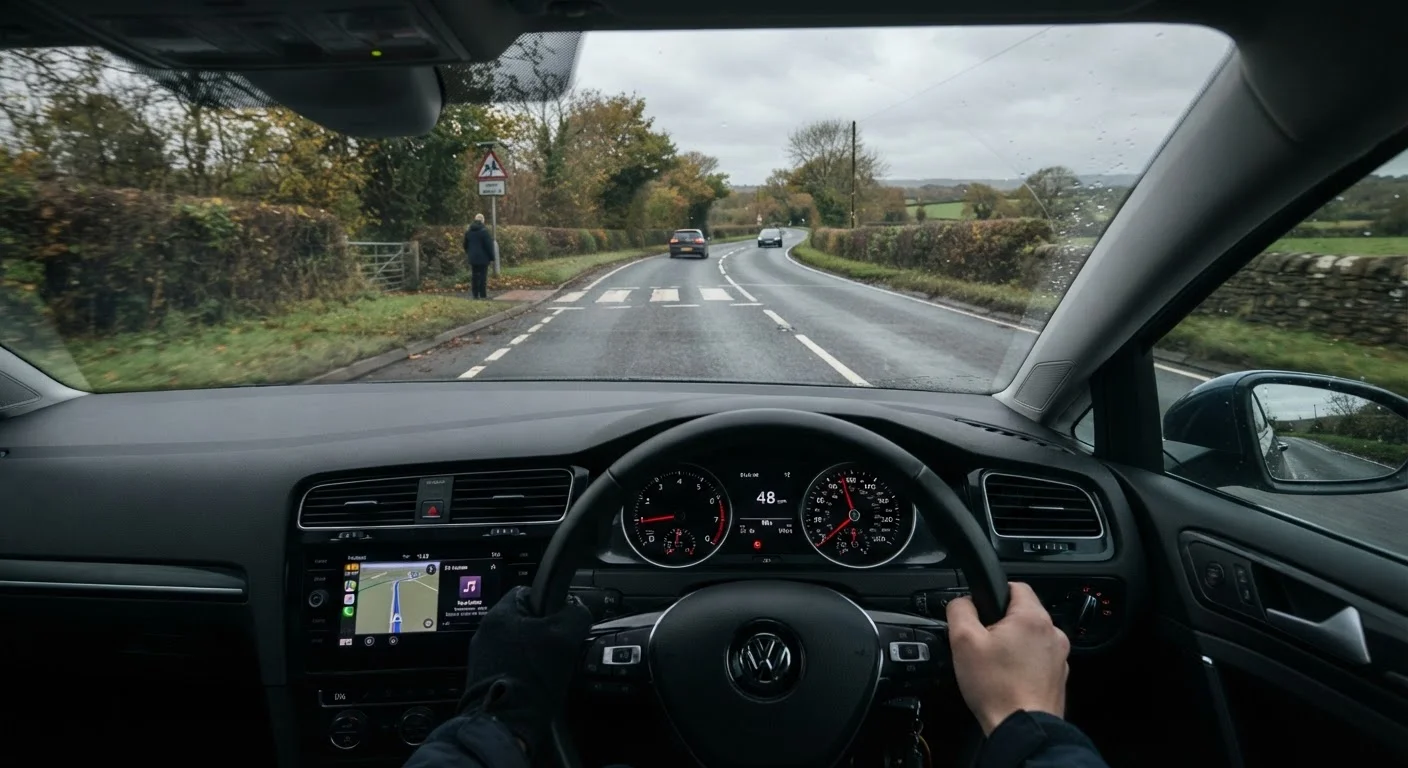
The core difference between a reactive driver and a proactive one isn't reflexes. It's where they look and what they look for. Research in driver behavior consistently shows that experienced drivers direct their gaze further ahead, gather information earlier, and make smoother adjustments as a result. Reactive braking, weaving, and near-misses are often symptoms of scanning too close to the front bumper.
Developing these habits takes deliberate practice, but the principles are straightforward. And unlike some driving skills, hazard perception can be improved by any driver — at any experience level — simply by understanding what to watch for. See also how complacency quietly degrades scanning habits in drivers who consider themselves experienced.
The Core Practices of Proactive Road Reading
The following habits form the foundation of what driving safety professionals call hazard perception — the ability to identify developing risks before they demand an emergency response.
Scan 12–15 seconds ahead on open roads, not just the vehicle in front of you
Fixating on the car directly ahead means you're reacting to it rather than reading what's developing further down the road. Scanning further ahead gives you more time to adjust speed gradually, change position, or prepare for a stop — without emergency inputs.
Use your mirrors on a regular cycle — not only when you plan to change lanes
Knowing what's behind and beside you is essential context for any forward hazard you spot. Without mirror awareness, you can't safely brake hard, change lanes, or pull over because you don't know what space is available around you.
Adjust your following distance based on conditions, not just habit
A fixed following distance doesn't account for speed, road surface, visibility, or your vehicle's braking capability. What feels safe at 35 mph on dry pavement is genuinely unsafe at 55 mph in rain. Most drivers underestimate how much distance they actually need in varying conditions.
Read intersections before you reach them — not as you enter them
Intersections are where a disproportionate share of collisions occur. Drivers who approach already watching for cross-traffic, signal-runners, and pedestrian movements can respond to developing problems before they arrive at the conflict point.
Recognize when your own state is compromising your perception
Hazard perception depends entirely on the driver's attentional capacity. Fatigue, stress, and distraction reduce the quality of your scanning before you notice it happening — and fatigued drivers often believe they are performing normally. Fatigue is one of the most underestimated driving risks precisely because it impairs self-assessment.
Know the road signs that govern the environment you're moving through
Signs communicate speed limits, lane rules, upcoming hazards, and right-of-way expectations. Misreading or overlooking them removes information your hazard perception relies on — you can't anticipate what the road requires if you're not fully reading its instructions.
Quick Wins You Can Apply on Your Next Drive
You don't need a training course to start improving your hazard perception today. These specific actions make an immediate difference and build the habit loop over time.
For drivers new to high-speed environments, highway driving introduces its own hazard-reading demands — particularly around merging, gap judgment, and fatigue.
Environmental and Behavioral Cues Worth Learning
Some hazards announce themselves clearly. Others are softer cues that require pattern recognition to interpret. Over time, experienced drivers build a mental library of situations that warrant extra attention.
Environmental cues
- Parked vehicles — doors may open, pedestrians may step out from between cars
- Dips and crests in the road — vehicles, cyclists, or debris may be hidden just beyond your sightline
- Wet or leaf-covered surfaces — wet roads affect braking distances more than most drivers expect, especially near intersections
- Construction zones — lane shifts, reduced speed limits, and unpredictable worker movements
Behavioral cues from other road users
- Hesitant or erratic positioning — a vehicle drifting toward a lane line may be distracted or fatigued
- Pedestrians looking at phones — they may step into the road without checking traffic
- Children near the curb — unpredictable movement is far more likely near playgrounds and school zones
- Cyclists checking over their shoulder — they are likely about to change position
Right-of-Way Rules Affect Hazard Prediction
Understanding who has right-of-way at roundabouts, unmarked intersections, and yield lines helps you predict what other drivers are likely to do — or fail to do. A plain-English reference to right-of-way rules can sharpen your ability to anticipate conflict points before you reach them.
Understanding how hazard types differ between urban and rural roads helps you tune your scanning to the environment you're in.
Vehicle Condition: The Foundation Beneath Your Scanning
No amount of skilled road reading compensates for a vehicle that can't respond when you need it to. Your brakes, tires, and lights are the physical limits within which all your hazard perception operates.
Tires in poor condition extend your stopping distance — often dramatically. Brakes that are wearing down may feel fine until they don't. Learning to read brake wear symptoms early is as important as learning to read the road. Similarly, a pre-trip vehicle check should be a non-negotiable habit before any long drive.
The Car Maintenance hub covers the essential upkeep checks that keep your vehicle's safety systems working as they should — giving your road-reading skills the mechanical foundation they depend on.
~40%
Of fatal crashes occur at or near intersections
According to the Federal Highway Administration, intersections are a disproportionate site of serious collisions — underscoring why proactive scanning before the conflict point matters.
3× longer
Wet-road stopping distances vs. dry
Road safety guidance consistently notes that wet pavement can extend stopping distances significantly — often cited at roughly three times that of dry conditions at the same speed.