

| Minimum coverage type required in most US states | Bodily injury & property damage liability (Insurance Information Institute) |
| Common deductible range for comprehensive/collision | $250–$1,500 (General industry range; varies by insurer and policy) |
| Liability limit notation format | Split limits (e.g., 25/50/25) or single combined limit (Standard US insurance industry format) |
| Grace period for missed payment (typical) | 10–30 days (varies by insurer and state) (State regulations vary; confirm with your insurer) |
| States with no-fault insurance systems | Approximately 12 states (Insurance Information Institute) |
Why Policy Language Matters
Most drivers sign their car insurance policy, file it away, and don't look at it again until they need to file a claim. That's a risky habit. The language in your policy determines exactly what is — and isn't — covered, and the gap between what you assumed and what you're actually owed can be significant.
The good news: insurance documents follow consistent structures and use a defined set of terms. Once you understand those terms, the document becomes far less intimidating. This reference guide walks through the core vocabulary so you can read your policy with confidence.
For a broader look at coverage types, see our guide to comprehensive vs. third-party car insurance.
Premium
The amount you pay — monthly, semi-annually, or annually — to keep your insurance policy active. Premiums are calculated based on factors like your driving record, vehicle type, location, and chosen coverage levels.
Deductible
The dollar amount you agree to pay out-of-pocket before your insurance company covers the rest of a claim. For example, a $500 deductible means you pay the first $500 of a covered repair.
Liability Coverage
Coverage that pays for injuries or property damage you cause to others in an at-fault accident. It does not cover your own vehicle or your own medical costs.
Collision Coverage
Optional coverage that pays to repair or replace your vehicle when it's damaged in a collision with another vehicle or object, regardless of who is at fault.
Comprehensive Coverage
Optional coverage that pays for vehicle damage caused by events other than collisions — such as theft, vandalism, hail, fire, or flooding.
Policy Limit
The maximum dollar amount your insurer will pay for a covered claim. Any costs beyond this limit become your financial responsibility.
Uninsured/Underinsured Motorist
Coverage that protects you when the at-fault driver has no insurance or insufficient coverage to pay for your injuries or vehicle damage.
Exclusion
A specific situation, condition, or type of damage that your policy explicitly does not cover. Exclusions are typically listed in a dedicated section of your policy documents.
The Core Coverage Categories Explained
A standard US auto insurance policy is built from several distinct coverage components. You may carry some or all of these, depending on your state's requirements and what you've chosen.
| Minimum coverage type required in most US states | Bodily injury & property damage liability (Insurance Information Institute) |
| Common deductible range for comprehensive/collision | $250–$1,500 (General industry range; varies by insurer and policy) |
| Liability limit notation format | Split limits (e.g., 25/50/25) or single combined limit (Standard US insurance industry format) |
| Grace period for missed payment (typical) | 10–30 days (varies by insurer and state) (State regulations vary; confirm with your insurer) |
| States with no-fault insurance systems | Approximately 12 states (Insurance Information Institute) |
Liability coverage is the foundation required in nearly every state. It protects other people — not you — when you cause an accident. The split-limit notation (e.g., 100/300/100) is the most common way this is expressed; see the note below for how to read it.
Split Limits vs. Combined Single Limit
Liability coverage is often expressed as three numbers — for example, 25/50/25. These represent: $25,000 per person for bodily injury, $50,000 per accident for bodily injury, and $25,000 for property damage. A combined single limit policy instead offers one pooled dollar amount that can be applied across all categories in a single claim. Understanding this distinction helps you accurately compare policies.
Collision and comprehensive coverage are optional in most states but frequently required by lenders if you're financing or leasing your vehicle. Collision pays for accident-related vehicle damage; comprehensive covers non-collision events like theft, hail, or a fallen tree. Both carry a deductible you choose when setting up your policy.
Personal Injury Protection (PIP) and Medical Payments (MedPay) cover medical expenses for you and your passengers regardless of fault. PIP is mandatory in no-fault states; MedPay is optional elsewhere. These are distinct from your health insurance, though coordination between the two is worth clarifying with your insurer.
1 in 8
US drivers estimated to be uninsured
According to the Insurance Research Council, roughly one in eight drivers on US roads carries no insurance at all.
~38%
Drivers who carry only minimum required liability
A significant share of insured drivers hold only state-minimum liability coverage, leaving potential gaps in protection for their own vehicles.
Uninsured and underinsured motorist coverage fills the gap when the at-fault driver can't pay. Given that a meaningful share of drivers carry no insurance, this coverage deserves serious consideration even where it's not mandated.
Reading the Declarations Page and Policy Details
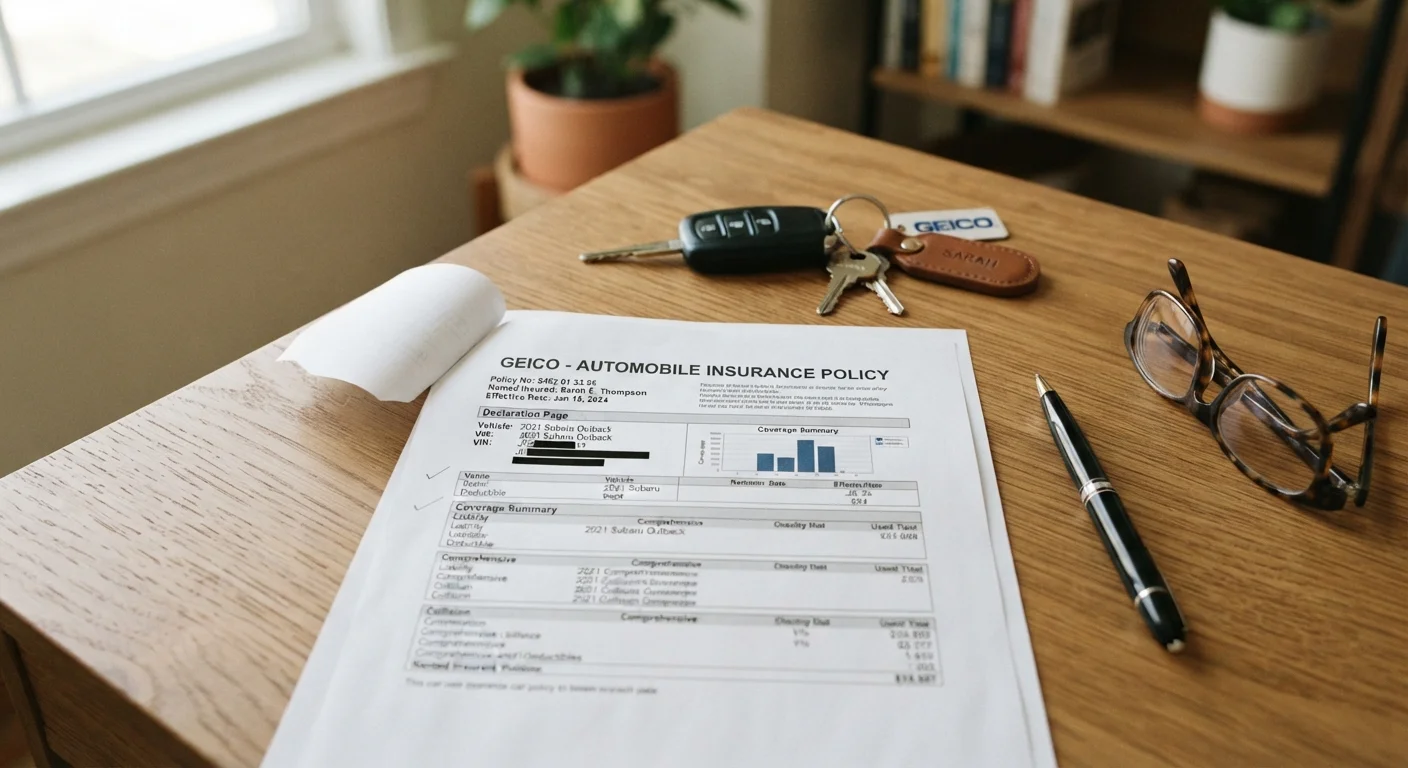
Your declarations page (often called the "dec page") is the summary at the front of your policy. It lists your coverage types, each limit, your deductible amounts, the policy period, and your premium. If you're unsure what coverage you currently carry, this is the first place to look.
Within the full policy document, pay close attention to two sections: Covered Perils (what is included) and Exclusions (what is not). Common exclusions include intentional damage, racing, using a personal vehicle for commercial delivery without an endorsement, and damage occurring while an unlisted driver operates the vehicle.
An endorsement (sometimes called a rider) is an add-on that modifies your base policy — expanding coverage for items like roadside assistance, rental reimbursement, or custom equipment. Endorsements are listed on your dec page and explained in supplemental documents.
If you're ever unsure how a term applies to your specific situation, contact your insurer's claims or customer service department directly before assuming coverage exists. The time to clarify is before a loss, not after.
This article is for general informational purposes only and does not constitute insurance, legal, or financial advice. Coverage requirements, terms, and definitions vary by state and insurer. Always review your own policy documents and consult a licensed insurance professional for guidance specific to your situation.