

| Number of warning light colors | 3 primary tiers: red, amber, and green/blue |
| Red light response | Stop safely as soon as possible |
| Diagnostic code reader | Required to pinpoint the specific cause of most amber lights |
| Owner's manual | Most authoritative source for your vehicle's specific warning symbols |
| TPMS standard in the US | Mandatory on all new passenger vehicles since 2008 (NHTSA Federal Motor Vehicle Safety Standard No. 138) |
Why Warning Lights Exist — and Why They Matter
Your dashboard is essentially your car's communication system. When a sensor detects something outside normal operating parameters, it triggers a warning light to alert you. Ignoring these signals doesn't make the underlying issue go away — in many cases, it allows a minor problem to escalate into a serious and expensive one.
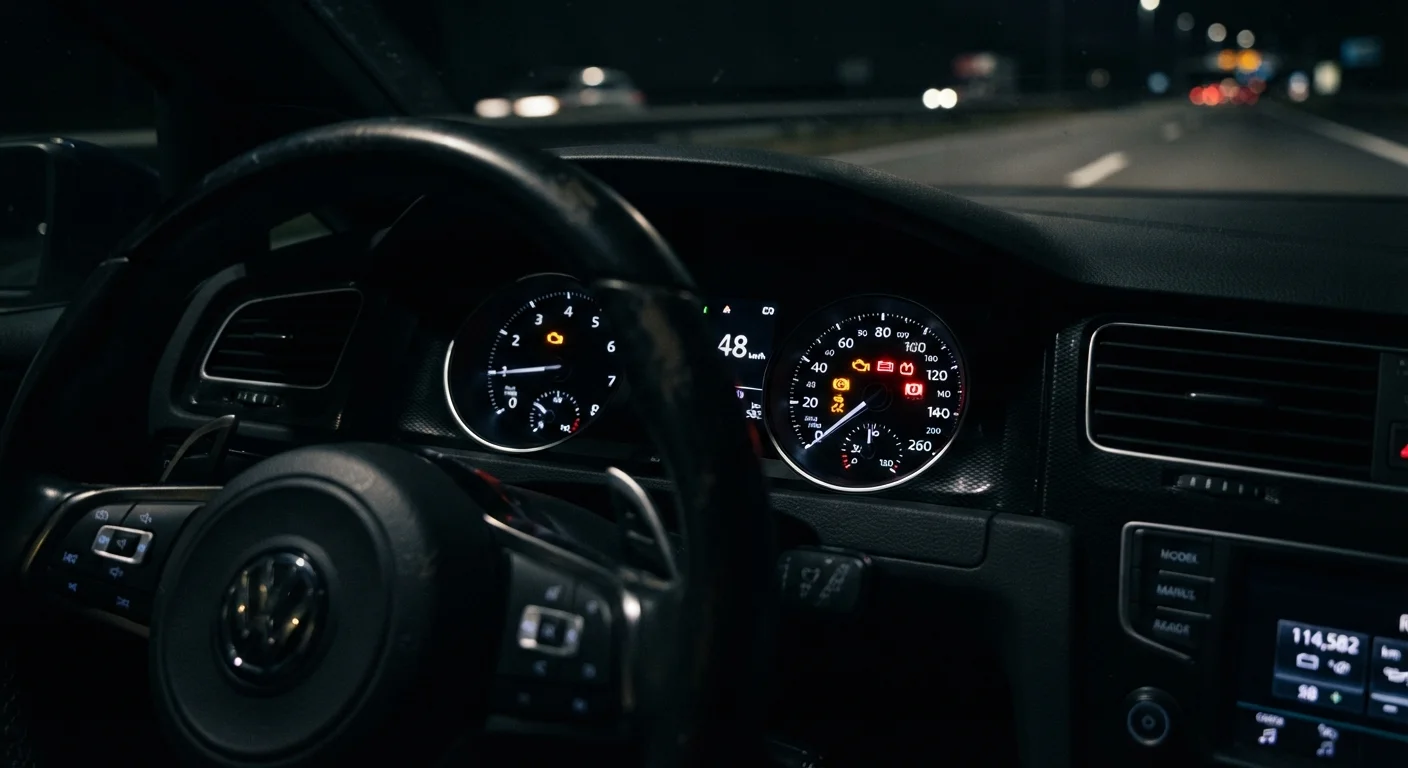
Warning lights generally fall into three urgency tiers. Red lights signal immediate danger: stop driving safely as soon as possible and seek professional help. Amber or yellow lights indicate a condition that needs attention soon but doesn't always require you to pull over instantly. Green or blue lights are informational — they confirm a system is active, such as high beams or cruise control.
Keep in mind that while understanding these symbols is useful, diagnosing the specific cause usually requires a scan tool that reads your car's onboard diagnostic codes. A qualified mechanic can retrieve these codes quickly and accurately. See how scheduled maintenance connects to warning light prevention for more context on staying ahead of these issues.
| Number of warning light colors | 3 primary tiers: red, amber, and green/blue |
| Red light response | Stop safely as soon as possible |
| Diagnostic code reader | Required to pinpoint the specific cause of most amber lights |
| Owner's manual | Most authoritative source for your vehicle's specific warning symbols |
| TPMS standard in the US | Mandatory on all new passenger vehicles since 2008 (NHTSA Federal Motor Vehicle Safety Standard No. 138) |
The Most Common Warning Lights Decoded
Understanding the most frequently seen dashboard symbols helps you respond appropriately rather than guess.
Check Engine Light (CEL)
An amber engine-shaped symbol that indicates the onboard diagnostic system has detected a fault, ranging from a loose gas cap to a failing catalytic converter. It requires a professional scan to identify the exact trouble code.
TPMS
Tire Pressure Monitoring System. This amber icon — an exclamation point inside a flat tire cross-section — illuminates when one or more tires fall significantly below the recommended pressure, affecting handling and fuel economy.
Oil Pressure Warning
A red oil can symbol that signals dangerously low oil pressure in the engine. This is a stop-immediately situation; continuing to drive risks severe and permanent engine damage.
Temperature Warning
A red thermometer submerged in liquid that indicates the engine is overheating. Pull over safely, switch off the engine, and allow it to cool before checking coolant levels — never open a hot radiator cap.
ABS Warning
Anti-lock Braking System. An amber ABS light means the system that prevents wheel lock-up during hard braking may be inactive. Regular braking still works, but emergency stopping performance may be reduced.
Brake Warning Light
A red circle with an exclamation mark inside parentheses. It can indicate the parking brake is engaged, low brake fluid, or a fault in the braking system — each requiring different levels of urgency.
Beyond these core lights, you may also encounter a battery light (red battery symbol), which suggests your charging system isn't maintaining proper voltage — possibly a failing alternator or a weak battery. A door ajar light is low-priority but confirms a door or trunk isn't fully latched. The seat belt reminder is self-explanatory but worth taking seriously every trip.
For brake-specific symptoms that appear alongside the brake warning light — such as squealing or a spongy pedal — understanding brake wear warning signs explains what physical and audible symptoms mean and when a professional inspection is essential.
When a Light Reappears After Being Reset
If a warning light is cleared without fixing the underlying cause — whether by a mechanic, a scan tool, or disconnecting the battery — it will typically return once the system runs its diagnostic cycle again. A recurring light after a reset almost always means the root problem hasn't been resolved. Don't interpret a temporarily dark dashboard as a clean bill of health.
How to Respond Without Panicking
A warning light appearing while you're driving can be startling, but most situations allow you a moment to respond calmly. First, note the color. Red demands immediate attention — find a safe place to stop, turn off the engine, and contact roadside assistance or a mechanic. Do not attempt to continue driving with a red oil pressure or temperature warning active, as engine damage can occur within minutes.
For amber lights, check whether the car's behavior has changed — unusual smells, sounds, or handling changes alongside a warning light elevate its urgency. If the car drives normally, it's generally safe to drive directly to a repair shop rather than continuing regular use until the issue is diagnosed.
One practical habit: take a photograph of any warning light you don't recognize so you can describe it accurately to a mechanic. Your owner's manual — often overlooked in the glove compartment — contains a section listing every light specific to your vehicle's make, model, and trim level. That's always the most authoritative reference for your particular car.
Staying alert on the road matters beyond mechanical readiness. driver fatigue can impair your ability to notice and respond to warning signs, both on the dashboard and on the road ahead.