

Key Takeaways
What Sets Calm Travelers Apart
Watch any airport long enough and you'll notice two distinct types of travelers: those gliding through with quiet confidence and those frantically patting pockets and refreshing flight apps every two minutes. The difference rarely comes down to luck — it comes down to planning habits practiced consistently before the bags are even packed.
The good news is that these habits aren't complicated or time-consuming. They're simple, repeatable routines that compress anxiety before it has a chance to build. Whether you're a first-time planner or someone looking to refine their approach, our complete walkthrough for first-time travelers is a great companion to the habits below.
Back Up Every Critical Document — Twice
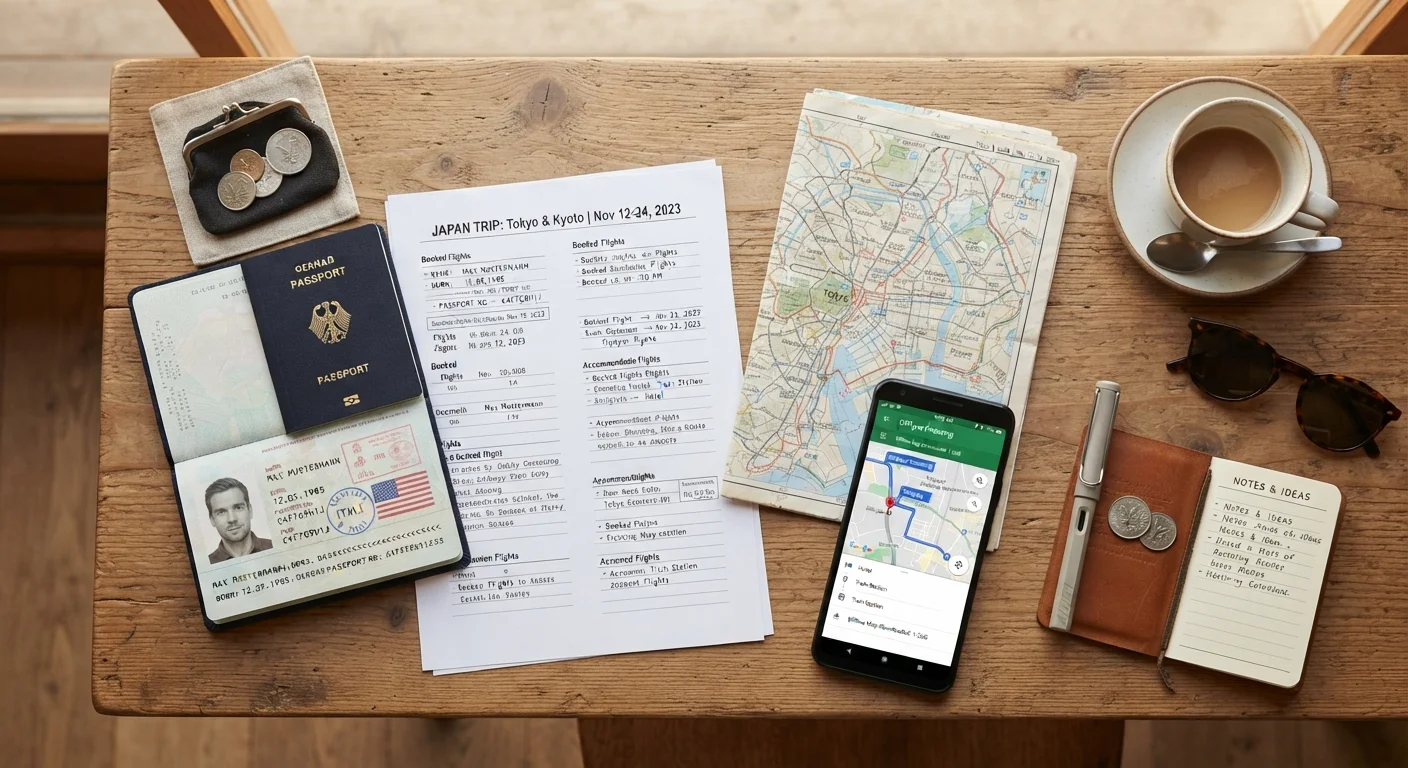
Losing your passport or printed reservation in a foreign city is a nightmare scenario that good preparation can soften considerably. Photograph every key document — passport, visa, travel insurance policy, accommodation confirmations, and medical cards — and store copies in at least two places: a secure cloud folder and an email draft you can access from any device.
Some travelers also keep a paper copy folded into a separate bag from their originals. It takes ten minutes before departure and can save days of bureaucratic untangling if something goes wrong.
Two backup locations for documents — cloud and paper — can save days of untangling.
Download Offline Maps Before You Leave Wi-Fi
Cell service is unpredictable — whether you're driving through a rural stretch of the American Southwest or navigating a historic European city center. Most major mapping apps allow you to download specific regions for offline use. Do this while connected to Wi-Fi at home, not while scrambling at the airport gate.
Offline maps work even when roaming is off, which also means you won't rack up unexpected data charges. Mark your key destinations — hotel, airport, day trip stops — in advance so they're easy to tap and go.
Download offline maps at home, not at the gate, to navigate confidently without cell service.
Research Entry Requirements Early — Not the Night Before
Visa requirements, passport validity rules, and health documentation can vary significantly by destination and even by your nationality. These aren't details to leave for the week before departure. Processing times for visas, ESTA authorizations, or specific health certificates can run from days to weeks.
Start your research at least 60 to 90 days out for international trips. Check government travel advisory sites for your home country for the most current and reliable information — and verify requirements again closer to your travel date, as rules can change. Our pre-trip research checklist walks through exactly what to verify before any international booking.
Visa and entry rules can take weeks to process — start researching at least 60 days out.
Build Buffer Time Into Every Leg of the Journey
Overpacked itineraries are one of the most common — and avoidable — sources of travel stress. When each connection or activity is scheduled back-to-back, a single delay cascades into a ruined day. Experienced travelers build in buffer: a longer layover than strictly necessary, an afternoon left intentionally free, or a dinner reservation set an hour later than they expect to arrive.
This isn't wasted time — it's the breathing room that lets you absorb delays without panic and actually enjoy the trip. See our full guide on building an itinerary that won't burn you out for practical spacing strategies.
Buffer time isn't wasted — it's the cushion that keeps delays from becoming disasters.
Pack a Purposeful Day Bag, Not Just a Carry-On
Your carry-on handles checked luggage overflow. Your day bag handles the actual day. These are different jobs. A well-considered day bag — sized for exploring, not overpacking — should contain climate-appropriate layers, a portable charger, any medications, a reusable water bottle, and offline-accessible copies of your key documents.
Tailor the contents to your specific trip type and destination climate rather than defaulting to a generic list. For a detailed breakdown by trip type and journey length, our day bag essentials reference offers a concise starting point.
A purposeful day bag tailored to your trip type makes every outing smoother and lighter.
Share Your Itinerary With Someone at Home
This one habit takes five minutes and delivers outsized peace of mind — both for you and for people who care about you. Before departure, send a full copy of your itinerary (flights, accommodations, key contact numbers) to a trusted friend or family member who isn't traveling with you.
If you miss a check-in, lose your phone, or end up in an unexpected situation, that person becomes your lifeline to help. It's a low-effort habit with high-value returns, and it's especially worth modeling for anyone traveling solo for the first time.
Sharing your itinerary with someone at home creates a safety net that costs you nothing.
Make These Habits Second Nature
Stress-free travel isn't a personality trait — it's a practice. The travelers who seem effortlessly calm have usually just internalized these steps until they feel automatic. Start with the two or three habits that address your personal weak spots, and build from there.
Start Small, Build the Habit
You don't need to overhaul your entire pre-trip routine at once. Pick the one or two habits that address your biggest travel pain points and practice them consistently on your next trip. Once they feel automatic, layer in another. Consistent small habits compound into genuinely stress-free travel over time.
If you're traveling with a group, many of these habits become even more valuable when shared across the whole party. Our guide to coordinating group travel without losing your mind covers how to align everyone's preparation so no single person carries the planning burden alone.