

Key Takeaways
Why Home Grooming Matters Beyond Appearance
Grooming is not simply cosmetic maintenance — it is a practical health monitoring system built into regular care. Each brushing session is an opportunity to detect early signs of skin conditions, parasites, lumps, or coat changes that could indicate an underlying problem. For pet owners who already understand the basics of animal behavior (see our introduction to animal behaviour), grooming is also a meaningful interaction that reinforces trust and socialization.
Home grooming is particularly valuable because it happens far more frequently than professional appointments. A groomer visited every six to eight weeks cannot catch what a weekly brush session will reveal. Across dogs, cats, rabbits, and birds, the specific needs differ — but the underlying principle is the same: consistent, calm, informed attention prevents larger problems.
If you are just starting out with a new pet, integrating grooming into your routine early pays dividends. Our guide to building a daily pet routine explains how to structure grooming alongside feeding and exercise for maximum consistency.
What you will need
Tools, Setup, and Step-by-Step Grooming
Having the right tools for each species makes the difference between a smooth session and a stressful one. Below are the key items to keep on hand, followed by step-by-step instructions for each common pet type.
Slicker brush or bristle brush
Removes loose fur, debris, and tangles from dog and cat coats during brushing sessions.
Pet nail clippers or grinder
Safely trims nails to prevent overgrowth, splitting, and discomfort across most pet types.
Fine-tooth metal comb
Detects and removes mats and checks for parasites in dense or long-haired coats.
Styptic powder
Stops minor bleeding quickly if a nail is accidentally cut too short.
Soft-bristle toothbrush (pet-formulated)
Used for dental hygiene in dogs and cats to reduce plaque and tartar buildup.
Damp cloth or unscented pet wipes
Gently cleans a bird's feathers or a rabbit's paws and bottom area without full bathing.
Establish a calm grooming environment
Choose a quiet room with good lighting and a non-slip mat or table surface. Minimize distractions — turn off loud TVs and keep other pets out of the space. Have all tools within reach before bringing your pet in, so you never need to leave mid-session.
Brush your dog according to coat type
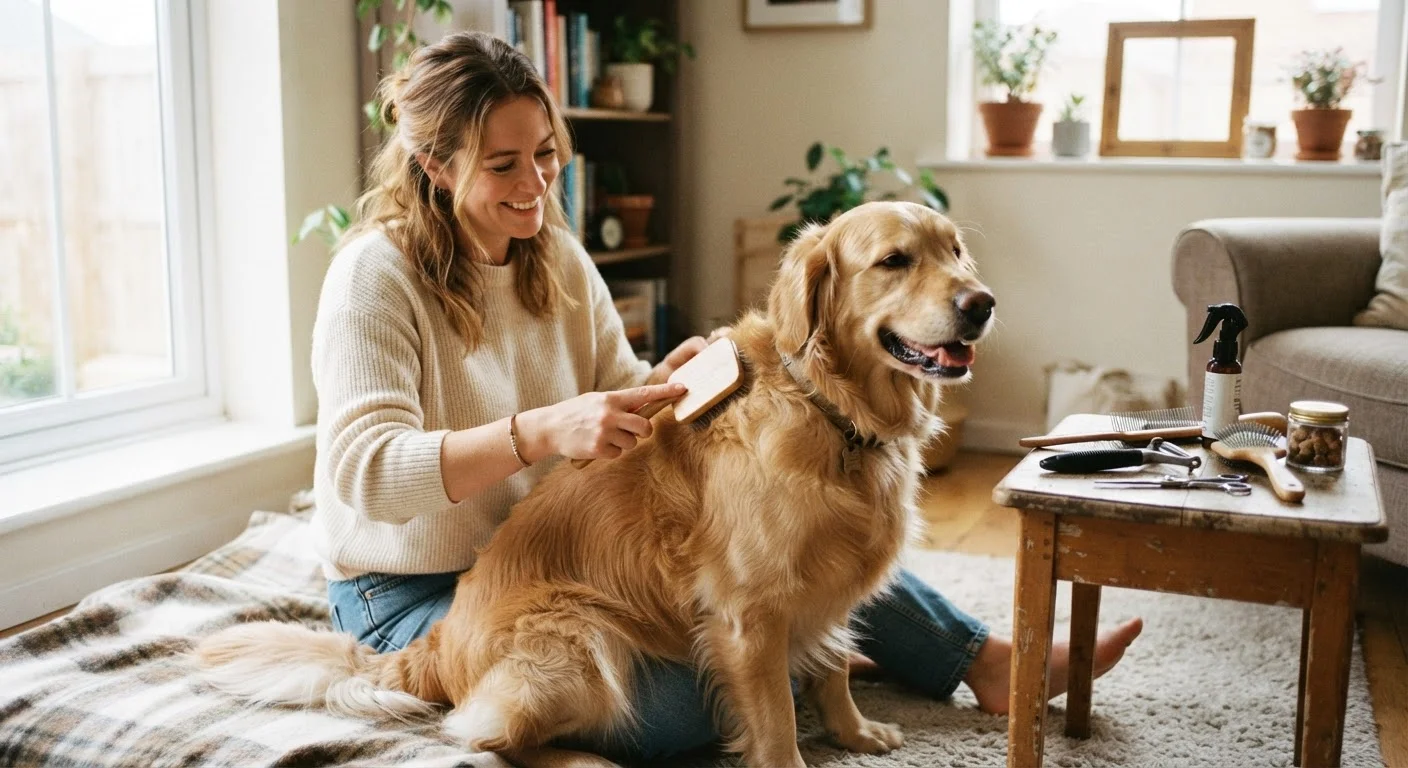
Short-coated dogs (Beagles, Boxers) need brushing once a week with a bristle brush. Double-coated or long-haired breeds (Golden Retrievers, Collies) benefit from brushing three to five times per week using a slicker brush followed by a metal comb. Always brush in the direction of hair growth, working section by section. Check the skin underneath for redness, lumps, or parasites.
Brush and check your cat's coat
Most short-haired cats groom themselves effectively and need brushing once or twice a week to reduce shedding and hairballs. Long-haired cats (Persians, Maine Coons) need daily brushing with a wide-tooth comb to prevent mat formation. Gently brush along the body, then check ears for dark waxy buildup and eyes for any discharge, which can indicate health concerns.
Groom your rabbit safely
Rabbits groom themselves like cats but shed heavily ("molt") every three months. During molts, brush daily with a soft slicker brush to remove loose fur and prevent ingestion, which can cause dangerous GI blockages. Between molts, weekly brushing is usually sufficient. Check the hindquarters weekly for soiling, which attracts flies and can cause flystrike — a serious, rapid-onset condition.
Trim nails across species
Overgrown nails cause discomfort and can lead to joint problems in dogs, cats, and rabbits. Dogs typically need nail trimming every three to four weeks; cats and rabbits every four to six weeks. Use species-appropriate clippers and cut only the clear tip, avoiding the pink "quick" (blood vessel). If you see or feel resistance, stop — you are close to the quick. Have styptic powder nearby in case of accidental nicking.
Birds' nails (talons) can also overgrow, especially in birds without access to natural perches. A veterinarian or experienced avian groomer should handle bird nail trimming initially until owners are confident.
Address feather and beak care for birds
Healthy birds preen themselves daily and typically do not need bathing assistance, though most enjoy a light misting with lukewarm water two to three times per week. Offer a shallow dish for bathing and let the bird choose to engage. Overgrown or misaligned beaks require professional trimming — attempting this at home risks injury. Check wing feathers for broken or blood feathers (feathers with an active blood supply), which require immediate veterinary attention.
Recognize when to call a professional
Some grooming needs exceed home capability. Seek a professional groomer or veterinarian when you observe: severe or skin-level matting, nails that have curled back toward the paw, signs of ear infection (odor, head shaking, dark discharge), skin wounds hidden beneath the coat, or significant behavioral resistance that poses a safety risk. Trying to push through these situations at home often worsens the problem and can harm both pet and owner.
Start Short, Build Gradually
For any pet new to grooming, keep early sessions under five minutes and focus on one task at a time. Pair every session with calm praise and a treat immediately after. Over several weeks, most pets learn to tolerate — and sometimes enjoy — routine grooming.
Never Use Human Grooming Products on Pets
Shampoos, conditioners, and nail products formulated for humans have pH levels and ingredients that can irritate or harm animal skin and coats. Always use products labeled safe for the specific species and, when in doubt, ask your veterinarian for recommendations.
Rabbits Should Rarely Be Bathed
Full water baths are highly stressful for rabbits and can cause hypothermia or fatal shock. Spot-clean soiled areas with a damp cloth only. If a rabbit's hindquarters are consistently soiled, this can signal a health issue that requires a veterinary evaluation, not a bath.
For broader guidance on setting up your home environment before your pet arrives, the New Pet Preparation Checklist covers what to have ready from day one.
This article provides general educational information about pet grooming and is not a substitute for advice from a licensed veterinarian. If your pet shows signs of pain, skin abnormalities, or behavioral distress during grooming, consult a veterinary professional.