

Key Takeaways
Reveals true spending patterns immediately
Most people significantly underestimate how much they spend in discretionary categories. Reviewing actual bank data for even one month tends to produce surprises that income-first estimates miss entirely.
Lower barrier to entry for beginners
Recording what you spend requires no forecasting skill or financial knowledge — just a bank statement and some honest categorisation. This makes it accessible to people who find traditional budgeting intimidating.
Well-suited to variable or irregular income
When monthly earnings are unpredictable, anchoring a budget to observed spending — which tends to be more stable — gives a realistic baseline that doesn't collapse when income dips.
Builds financial self-awareness over time
Regular tracking trains attention on spending decisions in real time, which research in behavioural economics suggests can gradually reduce mindless or emotionally driven purchases.
Easy to personalise to real life
Because the categories emerge from your own habits rather than a prescribed formula, the resulting budget reflects your actual lifestyle and is therefore more likely to feel achievable.
Can normalise overspending patterns
If your observed spending already exceeds your income, documenting it without making cuts simply records a problem rather than solving it. The method requires active follow-up to be effective.
Lacks built-in savings discipline
Unlike frameworks that allocate a savings percentage first (often called 'pay yourself first'), spending-first budgets treat savings as whatever is left over — which may be nothing if spending isn't reduced.
Requires consistent tracking effort
The approach depends on regularly reviewing and categorising transactions. Without a reliable system — whether an app or a spreadsheet — the data quickly becomes incomplete and the budget unreliable.
No built-in guardrails against future overspending
Income-first methods set category limits before money is spent; spending-first methods identify overages after the fact. For people prone to impulse spending, this after-the-fact structure offers little preventative friction.
Can be slow to surface income shortfalls
If several months pass before you compare totals to income, you may accumulate credit card balances or deplete savings before the budget signals a problem.
Our Verdict
A spending-first budget is a genuinely useful diagnostic tool — especially for people who have never tracked their money before or whose income fluctuates from month to month. It builds self-awareness quickly, but it requires a deliberate follow-up step: comparing spending to income and making intentional cuts or savings commitments. Used as a starting point rather than a permanent system, it can be a strong foundation for lasting financial habits.
Best for first-time budgeters, freelancers or gig workers with variable income, and anyone who wants to understand where their money actually goes before setting rigid spending limits.
What Is a Spending-First Budget?
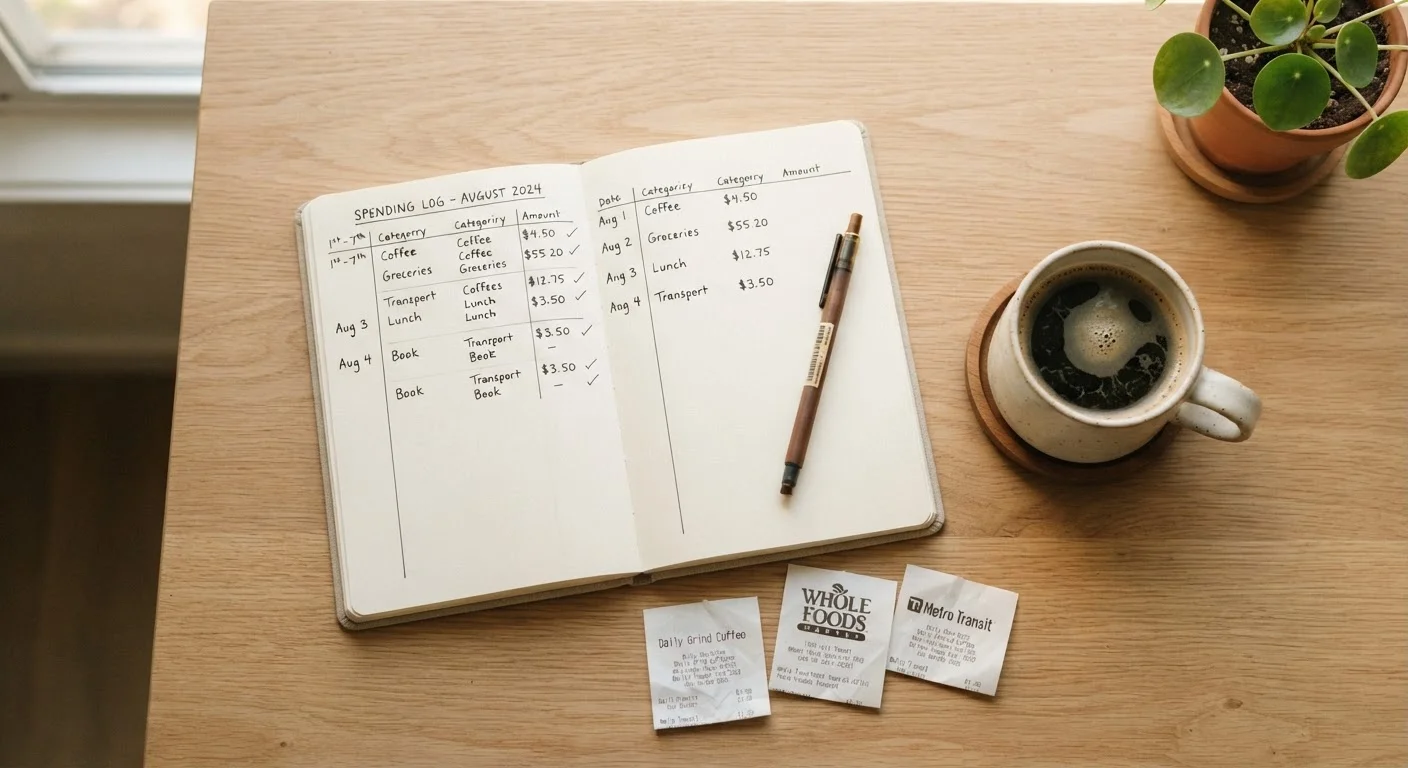
Most budgeting frameworks begin with income: you calculate your take-home pay, then allocate portions to housing, food, savings, and so on. A spending-first budget reverses that sequence. Instead of deciding in advance what you should spend, you start by documenting what you actually spend — typically over one to three months — and use that data as the foundation of your plan.
The method asks one core question: where is my money really going? Once you have an honest answer, you can compare your spending totals to your income and identify where adjustments are needed. Think of it less as a rulebook and more as an audit that becomes a budget.
This approach sits alongside other frameworks covered in our comparison of popular budgeting methods, but it differs in that it treats observed behavior — not an income formula — as the starting point.
The Advantages of Starting With Spending
There are several meaningful reasons to try this approach, particularly if you are new to budgeting or have found other frameworks hard to stick with.
Reveals true spending patterns immediately
Most people significantly underestimate how much they spend in discretionary categories. Reviewing actual bank data for even one month tends to produce surprises that income-first estimates miss entirely.
Lower barrier to entry for beginners
Recording what you spend requires no forecasting skill or financial knowledge — just a bank statement and some honest categorisation. This makes it accessible to people who find traditional budgeting intimidating.
Well-suited to variable or irregular income
When monthly earnings are unpredictable, anchoring a budget to observed spending — which tends to be more stable — gives a realistic baseline that doesn't collapse when income dips.
Builds financial self-awareness over time
Regular tracking trains attention on spending decisions in real time, which research in behavioural economics suggests can gradually reduce mindless or emotionally driven purchases.
Easy to personalise to real life
Because the categories emerge from your own habits rather than a prescribed formula, the resulting budget reflects your actual lifestyle and is therefore more likely to feel achievable.
Because the data comes from your own bank statements and receipts, a spending-first budget is grounded in your real life rather than an idealised version of it. Understanding the difference between fixed costs and variable spending is easier when you can see it in your own numbers — our plain-English guide to spending categories can help you label each line item once you've gathered the data.
The Drawbacks You Should Not Overlook
Honest budgeting means acknowledging where a method falls short. The spending-first approach carries real limitations.
Can normalise overspending patterns
If your observed spending already exceeds your income, documenting it without making cuts simply records a problem rather than solving it. The method requires active follow-up to be effective.
Lacks built-in savings discipline
Unlike frameworks that allocate a savings percentage first (often called 'pay yourself first'), spending-first budgets treat savings as whatever is left over — which may be nothing if spending isn't reduced.
Requires consistent tracking effort
The approach depends on regularly reviewing and categorising transactions. Without a reliable system — whether an app or a spreadsheet — the data quickly becomes incomplete and the budget unreliable.
No built-in guardrails against future overspending
Income-first methods set category limits before money is spent; spending-first methods identify overages after the fact. For people prone to impulse spending, this after-the-fact structure offers little preventative friction.
Can be slow to surface income shortfalls
If several months pass before you compare totals to income, you may accumulate credit card balances or deplete savings before the budget signals a problem.
The most significant risk is that recording spending without comparing it to income can feel like permission to keep spending the same way. A spending log only becomes a budget when you actively decide what to change. If your totals exceed your take-home pay, that gap needs a clear plan — not just awareness. Our saving and debt guidance hub offers practical strategies for closing that gap once you've identified it.
Who Benefits Most — and Who Should Try Something Else
The spending-first method tends to work well in specific situations:
- Irregular earners: Freelancers, contractors, and gig workers often find income-first budgets frustrating because their monthly take-home varies. Starting from stable spending data gives them a consistent baseline even when income fluctuates.
- New budgeters: If you have never tracked your money before, a few months of observation before setting limits can feel less overwhelming than jumping straight into allocation rules. Our beginner's budgeting walkthrough can complement this approach once you're ready to formalise your plan.
- People recovering from financial stress: Sometimes, shame around money makes strict budgets hard to start. Neutral observation — just recording, not judging — can lower the emotional barrier to engagement.
On the other hand, this method is less suited to people with fixed, predictable salaries who already know their income precisely, or to those who need firm spending caps immediately to avoid debt. In those cases, a structured framework like zero-based budgeting may be a more direct fit.
A Spending Log Is Not Yet a Budget
Recording your expenses is a valuable first step, but a list of past spending only becomes a budget when paired with forward-looking decisions — targets, limits, or savings commitments. Without that second step, you have a diary, not a plan. Set a calendar reminder to do your income-versus-spending comparison within the first week of gathering data.
This article is for general informational purposes only and does not constitute personalised financial advice. Consider consulting a qualified financial professional for guidance specific to your situation.
Making It Work: Turning Observation Into Action
A spending-first budget only delivers results if you move beyond recording into decision-making. Here is a practical sequence:
- Collect data: Pull two to three months of bank and credit card statements. Categorise every transaction — our guide to common budget categories provides a ready-made framework for grouping expenses.
- Calculate averages: Average your monthly spending per category to smooth out one-off costs.
- Compare to income: Subtract your total average monthly spending from your average monthly take-home pay. A positive number means capacity for saving or debt reduction; a negative number means cuts are needed.
- Set intentional targets: Adjust category totals to create a realistic forward-looking plan. This is where observation becomes a true budget.
- Review monthly: Spending patterns shift. Revisiting your numbers each month keeps the budget responsive rather than stale.
Pairing this habit with an understanding of what drives unplanned purchases can also help — our article on the psychological roots of impulse spending explores why certain expenses appear repeatedly even when we plan to avoid them.
~33%
Adults without any monthly budget
Gallup polling has consistently found that roughly one-third of U.S. adults report they do not follow a budget of any kind, suggesting many could benefit from a low-barrier entry point like spending tracking.
Over 40%
Americans with irregular income
A JPMorgan Chase Institute analysis of bank account data found that a large share of U.S. households experience meaningful month-to-month income volatility, making income-first budgeting frameworks harder to apply reliably.