

Key Takeaways
Why Most Outdoor Spaces Feel Finished by September
Many home gardens are designed around one season, usually summer. Beds burst with color in July, then look sparse and forgotten by October. It's a common pattern, and it has less to do with climate than with how the space was planned in the first place.
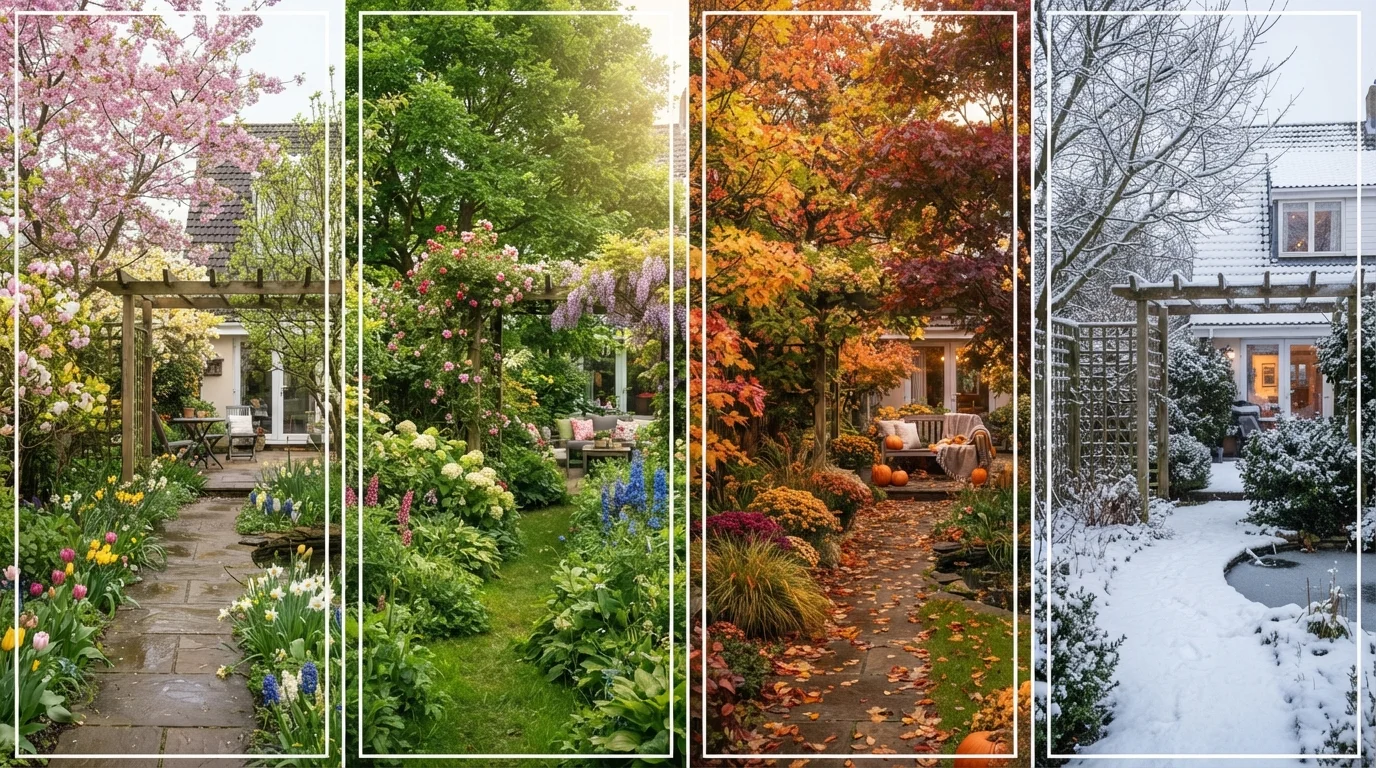
A genuinely functional outdoor space takes the full calendar into account — not just what blooms when, but how the space feels to move through, sit in, and look at across all twelve months. That means balancing living plants with structural elements, choosing species with overlapping interest, and designing seating and shelter that hold up under variable conditions.
The principles below can be applied to any outdoor space, from a compact urban patio to a sprawling suburban yard. Pair these ideas with our month-by-month garden maintenance reference to keep the momentum going once your design is in place.
Layer plants by seasonal peak, not just by height
Most planting guides organize plants by mature height — tall at the back, short at the front. That's useful for visibility, but it says nothing about when each plant performs. A better approach layers plants by their peak season of interest so that as one plant fades, another steps forward.
For example, early bulbs like snowdrops and crocuses give way to mid-spring perennials like alliums, which then hand off to summer-blooming rudbeckia and echinacea, followed by asters and sedums carrying color into autumn. Plan successions intentionally, and you'll rarely have a bare patch. Check our pollinator planting guide for species that pull double duty on color and wildlife value.
Planning plant successions by season eliminates bare patches without requiring more space.
Add structural evergreens and ornamental grasses
When flowering plants go dormant, structure is what saves a garden from looking abandoned. Evergreen shrubs — boxwood, holly, or yew — hold their form and color through winter, providing a visual anchor. Ornamental grasses like Pennisetum or Miscanthus catch light beautifully in low winter sun and offer movement even on cold days.
These plants don't need to dominate the space. Even a few well-placed specimens scattered through a bed can define the garden's bones and make it readable year-round, not just when everything is blooming.
Evergreens and grasses give the garden a readable structure when flowering plants go dormant.
Design hardscaping that earns its place in every season
Hardscaping — paths, patios, raised beds, walls, pergolas — provides the permanent framework around which planting evolves. Unlike plants, these elements don't disappear in winter. A well-laid stone path looks intentional in February; a gravel border keeps its shape even when beds are bare.
When planning or updating hardscaping, think about how it reads from inside the house, not just from within the garden itself. A path that curves toward a focal point, a raised bed with clean lines, or a pergola draped in a deciduous climber — these elements contribute to the view through your window during months when you're spending less time outdoors. For broader home improvement ideas, the home improvement hub covers renovation and upgrade guidance alongside outdoor projects.
Good hardscaping looks intentional from inside the house even on the coldest days.
Create a sheltered seating area that extends usable time
An outdoor space you can only sit in for three months isn't working as hard as it could. A pergola, a sail shade, or even a well-positioned garden wall can extend comfortable outdoor time by sheltering against wind, light rain, or intense midday sun depending on the season.
When positioning seating, consider sun angle throughout the year — not just in June. A south-facing spot sheltered from prevailing winds can be comfortable on mild winter days. Adding outdoor-rated lighting extends evening use well into autumn. These investments don't need to be elaborate; a modest shelter and good orientation go a long way.
A sheltered, well-oriented seating spot can be usable on mild days in any season.
Embrace winter interest as a design goal, not an afterthought
Winter interest is one of the most underutilized opportunities in residential garden design. Ornamental bark — the cinnamon peel of a river birch or the coral stems of a dogwood — is striking against a grey sky. Seedheads left on rudbeckia, echinacea, or fennel provide texture and feed overwintering birds. A single well-chosen specimen tree or shrub with interesting winter form can transform how the whole garden reads from November through March.
Resist the urge to cut everything back at the first frost. Leaving some seedheads and spent stems provides wildlife habitat and adds visual interest. Our winter preparation guide explains which plants benefit from autumn cleanup and which are better left alone until spring.
Bark, seedheads, and winter-form shrubs make the coldest months as visually rewarding as any other.
Choose lawn alternatives or mixed approaches for lower-effort resilience
A conventional grass lawn can look stressed in summer drought, muddy in winter, and bare in shade — demanding significant input to stay presentable year-round. Supplementing or partially replacing lawn areas with ground covers, gravel, or mixed plantings can reduce effort while improving year-round appearance.
Ground covers like creeping thyme or ajuga stay relatively green through winter in mild climates, tolerate drought better than grass, and reduce the need for mowing. Gravel areas with planted pockets have a clean, structural look in all seasons. For a deeper look at the tradeoffs, our lawn care approaches article covers a range of philosophies and what each one realistically demands.
Ground covers and gravel can maintain year-round appeal with far less seasonal intervention than grass.
Putting It All Together
A year-round garden doesn't require a complete redesign. In most cases, a few deliberate additions — a structural shrub here, a gravel path there, a sheltered seating spot — can dramatically extend how engaging and usable the space feels. Start by identifying the weakest season in your current setup and address that gap first.
For everything that happens once autumn arrives, our guide on preparing your garden for winter covers the protective steps that make spring recovery much easier. And if you're reassessing your planting choices altogether, native plants versus exotic ornamentals is a useful place to think through what truly belongs in your space long term.
Start With One Weak Season
Rather than overhauling the entire garden at once, identify which season currently looks the most neglected and focus your first changes there. Adding a single evergreen specimen or a structural path can have an outsized impact on how the whole space reads during that gap period. Small, targeted additions made over two or three years are often more effective — and more sustainable — than a single large redesign.