

Key Takeaways
Why Strength Training Matters for Adults
Adults naturally lose muscle mass — a process called sarcopenia — beginning as early as the thirties, accelerating after fifty. Alongside this, bone density declines, metabolic rate slows, and functional strength for everyday tasks diminishes. Strength training directly counters each of these changes.
Research consistently links regular resistance exercise to improved body composition, better insulin sensitivity, reduced risk of falls in older adults, and enhanced mood and cognitive function. These benefits extend across the adult lifespan and are accessible regardless of starting fitness level.
If you're building your first structured routine, the guide to building a fitness routine from scratch offers a practical starting framework to complement the principles here.
3–8%
Muscle mass lost per decade after age 30
According to research published in the Journal of Gerontology, sarcopenia accelerates significantly without resistance exercise.
2–3x/week
Minimum training frequency for meaningful strength gains
Major exercise science bodies, including the American College of Sports Medicine, recommend at least two resistance sessions per week for adults.
~1%
Annual bone density loss without resistance exercise after 40
Weight-bearing and resistance exercise are among the most evidence-supported interventions for preserving bone density in aging adults.
Core Principles Behind Effective Training
Three principles underpin all effective strength programs, regardless of whether someone trains at home or in a gym:
- Specificity: The body adapts to the specific demands placed on it. Squatting builds squat strength; pressing builds pressing strength. Training should match your goals.
- Progressive overload: Muscles grow and strengthen only when challenged beyond their current capacity. This means gradually increasing resistance, volume, or difficulty over time.
- Recovery: Adaptation happens during rest, not during the workout itself. Without adequate recovery, training becomes a liability rather than an asset.
Understanding these principles helps adults make sense of any program they encounter. For a plain-language explanation of fitness terminology — including terms like sets, reps, and one-rep max — the physical health terminology reference is a useful companion resource.
Getting Started: Technique Before Load
The most common mistake among beginners is adding weight before movement quality is established. Poor mechanics under load are the primary driver of avoidable injuries in resistance training.
Priority movements for most adults include the squat pattern, hip hinge (such as a deadlift), vertical and horizontal pushing, and vertical and horizontal pulling. Bodyweight or very light loads allow time to develop motor patterns safely before progression.
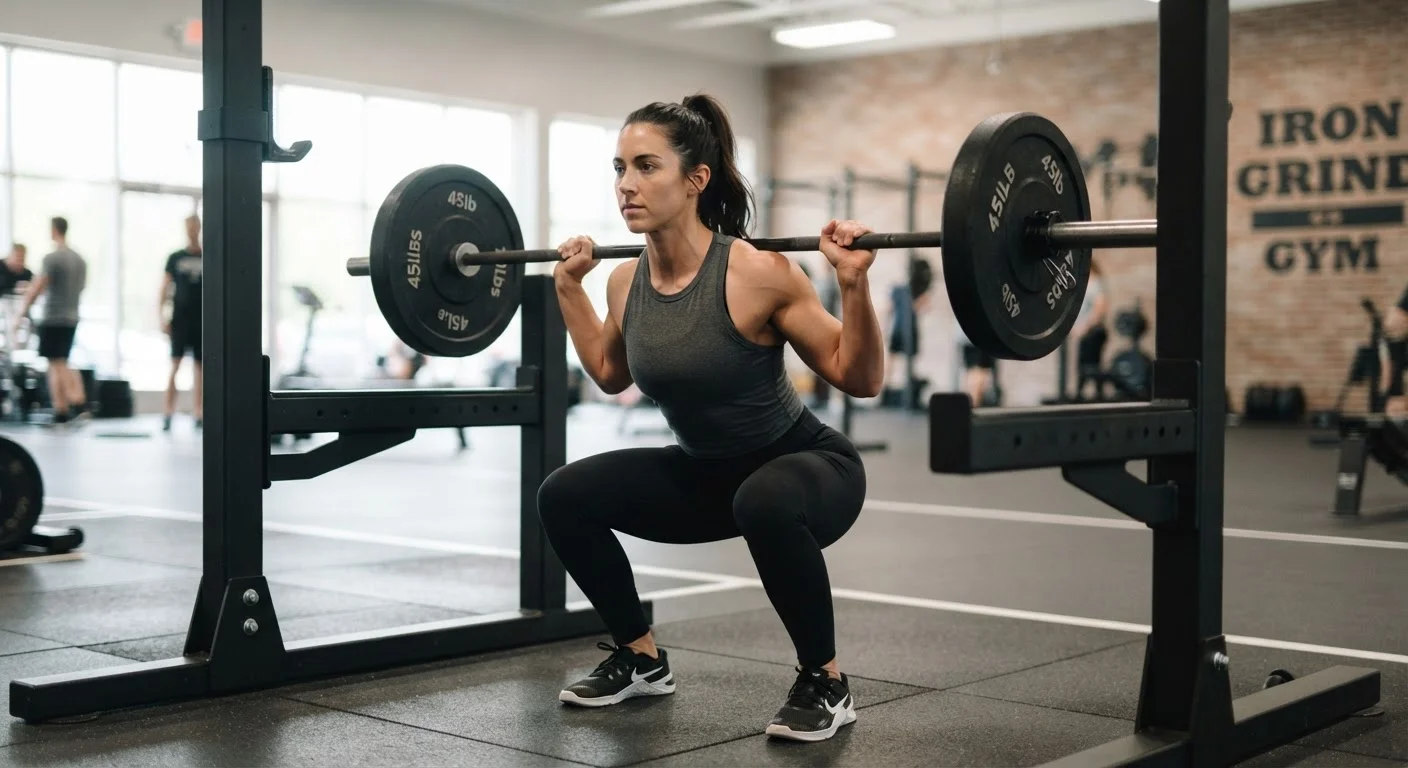
Film yourself performing a squat or hinge from a side angle before adding any weight. You'll identify form issues in thirty seconds that would take months of discomfort to notice otherwise.
Visual self-feedback is one of the most underused tools for technique correction among beginners, and catching errors early prevents them from becoming ingrained patterns.
Choose a starting weight that feels almost too easy, complete all planned sets with perfect form, and only then consider adding load the following week.
Ego-driven loading is the single most common driver of early training injuries. A conservative start builds the movement patterns that make heavier work safe and productive later.
Working with a qualified trainer for even a small number of sessions at the outset can accelerate technique development and reduce injury risk significantly. If in-person guidance isn't accessible, reputable instructional resources and video feedback from a professional can serve a similar purpose.
Programming and Progressive Overload
For most adults, two to three strength sessions per week — each targeting the major muscle groups — is both sufficient and sustainable. Trying to train five or six days per week as a beginner often leads to burnout or overuse injuries before meaningful adaptation occurs.
A simple structure might involve:
- A lower-body-focused session (squats, hip hinges, single-leg work)
- An upper-body-focused session (pressing and pulling movements)
- A full-body session combining both
Progressive overload can be applied in several practical ways: adding small amounts of weight, performing an extra repetition or set, reducing rest time, or improving technique and range of motion. The key is that something becomes slightly more demanding over time — not dramatically harder each session.
Stalls and plateaus are normal and expected. When progress slows, reviewing sleep, nutrition, and overall stress load often reveals more than adjusting the program itself. For insight into the patterns that derail progress, see why fitness routines fall apart.
Recovery: The Part Most Adults Underestimate
Muscle repair and growth occur during rest periods — not during the workout. Sleep is the most powerful recovery tool available: research supports seven to nine hours per night for most adults as optimal for tissue repair and hormonal balance supporting muscle adaptation.
Nutrition plays an equally important role. Adequate protein intake — distributed across meals throughout the day — provides the amino acids needed for muscle protein synthesis. General nutrition guidance for active adults typically centers on whole foods, sufficient energy intake, and consistent hydration, though individual needs vary. Always consult a registered dietitian or healthcare provider for personalised guidance.
Soreness vs. Pain: Know the Difference
Delayed onset muscle soreness (DOMS) — a dull achiness peaking 24–48 hours after training — is a normal response to novel exercise. Sharp, acute, or joint-localised pain during or immediately after a session is not normal and warrants rest and professional evaluation. Training through joint pain frequently converts minor issues into significant injuries.
Active recovery between sessions — light walking, stretching, or low-intensity movement — supports circulation and reduces stiffness without impeding recovery. Extended soreness or persistent fatigue are signals to scale back, not push through.
Tracking Progress and Adjusting Over Time
Progress in strength training is rarely linear, and measuring it only by weight on the bar misses the full picture. Useful indicators include how a given weight feels over time, improvements in movement quality, increased endurance within a set, and subjective energy and wellbeing.
A training log — even a simple notebook — creates accountability and reveals patterns that would otherwise go unnoticed. Reviewing it monthly is more informative than daily check-ins.
Long-term success in strength training relies more on consistency than intensity. Because motivation naturally fluctuates, building sessions into your schedule as non-negotiable habits carries far more weight than relying on daily willpower. The guide to building a sustainable exercise habit explores the behavioural science behind lasting consistency.
This article is for general informational and educational purposes only. It is not a substitute for professional medical advice, diagnosis, or treatment. Always consult a qualified healthcare provider before beginning a new exercise program, particularly if you have existing health conditions, injuries, or concerns.