

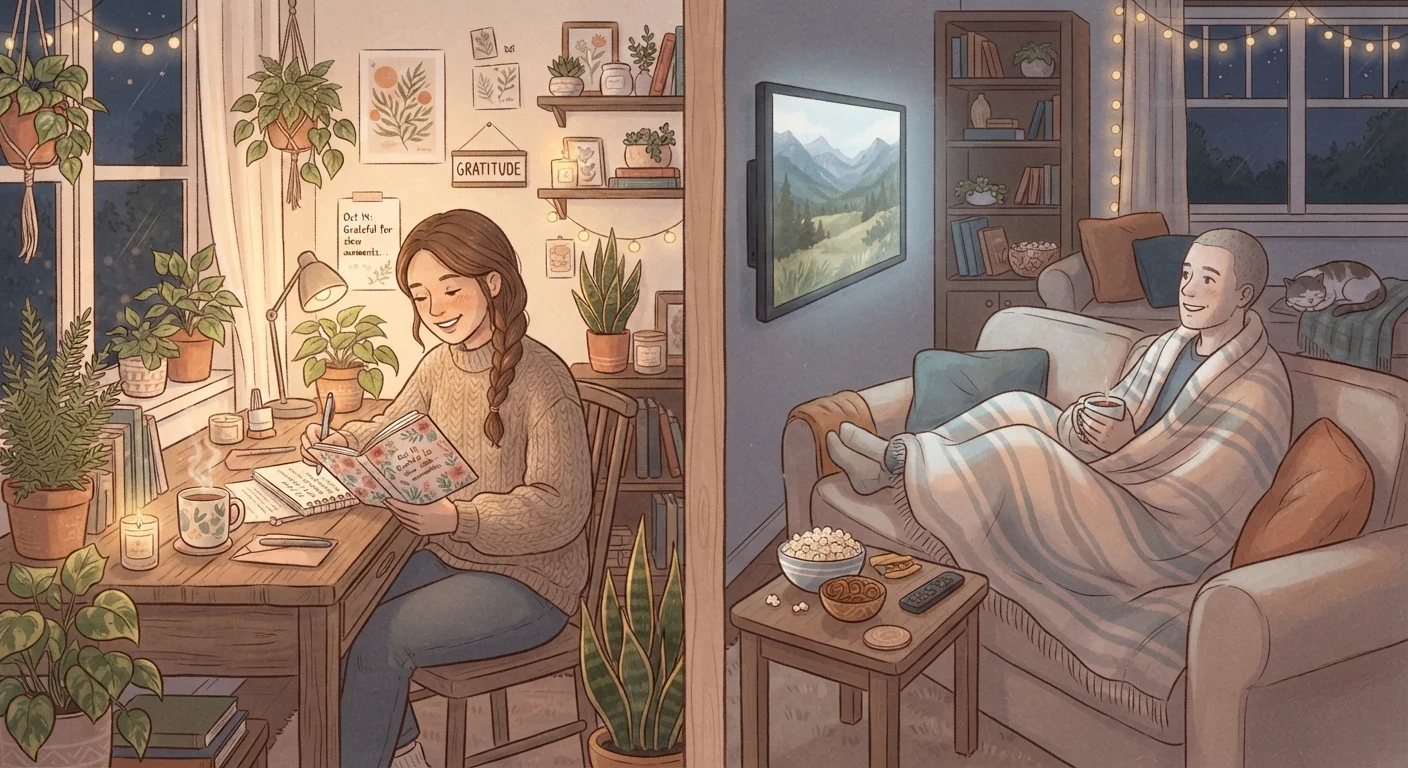
Key Takeaways
Option A
Self-Care
The intentional practice of building long-term resilience.
Best for: Adults looking to strengthen emotional capacity, establish healthy routines, and grow through challenges over time.
Option B
Self-Soothing
The immediate comfort strategy for calming acute distress.
Best for: Anyone needing to lower emotional intensity quickly before they can think clearly or take constructive action.
If you're overwhelmed and can't think straight right now
Self-Soothing
When emotional flooding blocks rational thought, calming the nervous system first is the most practical starting point.
If you want to strengthen your emotional foundation over time
Self-Care
Consistent self-care practices build the capacity to handle future stressors without always needing emergency relief.
If you notice you're always soothing but never feeling better long-term
Self-Care
Persistent reliance on self-soothing without growth-oriented practices may signal a need to shift focus or seek professional support.
If you practice self-care diligently but still hit acute hard moments
Self-Soothing
Even the healthiest routines can't prevent all distress; having soothing tools available is a sign of good self-awareness, not failure.
Two Distinct Concepts, Often Conflated
"Self-care" and "self-soothing" appear in wellness conversations constantly, often as if they mean the same thing. They don't — and blurring the distinction can quietly undermine your emotional well-being.
Self-care refers to intentional actions that support your physical, mental, and emotional health over time. Think consistent sleep habits, regular movement, setting boundaries, therapy, or nurturing meaningful relationships. These practices often require effort and may not feel instantly rewarding, but they build the psychological foundation that helps you weather life's difficulties.
Self-soothing is different in purpose and feel. It describes strategies designed to calm or comfort you during a moment of acute distress — scrolling through lighthearted content, taking a warm bath, eating a comforting meal, or calling a friend to vent. The goal is emotional regulation right now, not long-term growth.
Both are real, legitimate tools. The confusion arises when people substitute one for the other, especially when self-soothing becomes the default response to every difficult feeling rather than a bridge to more constructive engagement. For a broader look at how these practices fit into everyday emotional wellness, see everyday habits that support lasting emotional well-being.
| Criterion | Self-Care | Self-Soothing |
|---|---|---|
| Primary purpose | Build long-term resilience | Relieve immediate distress |
| Time horizon | Ongoing, habitual | In-the-moment |
| Effort required | Often requires motivation and consistency | Low barrier; accessible when depleted |
| Examples | Sleep hygiene, therapy, exercise, boundaries | Comfort food, warm bath, lighthearted media |
| Addresses root cause? | Often yes, over time | Not directly |
| Risk when overused | Burnout from rigid self-improvement focus | Avoidance of necessary emotional work |
| Therapeutic backing | Broad (CBT, positive psychology, lifestyle medicine) | Recognized in DBT as distress tolerance skill |
When Self-Soothing Is the Right Tool
Self-soothing gets an unfairly bad reputation. In mental health and therapeutic contexts — particularly in Dialectical Behavior Therapy (DBT) — self-soothing is recognized as a core distress tolerance skill. When emotional intensity becomes overwhelming, the brain's capacity for problem-solving and perspective-taking genuinely diminishes. Trying to "do the healthy thing" in that state can backfire.
Used intentionally, self-soothing helps regulate the nervous system enough to return to a state where constructive choices are possible. The key word is intentionally. There's a meaningful difference between consciously choosing to watch a favorite show to decompress and mindlessly binging for hours to avoid an uncomfortable conversation you know you need to have.
~40%
Adults using avoidance as a primary coping style
Research in coping styles suggests avoidance-based coping is common, though estimates vary across studies and populations.
6 skills
DBT distress tolerance categories including self-soothe
Dialectical Behavior Therapy, developed by Dr. Marsha Linehan, formally includes self-soothe as one of its core distress tolerance skill sets.
Self-soothing becomes a concern not because of what it is, but when it consistently replaces self-care — when the temporary relief it provides becomes a way to avoid addressing underlying stressors, emotions, or habits that genuinely need attention. If you find your coping strategies routinely fall short, recognizing when it's time to seek extra support is an important read.
Building Both Into a Sustainable Approach
The most resilient approach to mental wellness isn't choosing one over the other — it's developing the self-awareness to know which one a given moment calls for. That skill, sometimes called emotional meta-awareness, is itself something that grows with practice.
A useful question to ask yourself: "Am I doing this to feel better right now, or to be better equipped for tomorrow?" Neither answer is wrong. Both have their place in a complete mental wellness strategy.
Some practical pointers:
- Use self-soothing as a bridge, not a destination. After you've calmed down, check in with what the distress was pointing to.
- Schedule self-care rather than waiting until you feel like it. Self-care's benefits often emerge gradually, making motivation unreliable.
- Notice patterns over time. Regular weekly mental health check-ins can help you spot whether soothing has quietly replaced growth.
- Don't shame yourself for soothing. Compassion for your own distress is, in itself, an act of self-care.
Understanding how these two concepts relate to broader practices — like mindfulness — can deepen your toolkit further. For context, see how mindfulness and meditation differ and each helps.
This article is for general informational and educational purposes only and is not a substitute for professional mental health advice, diagnosis, or treatment. If you are experiencing significant emotional distress, please consult a qualified mental health professional.