

Key Takeaways
Why the Two-Week Wall Exists
The pattern is familiar: a new routine starts strong, the first week feels promising, and then somewhere around day ten to fourteen, it quietly dissolves. This isn't a character flaw — it's a predictable consequence of how the brain builds new behaviors. Initial motivation provides enough neurological fuel to get started, but it isn't sufficient to automate a habit. That automation takes considerably longer than most people expect.
Understanding why routines collapse at this stage is more useful than applying more willpower. The mistakes below are the most common structural errors that send healthy intentions off the rails — and each one has a practical fix.
Starting with an overly ambitious routine that demands too much time or willpower from day one.
Why it happens: Initial enthusiasm creates a burst of motivation that feels like it will last indefinitely, so people set goals sized for their best possible day rather than their average one.
Relying on motivation alone rather than building a reliable structure around the habit.
Why it happens: People assume that wanting the outcome strongly enough will carry them through. But motivation is an emotional state that fluctuates with sleep, stress, and life demands — it was never meant to be the engine of daily behavior.
Treating a single missed day as a complete failure and abandoning the effort entirely.
Why it happens: An all-or-nothing mindset frames any interruption as proof that the habit won't work, which makes quitting feel logical rather than premature.
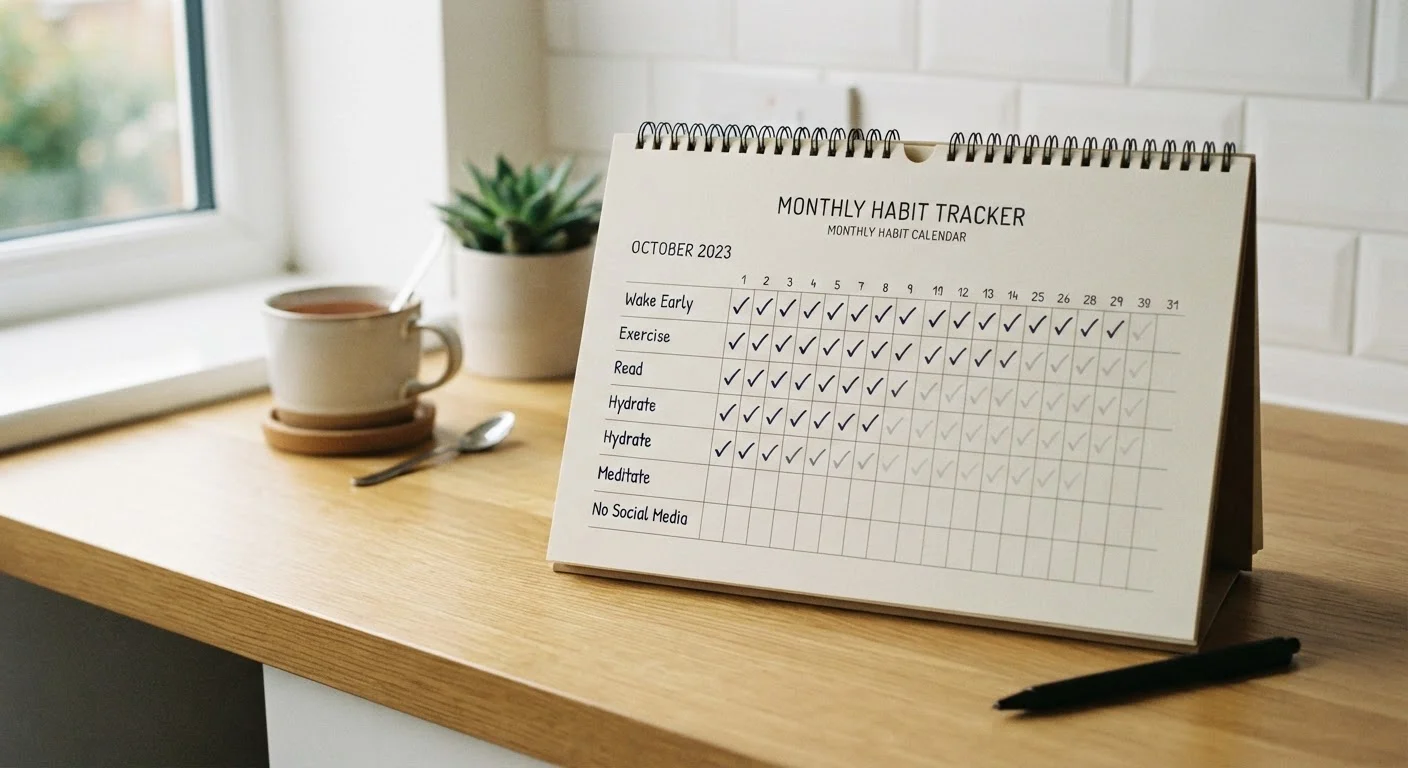
Setting outcome-based goals without tracking the process behaviors that actually produce results.
Why it happens: Outcomes — losing weight, sleeping better, feeling calmer — are easy to imagine but slow to appear, making progress feel invisible and discouraging.
Ignoring the environment and expecting willpower to compensate for an inconvenient setup.
Why it happens: People focus on personal resolve without recognizing how powerfully physical surroundings shape automatic behavior.
Pursuing too many new habits simultaneously, splitting attention and recovery resources too thin.
Why it happens: A fresh commitment to health can feel like everything needs to change at once — diet, sleep, exercise, and stress management all at the same time.
Building Habits That Actually Last
Habit durability comes from design, not determination. Once you've identified which mistakes apply to your situation, small structural adjustments make a disproportionate difference. Environment matters more than most people realize — the physical health practices that hold up over years are almost always the ones that require the least daily decision-making.
~66 days
Average time for a habit to become automatic
A study published in the European Journal of Social Psychology found that habit automaticity plateaued at an average of 66 days, significantly longer than the often-cited 21-day figure.
40%
Of daily actions driven by habit, not decision
Research from Duke University estimates that roughly 40 percent of everyday behaviors are performed habitually, underlining how much environment and routine shape health outcomes.
For nutrition specifically, the same principle applies: eating habits that hold up over time tend to be simple, repeatable, and embedded in an existing daily structure rather than reliant on constant planning. And as seasons and circumstances change, routines need periodic adjustment — seasonal habit adjustments can prevent the gradual drift that replaces good intentions with old defaults.
Don't Confuse Soreness With Failure
Physical discomfort in the first days of a new exercise or movement routine is common and expected. However, sharp pain, persistent joint discomfort, or extreme fatigue are signals worth discussing with a healthcare provider. Pushing through genuine pain to maintain a streak is more likely to end the habit than skipping a session would be.
This article is intended for general informational purposes only and does not constitute medical or psychological advice. Consult a qualified healthcare professional before making significant changes to your health routine, particularly if you have an existing medical condition.