

Key Takeaways
Sleep Hygiene
Sleep hygiene refers to a set of behavioral and environmental habits that support consistent, high-quality sleep. The term borrows "hygiene" from public health — just as hand-washing prevents physical illness, sleep hygiene practices help protect and maintain healthy sleep patterns. It is not about cleanliness in the literal sense, but about cultivating conditions that make restful sleep more likely.
In clinical sleep medicine, sleep hygiene is often considered a first-line behavioral intervention and is a component of Cognitive Behavioral Therapy for Insomnia (CBT-I), the most evidence-supported treatment for chronic insomnia.
Where the Term Comes From — and What It Really Means
"Sleep hygiene" sounds clinical, even a little odd. Hygiene is something we associate with handwashing and dental care — not bedtimes. But the borrowing is intentional. Just as personal hygiene describes daily habits that maintain physical health, sleep hygiene describes daily habits that maintain healthy sleep.
The term gained traction in behavioral medicine and sleep research from the 1970s onward, as scientists began recognizing that many sleep problems — particularly insomnia — were closely tied to behaviors and environments rather than purely biological causes. The logic is straightforward: if consistent habits can erode sleep quality, then consistent habits can also protect and improve it.
Understanding the concept properly matters because it changes how you approach your own sleep. Rather than searching for a single fix, sleep hygiene frames rest as something you build toward through ongoing, cumulative choices. It's less about any single evening and more about the patterns you establish over weeks and months. For a broader look at how sleep fits into your overall wellness, see the Mental Wellness Toolkit.
What the Evidence Actually Supports
Not all sleep hygiene advice is equally grounded in research. Some practices have strong, replicated support. Others are plausible but weakly studied. And a few popular tips are genuinely overhyped.
1 in 3
U.S. adults not getting enough sleep
The Centers for Disease Control and Prevention (CDC) has reported that roughly one-third of U.S. adults regularly sleep less than the recommended seven hours per night.
7–9 hrs
Recommended nightly sleep for adults
The American Academy of Sleep Medicine and the Sleep Research Society jointly recommend seven to nine hours of sleep per night for adults aged 18–60.
~5–6 hrs
Average half-life of caffeine in adults
Caffeine's half-life means a standard afternoon coffee can remain partially active in the body by the time most people try to fall asleep.
Well-supported practices
- Consistent sleep and wake times: Your body runs on a circadian rhythm — an internal clock synchronized by light and behavior. Going to bed and waking at roughly the same time each day, including weekends, is one of the most reliably supported habits in sleep research. Irregular schedules are associated with poorer sleep quality and mood.
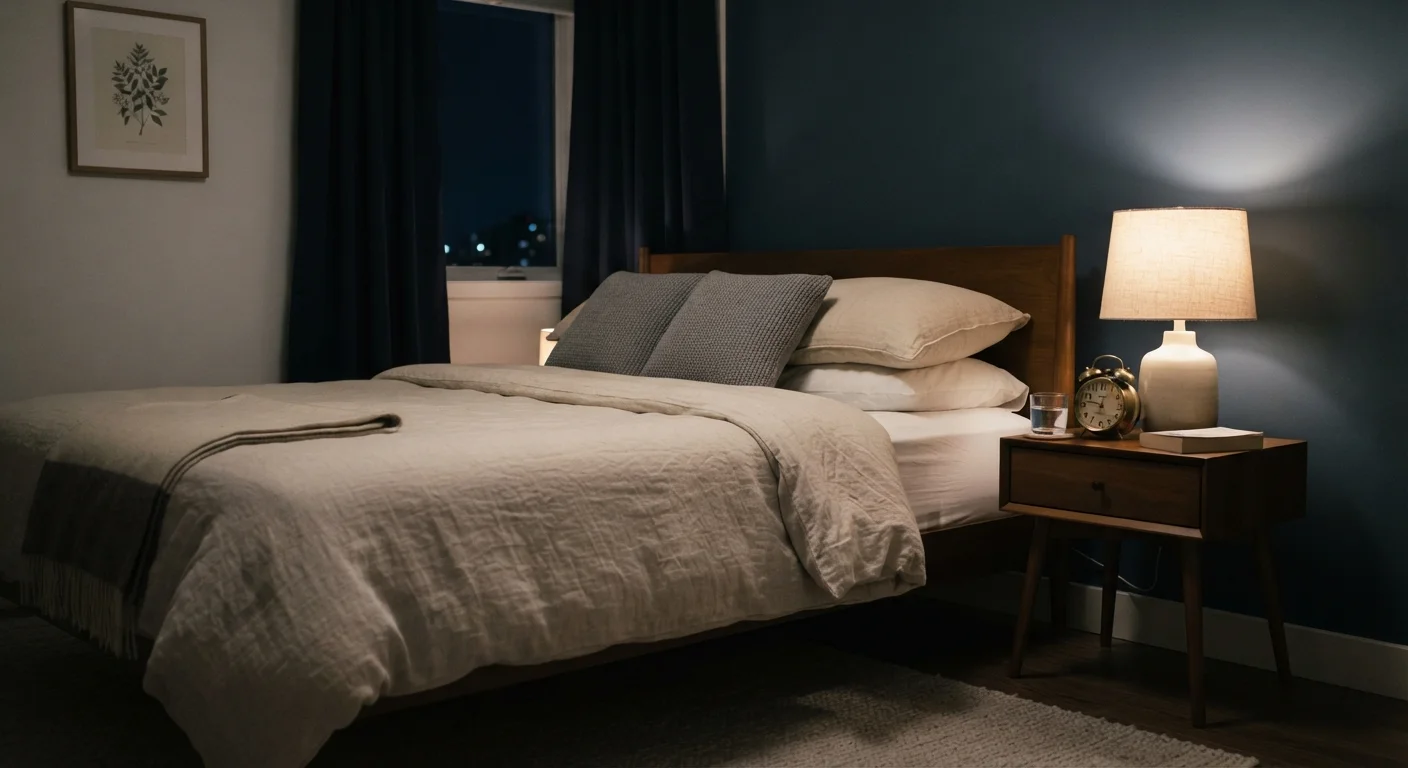
- A cool, dark sleeping environment: Core body temperature drops as part of the natural sleep process. A cooler room (roughly 65–68°F is often cited as a comfortable range for many adults, though individual preference varies) supports this process. Darkness matters too — even low ambient light can signal wakefulness to the brain.
- Limiting caffeine in the afternoon and evening: Caffeine has a half-life of roughly five to six hours in most adults, meaning a late-afternoon coffee can still be partially active at bedtime. Research consistently supports cutting off caffeine in the mid-afternoon for people who are sensitive to its effects.
- Reserving the bed for sleep: Working, scrolling, or watching TV in bed can weaken the brain's learned association between the bed and sleep — a principle central to stimulus control therapy used in CBT-I.
Practices with mixed or weaker evidence
Warm baths before bed may help some people by triggering a drop in core temperature afterward, though effects are modest. Chamomile tea and similar herbal remedies have anecdotal support but limited clinical evidence for improving sleep in healthy adults. White noise machines help some people but not others. Individual variation is real, and what works well for one person may have no effect for another.
Building Habits That Actually Stick
Knowing what supports sleep and actually changing your nightly behavior are two different challenges. The gap between information and action is where most people struggle — and where small, incremental changes outperform sweeping overnight transformations.
Start With One Change, Not Ten
Overhauling your entire evening routine at once is rarely sustainable. Instead, identify the single habit most likely to make a difference for you — consistent wake time is often the best starting point — and practice it consistently for two to three weeks before adding anything else. Small wins build momentum and make lasting change more realistic.
Consider anchoring any new sleep habit to something you already do reliably. If you always brush your teeth before bed, that moment becomes a natural cue to dim the lights or put your phone in another room. This approach — habit stacking — draws on well-established behavioral science principles and makes new routines easier to maintain.
Your wind-down period in the hour or two before bed also matters more than many people realize. A thoughtful evening routine doesn't need to be elaborate; it just needs to consistently signal to your nervous system that the day is winding down. Building an evening routine that eases stress is an important complement to the environmental changes described above.
And if sleep remains elusive despite consistent effort, that's important information — not a personal failure. Persistent sleep difficulties are a valid clinical concern, and a qualified healthcare professional can help identify whether something beyond behavioral habits is involved. Practical strategies for more restorative sleep can also provide actionable next steps.
This article is for general informational purposes only and does not constitute medical advice. If you are experiencing persistent sleep difficulties or have concerns about your health, please consult a qualified healthcare professional.