

Key Takeaways
Lower purchase price in private sales
Private sellers skip dealer overhead, so listed prices are typically closer to wholesale value. This can translate to thousands of dollars in savings on comparable vehicles.
Dealerships provide structured consumer protections
Licensed dealers must comply with the FTC Used Car Rule and applicable state warranty laws, giving buyers clearer disclosure and some legal recourse if problems arise.
Private sales offer direct seller insight
Individual owners can speak firsthand about how the vehicle was driven, serviced, and stored — context that a dealership's lot staff often can't provide.
Dealerships simplify trade-ins and financing
Rolling a trade-in into the deal and arranging financing under one roof reduces complexity, especially for buyers who don't want to sell their current car separately.
Wider inventory access through private listings
National platforms like Craigslist and Facebook Marketplace expose buyers to a far broader pool of vehicles, including rare trims or colours not stocked locally by dealers.
Certified pre-owned programmes add dealer peace of mind
Many franchise dealerships offer manufacturer-backed CPO (certified pre-owned) programmes with multi-point inspections and extended limited warranties unavailable in private transactions.
Private sales offer little legal recourse
Most private transactions are sold as-is under state law. If a hidden defect emerges after purchase, recovering losses through civil action is difficult and often impractical.
Dealership prices include significant markup
Dealers factor in reconditioning, overhead, and profit margin, meaning the same vehicle can cost noticeably more than a private-party equivalent in similar condition.
Private sellers may not disclose all known issues
Without legal obligation equivalent to dealer disclosure rules, some private sellers omit unflattering history. This makes independent inspections and history reports essential.
Dealer financing can carry higher interest costs
While convenient, dealership financing sometimes includes rate markups. Buyers who don't comparison-shop before visiting a lot may pay more over the life of a loan.
Private transactions require more buyer effort
Coordinating test drives, arranging independent inspections, handling paperwork, and securing financing independently all fall on the buyer in a private sale.
Our Verdict
Neither route is universally better — each suits a different type of buyer. Private sales reward well-prepared buyers with research skills and mechanical savvy, while dealerships offer structured protections that reduce — but don't eliminate — risk for those who want more reassurance. The right choice depends on how much due diligence you're willing to do and how much uncertainty you can absorb.
Private sales suit confident, research-ready buyers seeking the lowest price; dealerships are a better fit for buyers who prioritise consumer protections, financing convenience, and trade-in options.
The Core Difference Between the Two Routes
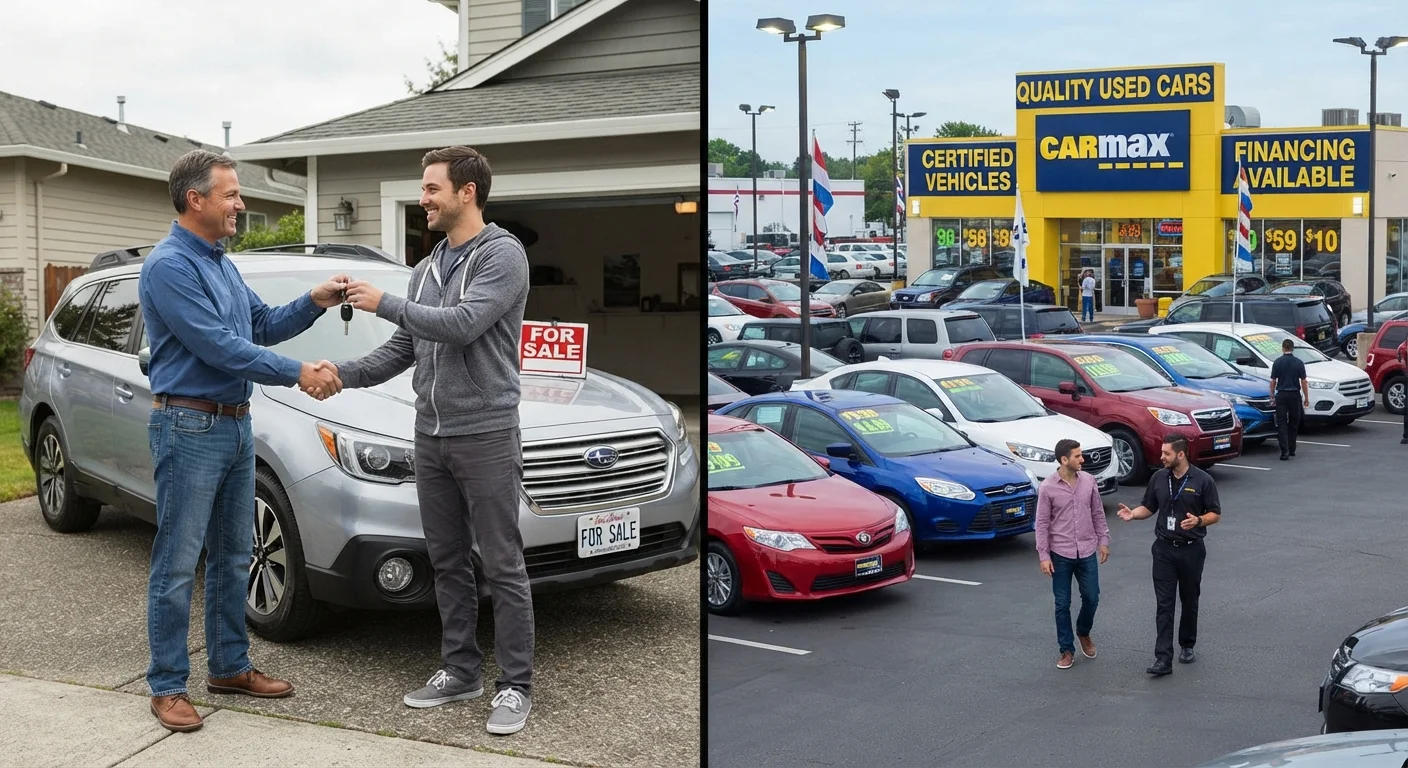
When shopping for a used car in the US, every purchase falls into one of two broad categories: buying from a private individual or buying from a licensed dealership. The distinction matters far more than most buyers realise — it shapes the price you'll pay, the legal protections you'll have, and the risks you'll carry once you drive away.
Private sellers are typically ordinary people offloading a vehicle they no longer need. Dealerships — whether franchise operations attached to a manufacturer or independent used-car lots — are businesses regulated under state and federal law. That regulatory layer creates a meaningfully different transaction. Before you decide, it's worth understanding the full financial picture of car ownership, because purchase price is only part of what you'll spend.
Advantages and Disadvantages at a Glance
Both options carry genuine upsides and real downsides. The right balance depends entirely on your situation.
Lower purchase price in private sales
Private sellers skip dealer overhead, so listed prices are typically closer to wholesale value. This can translate to thousands of dollars in savings on comparable vehicles.
Dealerships provide structured consumer protections
Licensed dealers must comply with the FTC Used Car Rule and applicable state warranty laws, giving buyers clearer disclosure and some legal recourse if problems arise.
Private sales offer direct seller insight
Individual owners can speak firsthand about how the vehicle was driven, serviced, and stored — context that a dealership's lot staff often can't provide.
Dealerships simplify trade-ins and financing
Rolling a trade-in into the deal and arranging financing under one roof reduces complexity, especially for buyers who don't want to sell their current car separately.
Wider inventory access through private listings
National platforms like Craigslist and Facebook Marketplace expose buyers to a far broader pool of vehicles, including rare trims or colours not stocked locally by dealers.
Certified pre-owned programmes add dealer peace of mind
Many franchise dealerships offer manufacturer-backed CPO (certified pre-owned) programmes with multi-point inspections and extended limited warranties unavailable in private transactions.
Private sales offer little legal recourse
Most private transactions are sold as-is under state law. If a hidden defect emerges after purchase, recovering losses through civil action is difficult and often impractical.
Dealership prices include significant markup
Dealers factor in reconditioning, overhead, and profit margin, meaning the same vehicle can cost noticeably more than a private-party equivalent in similar condition.
Private sellers may not disclose all known issues
Without legal obligation equivalent to dealer disclosure rules, some private sellers omit unflattering history. This makes independent inspections and history reports essential.
Dealer financing can carry higher interest costs
While convenient, dealership financing sometimes includes rate markups. Buyers who don't comparison-shop before visiting a lot may pay more over the life of a loan.
Private transactions require more buyer effort
Coordinating test drives, arranging independent inspections, handling paperwork, and securing financing independently all fall on the buyer in a private sale.
Consumer Protections: A Key Dividing Line
One of the most important differences between the two routes is legal protection. When you buy from a licensed dealer, the Federal Trade Commission's Used Car Rule requires a Buyers Guide disclosing whether the vehicle comes with a warranty or is sold "as-is." Many states layer additional protections on top — some extend implied warranty coverage even on as-is sales if a dealer misrepresents the vehicle's condition.
Private sales operate largely under caveat emptor — buyer beware. Once money changes hands, your recourse is limited. Fraud claims are possible in egregious cases, but pursuing them through small claims or civil court is time-consuming and uncertain.
"As-Is" Doesn't Always Mean No Recourse
Even when a vehicle is sold as-is by a dealer, buyers may have limited claims if the seller knowingly concealed a defect or made a material misrepresentation. State consumer protection laws vary significantly in how far this protection extends. If you suspect fraud after a purchase, consult a consumer protection attorney in your state — many offer free initial consultations.
This protection gap is why a thorough pre-purchase checklist is non-negotiable regardless of where you buy — but is especially critical in a private transaction.
Price, Negotiation, and Financing
Private sellers generally list vehicles below dealer retail price because they have no overhead — no lot fees, no reconditioning costs, no sales staff. That gap can be meaningful, sometimes several thousand dollars on the same make, model, and year. Negotiation is often more direct and flexible, though some private sellers are emotionally attached to their asking price.
~$4,000
Typical private vs. dealer price gap
Industry observers and consumer advocates commonly note that private-party used car prices run several thousand dollars below comparable dealer retail listings, though the exact gap varies by vehicle, market, and condition.
75%+
Used car buyers who finance through a dealer
According to Experian automotive finance data, the majority of used vehicle buyers who finance do so through dealership-arranged financing rather than direct bank or credit union loans.
Financing, however, is a different story. Banks and credit unions will issue personal auto loans for private-party purchases, but the process is less seamless than dealer financing, and some lenders restrict the vehicle age or mileage they'll cover. Dealerships offer in-house financing and may have relationships with multiple lenders, making it easier to compare rates on the spot. If you plan to trade in a current vehicle, dealerships handle that transaction directly; private sales require you to sell your old car separately.
For a broader view of how purchase decisions intersect with long-term costs, see the related discussion on owning vs. leasing a car.
Due Diligence: What You Must Do Either Way
Regardless of the seller type, some steps are non-negotiable. Running a vehicle history report (using the VIN — vehicle identification number) surfaces prior accidents, odometer rollbacks, title issues, and outstanding liens. An independent pre-purchase inspection by a trusted mechanic is equally important; a trained eye can identify deferred maintenance and looming repair costs that neither a private seller nor a dealer will volunteer.
If you're considering a private transaction, also read up on how private vehicle sales work from the seller's side — understanding that process helps you ask the right questions and spot red flags. And before finalising any deal, review the costs that routinely catch first-time owners off guard, from registration fees to insurance adjustments.