

Key Takeaways
Our Verdict
EVs offer genuine long-term savings on fuel and routine maintenance for drivers who charge primarily at home and keep their vehicle for several years. However, higher upfront costs, insurance premiums, and battery-related depreciation mean the financial advantage depends heavily on individual driving patterns and circumstances. Neither ownership path is universally cheaper — the right choice depends on your daily mileage, home charging access, and how long you plan to keep the vehicle.
| Best for | Recommended |
|---|---|
| High-mileage commuters with home charging access | Electric Vehicle |
| Drivers in areas with limited charging infrastructure | Petrol Vehicle |
| Those prioritising lower routine maintenance costs | Electric Vehicle |
| Owners seeking lower upfront purchase price | Petrol Vehicle |
Fuelling: Electricity vs. Petrol Costs
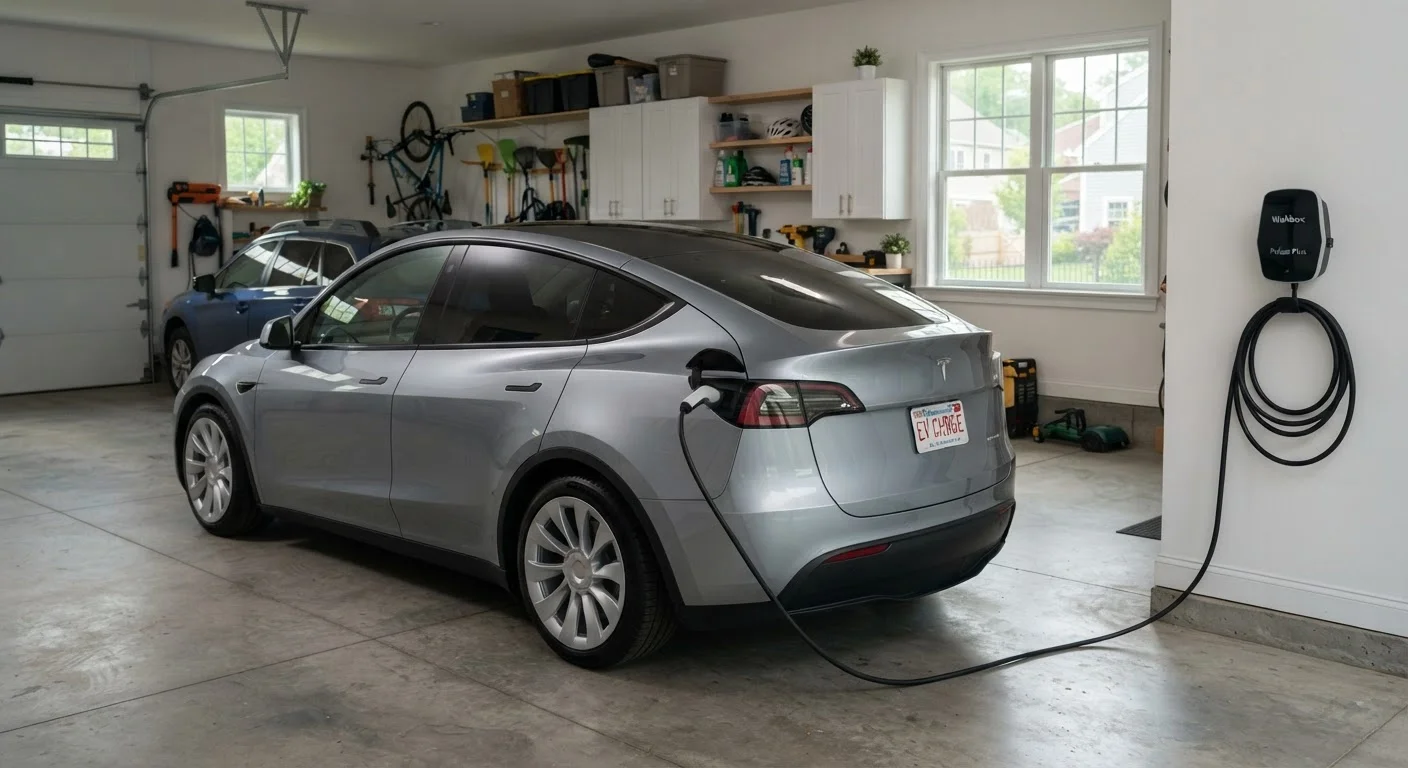
The most immediate running cost difference between EVs and petrol vehicles is energy. Charging an EV at home — typically overnight on a standard 240V outlet or a dedicated Level 2 charger — is generally the cheapest way to power the vehicle. Electricity rates vary significantly by state and utility provider, but home charging typically costs considerably less per mile than petrol at current US pump prices.
Public DC fast-charging, however, narrows this gap considerably. Some fast-charging networks price electricity at rates that bring the per-mile cost close to — or occasionally above — petrol, particularly for drivers without home charging access. If you live in an apartment or rely heavily on public charging, the fuel-cost advantage of an EV shrinks meaningfully.
Petrol prices are volatile and region-dependent, which makes direct comparison difficult. What's consistent is that EV owners with reliable home charging generally report lower monthly energy costs for transportation. Those without that option should calculate their realistic charging costs before assuming significant savings.
Maximise Home Charging Savings
If you have access to home charging, consider enrolling in a time-of-use electricity plan. Many utility providers offer lower rates during off-peak hours — typically overnight — which can significantly reduce your per-mile charging cost. Schedule charging to begin automatically during these windows using your vehicle's built-in timer.
Servicing and Maintenance: Fewer Parts, Different Demands
EVs have far fewer moving parts than internal combustion engine (ICE) vehicles — no oil, no transmission fluid, no spark plugs, no timing belt. This eliminates several routine maintenance items that petrol car owners budget for regularly. Annual servicing for an EV is typically simpler and often less expensive.
That said, EV ownership introduces its own maintenance considerations. Tyres tend to wear faster on EVs due to higher vehicle weight and the instant torque delivery electric motors produce. Brake pads, by contrast, often last longer thanks to regenerative braking — a system that recovers energy during deceleration, reducing reliance on friction brakes.
Battery health monitoring is an important EV-specific responsibility. While modern EV batteries are engineered to degrade slowly, factors like frequent DC fast-charging, extreme temperatures, and consistently charging to 100% can accelerate wear. Many manufacturers recommend charging to 80% for daily use to preserve long-term capacity. For a broader look at routine vehicle upkeep, see the car maintenance hub.
Insurance, Registration, and Other Ownership Costs
EV insurance premiums in the US are generally higher than comparable petrol vehicles. Repair costs drive this difference — EVs use specialised components, and collision repairs often require technicians trained in high-voltage systems. Parts availability can also be limited, increasing repair timelines and costs, which insurers factor into premiums.
Registration fees vary by state. Some states offer reduced registration costs or fee exemptions for EVs as an incentive, while others charge additional fees to offset lost petrol tax revenue — since EV drivers don't contribute to road funding through the pump. Understanding how registration fees are calculated can help you anticipate this cost in your state.
High-Voltage Repairs Require Qualified Technicians
EV battery packs and electric drivetrains operate at voltages that are potentially lethal. Never attempt DIY repairs on EV electrical systems. Always use a qualified EV technician or authorised service centre for any work involving the battery, charging system, or high-voltage components.
For a complete picture of ownership costs beyond what's obvious at purchase, exploring the full financial picture of car ownership is a useful starting point.
Depreciation and Resale Value
Depreciation remains one of the largest costs of car ownership regardless of powertrain type. EVs have historically depreciated faster than comparable petrol vehicles, though this pattern is evolving as the market matures and consumer confidence in battery longevity grows.
Battery condition is the central factor in EV resale value. A used EV with a degraded battery — one that now delivers significantly less than its original range — is worth considerably less than one with a healthy pack. Buyers in the used market treat battery state-of-health much like they would engine condition in a petrol car.
| Cost Category | Electric Vehicle | Petrol Vehicle | |
|---|---|---|---|
| Purchase Price | Generally higher upfront | Generally lower upfront | |
| Fuel / Energy Cost | Lower with home charging | Volatile; region-dependent | |
| Routine Servicing | Simpler; no oil changes | More frequent; more items | |
| Tyre Wear | Faster due to weight and torque | Standard wear rates | |
| Insurance Premiums | Typically higher | Typically lower | |
| Depreciation | Battery health is key factor | More established resale patterns |
Federal tax credits and state incentives have also affected EV pricing dynamics, with new-vehicle discounts occasionally putting downward pressure on used EV values. Understanding how depreciation works across vehicle types helps set realistic expectations for long-term ownership costs.